
 +965 2292 4888


Daily Economic Update
11.06.2026
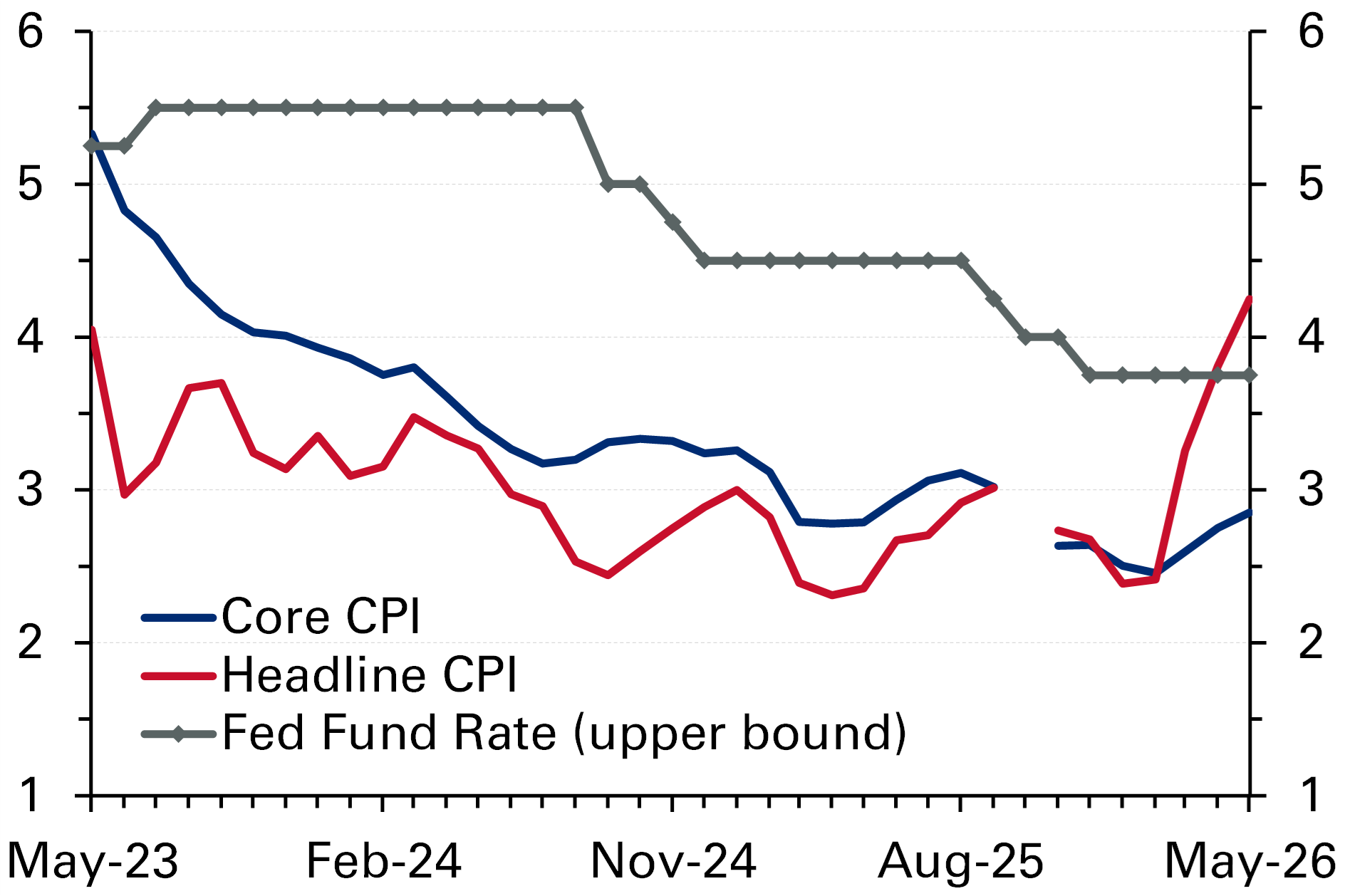
US: CPI inflation jumps to an over three-year high in May, but came largely in-line with consensus estimates; equity markets tank on fresh military escalation. CPI inflation in May accelerated to the highest level since April 2023 at 4.2% y/y from 3.8% in April as gasoline prices surged by 7% m/m (over 40% y/y). The core rate also increased to 2.9% from 2.8%, the highest reading since September 2025. On a monthly basis, overall prices rose by 0.5% versus 0.6% in April and 0.9% in March, while core inflation fell back to 0.2% following April’s climb to 0.4%, and slightly lower than the 0.3% consensus forecast. Core services less shelter inflation, a key measure that the Fed monitors closely, remains hot and higher than what the Fed would like to see, inching up to 3.4% y/y from 3.3% in April. However, suggesting still benign second-round effects of higher energy prices, core goods prices fell 0.1% m/m, a first monthly drop in a year, along with a 0.6% m/m decline in transportation services prices, helped by a 1.7% drop in motor insurance costs. But airfares rose by 2.7% m/m (27% y/y), mostly following the trend seen since March, signaling further passthrough of higher fuel costs. The heavy-weight shelter component softened to 0.3% m/m (3.4% y/y), normalizing from an outsized 0.6% rise in April that was mostly attributed to a data distortion effect following the government shutdown in October and November. Within shelter, lodging away from home was elevated (5.2% y/y), due likely to the demand ahead of the FIFA World Cup that kicks off today. Overall, the latest inflation prints underscore that price pressures are worsening but the impact of higher energy prices on underlying components is relatively mild for now. However, that may change if oil prices remain elevated for a prolonged period; given no concrete developments regarding the opening of the Strait of Hormuz, the possibility of such a scenario is rising. Meanwhile, given the recent military escalation in the Middle East and tech stock valuation worries, US equity markets came under renewed selling pressures, with the S&P 500 tanking 1.6% yesterday along with an abrupt decline in gold prices, while the US dollar rose against major currencies but UST yields were changed a little. The futures market currently indicates around a two-third probability of at least a 25bps interest rate hike by the end of 2026.
Oil: Prices surge amid further US-Iran escalation. Brent futures rose 1.8% yesterday and have added another 1.8% to $94.8/bbl in early Asian trading today, as markets react to renewed escalation risks following President Trump’s implementation of previously signaled strikes on Iran. Sentiment has been further supported by warnings of additional US military action should Tehran fail to agree to a deal. In response, Iran stated that the Strait of Hormuz will remain closed until further notice, heightening concerns over already constrained flows. While tanker traffic has largely ground to a halt, some shipments have continued to pass through the chokepoint. Trump indicated that over 100 million barrels (~2.5 mb/d) have exited the Strait since last month, reportedly under a covert US effort to facilitate tanker flow. Although details remain unclear, market reports suggest that Kuwait, the UAE, and Qatar have indeed been able to move limited volumes through the Strait, though these flows remain insufficient to ease broader market tightness. This is reflected in continued inventory drawdowns, particularly in the US. Latest EIA data show that for the week ending June 5, commercial crude stocks fell by 7.2 mb, while the SPR declined by 7.9 mb, continuing the trend of inventory drawdowns seen since the start of the conflict. Looking ahead, the EIA has warned that OECD inventories are on track to fall to their lowest levels since 2003, with their projections pointing to a decline to 2.2 billion barrels by end 2026, down from 2.76 billion barrels in January 2026, under the assumption that maritime flows through the Strait only normalize by early-2027.
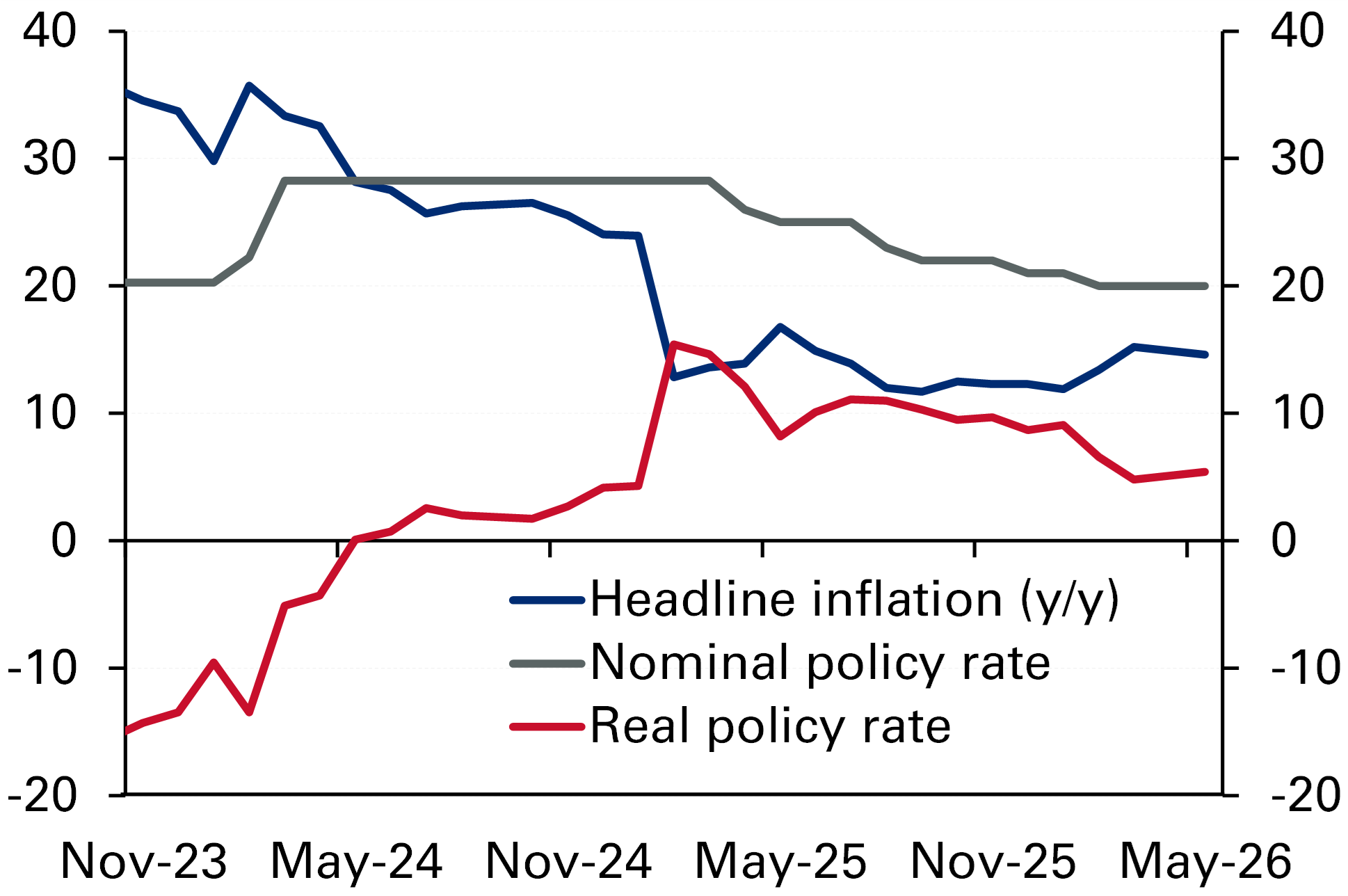
Egypt: Inflation eases for a second consecutive month, supporting a cautious policy stance. Egypt’s urban inflation rate slowed for the second consecutive month in May, to 14.6% y/y (+1.6% m/m), down from 14.9% y/y (+1.1% m/m) in April, according to CAPMAS data. Meanwhile, core inflation, which excludes volatile and regulated items, was broadly stable at 13.8% y/y (+1.6% m/m), according to the Central Bank of Egypt (CBE). The main drivers behind inflation in May were food and non-alcoholic beverages, the largest component of the inflation basket, which increased by 2.4% m/m, alongside a sharp 10.5% monthly increase in communication prices. Despite the recent slowdown, inflation remains elevated and continues to move within the 14-16% range, significantly above the CBE’s medium-term target of 7% (+/- 2%) by Q4 2026. The inflation trend since the outbreak of regional tensions three months ago suggests that price pressures have stabilized but are persistent. In our view, the latest inflation figures support the CBE’s cautious monetary policy approach. While inflation is moderating gradually, upside risks remain, particularly from the possibility of additional fuel price hikes and continued volatility in global food and energy prices. With the real interest rate still standing at around 5.4%, the CBE has room to remain patient. Given ongoing regional uncertainty and no clear end to geopolitical tensions, we expect the CBE to keep policy rates unchanged in the upcoming MPC meeting in July. Overall, the May inflation print reinforces the view that disinflation is progressing, but not yet at a pace strong enough to justify restarting the easing cycle, especially as the CBE now expects single-digit inflation only in H2 2027.
Saudi Arabia: Industrial production shrinks in April at its fastest pace ever. Saudi industry remained under pressure in April, with industrial production recording its second consecutive monthly contraction and its sharpest decline on record, as weaker oil activity continued to weigh heavily on the index. According to the latest data from GASTAT, the Kingdom’s Industrial Production Index (IPI) contracted by 19.1% y/y (-6.8% m/m) in April. The decline was mainly driven by a sharp drop in mining and quarrying activity, which represents the largest component of the index and fell by 30% y/y, reflecting disruptions to oil production and logistics amid ongoing regional tensions. Despite the sharp headline contraction, the non-oil component continued to show relative resilience. Manufacturing activity slowed but remained comparatively stable, suggesting that domestic non-oil sectors are continuing to absorb part of the shock from the regional conflict. The April figures broadly align with recent business sentiment indicators. Saudi Arabia’s PMI improved to 51.5 in April and 52.8 in May, up from 48.8 in March, returning above the 50-point threshold that separates expansion from contraction. The rebound was supported by stronger output and new orders, despite continued supply-chain disruptions linked to the conflict in Iran. Overall, the latest data points to a two-speed economy, where oil-related activity remains under pressure, while the non-oil sector is showing signs of stabilization, though still operating below its historical growth momentum.