
 +965 2292 4888


Daily Economic Update
30.11.2025
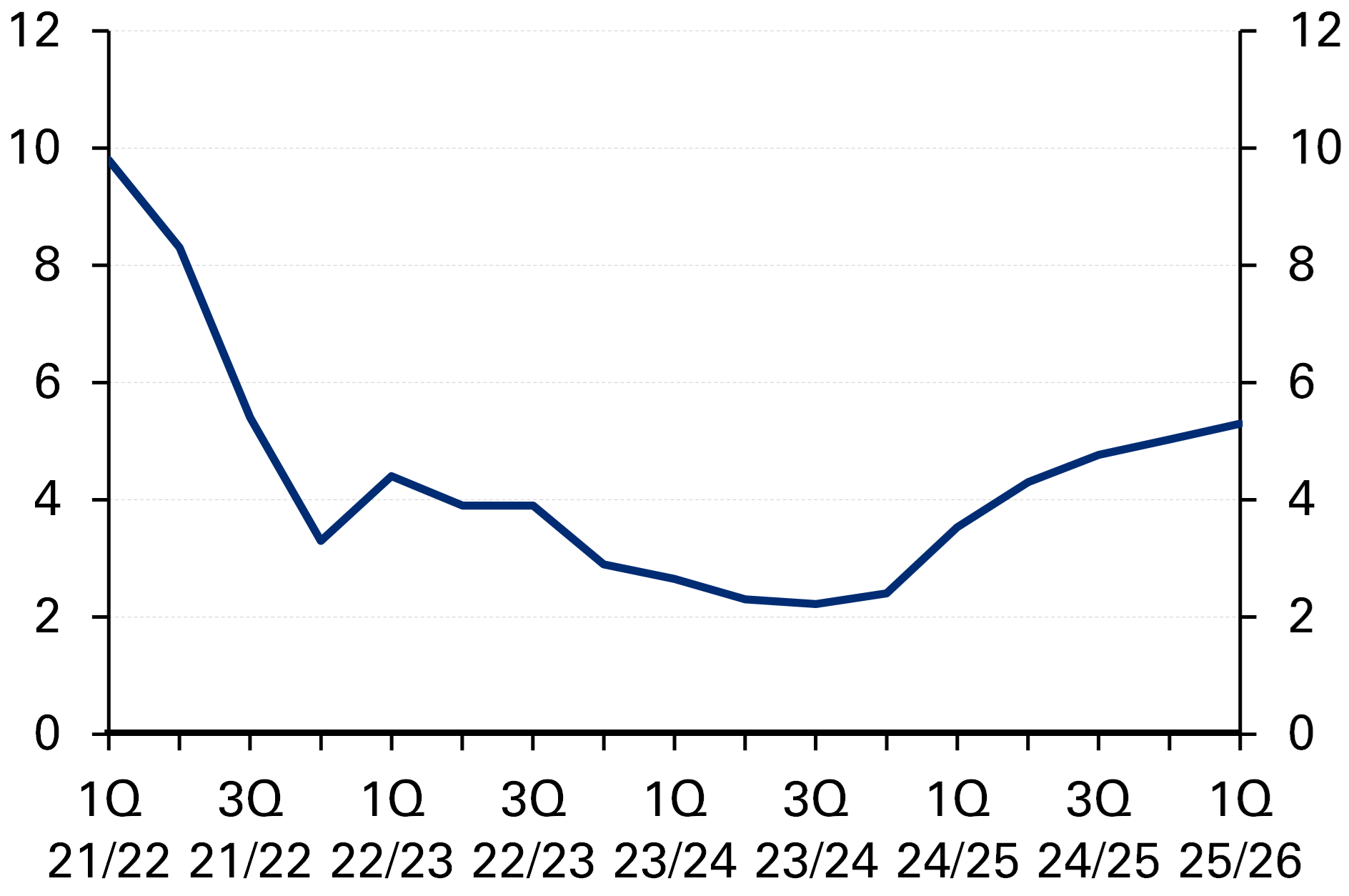
Egypt: Economy grows at fastest rate in more than three years. Egypt’s economy posted its strongest performance in three years in the first quarter of FY25/26 (July-September), with GDP expanding by 5.3% y/y (vs. 3.5% y/y in Q1 FY24/25), according to figures from the Ministry of Planning. The pickup reflects broad-based momentum across key sectors. Non-oil manufacturing and communication, information, and technology (CIT) led the expansion, with robust growth of 14.5% y/y followed by tourism (13.8%) – supported by improved service quality and upgraded tourism infrastructure – and financial intermediation (10.2%). Importantly, Suez Canal activity returned to positive territory, expanding by 8.6% y/y, for the first time first since Q2 FY23/24 as disruptions to Red Sea shipping routes all but ceased. Importantly, private-sector investment surged by almost 26% and accounted for 66% of total investments, a sign of renewed confidence and a recovery in capital formation. Conversely, output from extractive sectors contracted 5.3% y/y, with both oil (-6.6%) and natural gas (-10.9%) activities declining, though the rate of decline is not as acute as the -8.9% witnessed in the same quarter last year. From an expenditure perspective, investment contributed +2.5% pts to GDP growth, reflecting strengthening investment dynamics. Meanwhile, the drag from net exports eased significantly: its contribution, though still negative at -1.8% pts, improved from -3.25% pts a year earlier, which points to a gradual rebalancing in the external sector. Overall, Egypt’s economic outlook is turning much more positive. With reforms ongoing and leading indicators improving, GDP growth in FY25/26 is projected to reach no less than 5%, while potential upsides — including recovering external inflows, stronger private investment, and stabilizing external conditions — could push growth even higher.
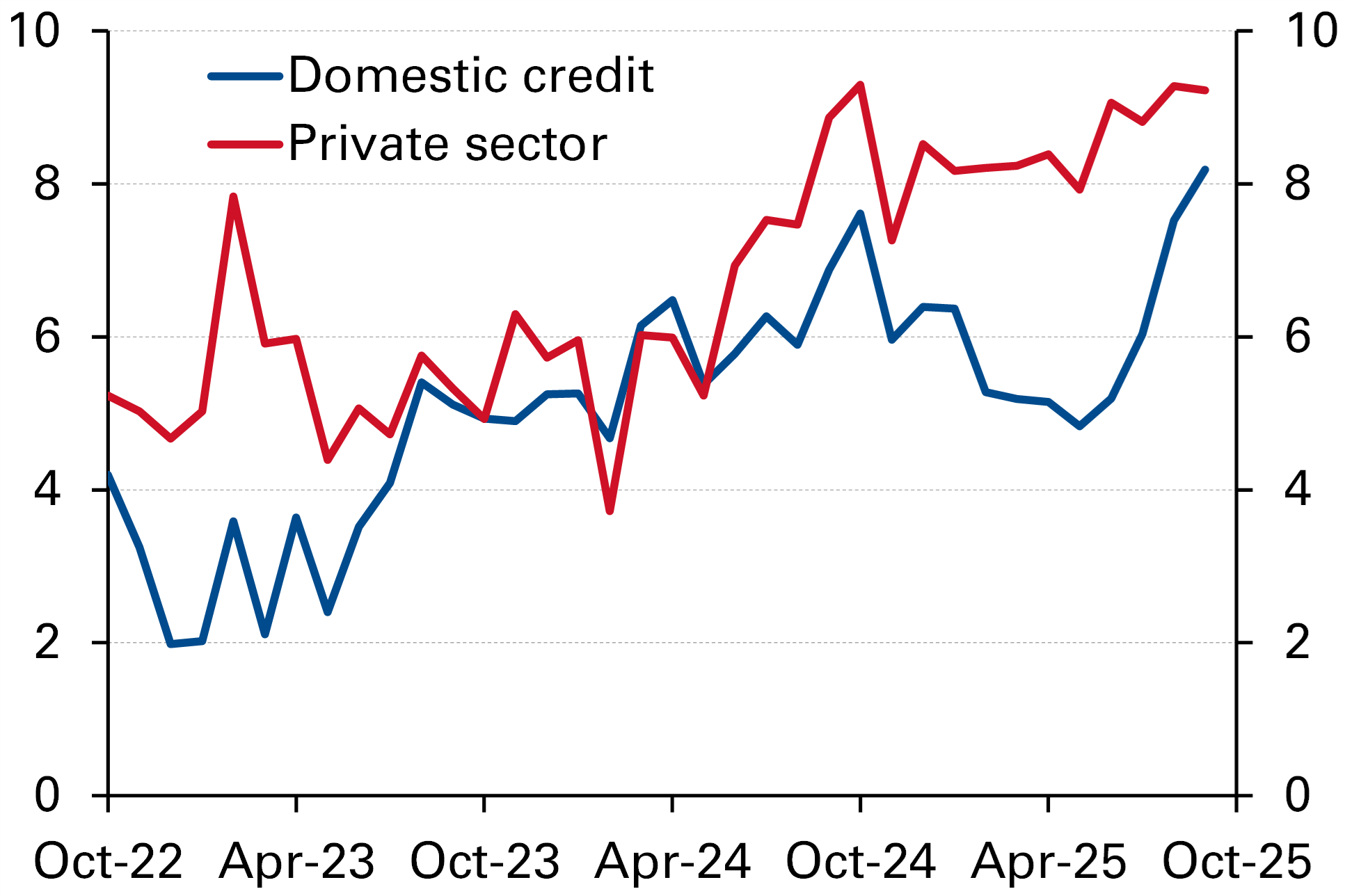
UAE: Domestic credit growth hits a decade high in September. Domestic credit growth surged for the fourth consecutive month, to 8.2% y/y in September, its fastest pace in a decade and up from 7.5% in August. The acceleration was driven largely by a sharp rebound in public sector credit, which grew 5.2% y/y, nearly doubling from 2.8% the previous month. Meanwhile, private sector credit, accounting for 73% of total lending, eased slightly to 9.2% y/y from 9.3% in August. The slowdown reflected softer growth in personal credit (15.7% y/y versus 16.6% in August), though lending to businesses and industry provided some support (5.7% y/y versus 5.4%). On the funding side, resident deposits rose 13.5% y/y, marginally below August’s 13.6%, as private sector deposit growth moderated (16.3% versus 16.5%). The year-to-date trends remain robust with domestic credit up by 9.6% in September, compared with 7% in the same period of 2024, while deposits climbed 11.1%, versus 9.8% a year earlier. The strong credit momentum, coupled with a healthy project pipeline and increased public spending, is expected to underpin non-oil GDP growth of 4.8% in 2025, reinforcing the UAE’s economic resilience. Meanwhile, UAE President Sheikh Mohamed bin Zayed announced a debt waiver of about AED475 million ($130mn) for 1,435 Emiratis through the defaulted debts settlement fund. In collaboration with 19 national banks and financial institutions, the initiative aims to ease the financial burden for low-income borrowers, retirees, senior citizens, and families of the deceased. Moreover, Sheikh Mohamed also approved Abu Dhabi’s third housing benefits package of 2025, valued at AED4 billion ($1.1bn) to benefit 3,310 citizens, which includes housing loans (AED2.3bn for 1,768 citizens), housing grants (AED1.5bn) for readily built homes, and AED208 million of loan reductions under the Emirati family growth program. These measures bring total disbursed housing benefits in 2025 to around AED15.4 billion, supporting a total of 10,718 citizens.
Bahrain: Inflation holds near zero in October and remains the lowest in the Gulf region. Bahrain’s inflation rate remained virtually unchanged in October 2025 at 0.1% y/y (0% m/m), which is the lowest in the GCC and among the lowest globally. Price stability was supported by declines across seven out of twelve CPI components, effectively offsetting increases in other categories. Notable price declines were observed in the food & non-alcoholic beverage (-1.5% y/y; -0.8% m/m), clothing & footwear (-2.9% y/y; -2.1% m/m), and housing & energy (-1.6% y/y; -0.3% m/m) categories. These reductions helped ease pressure on the headline index for the second consecutive month. Meanwhile, other sectors, such as transportation (+2.3% y/y; +1.5% m/m) and restaurants & hotels (+2.2% y/y; +0.8% m/m) recorded only modest increases that were insufficient to shift the overall index upwards.
China: PMIs in November signal ongoing industrial and services sector weakness. The NBS manufacturing PMI inched up to 49.2 in November from 49.0 in October but remained in contraction territory for the eighth consecutive month, reflecting persistent weakness in factory output. Meanwhile, the non-manufacturing PMI slipped below the 50-no change level in November and into contraction territory at 49.5 (50.1 in October) for the first time in nearly three years. This indicates that activity in both the services and construction sub-components is contracting. The general PMI slipped to 49.7 in November from 50.0 in October, its lowest level since late 2022, suggesting private-sector business conditions are broadly deteriorating. Taken together, these indicators point to renewed softness across China’s economy, reinforcing the view that easing measures by policymakers may be needed to bolster growth in the coming months. However, the “around 5%” growth target for 2025 is still within reach, indicating that stimulus measures are not guaranteed.
Japan: Tokyo inflation ticks down as retail sales and industrial production beat expectations. Tokyo’s consumer price inflation ticked down to 2.7% y/y in November, matching consensus estimates and falling below October’s 2.8% print. Meanwhile, core inflation (excluding fresh food) was steady at 2.8% y/y (versus expectations of 2.7%) as electricity prices were higher than expected. Elsewhere, October’s retail sales growth rose to a four-month high of 1.7% y/y (0.2% in September), easily beating forecasts while industrial production also came higher than expected at 1.4% m/m, though slowing from 2.6% in September. Finally, prime minister Takaichi’s cabinet approved a ¥18.3 trillion ($117 billion) supplementary budget on Friday, with most of the package expected to be financed through new debt issuance.