
 +965 2292 4888


Daily Economic Update
05.07.2026
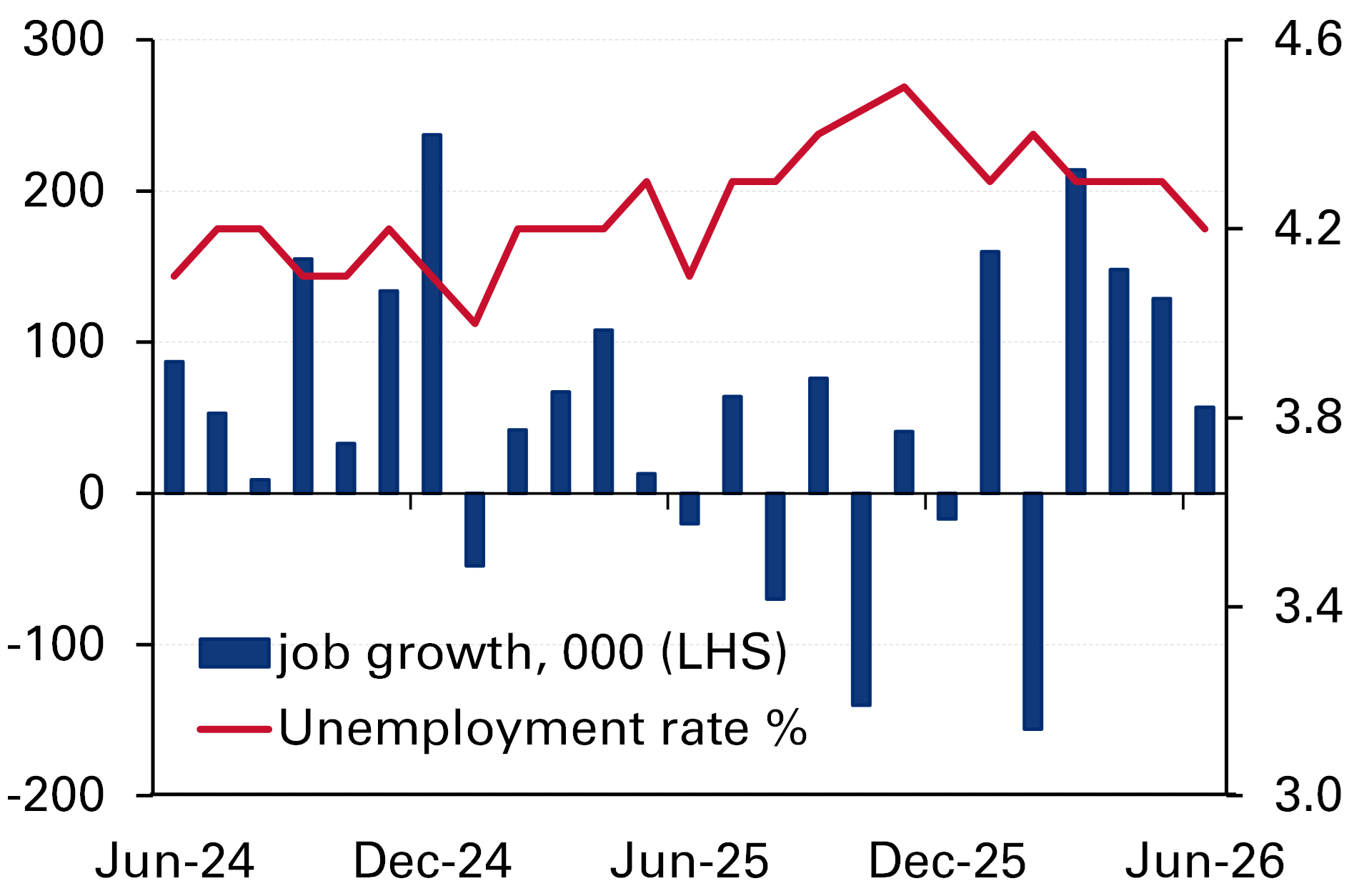
US: Job growth weaker than expected in June with lower participation pulling down the unemployment rate. Non-farm payrolls rose by 57K in June, much lower than expected (+110K), and April-May’s increase revised lower by a total of 74K. This puts the three-month moving average job growth at a still decent 111K per month. The weaker-than-expected job growth in June was mainly driven by a sharp fall (-61K) in leisure and hospitality jobs, reversing a solid increase in May. The healthcare and social assistance sectors continued to be primary drivers of job growth, adding around 47K jobs while professional and business services added 36K jobs. The unemployment rate fell to a lower-than-expected 4.2% in June (4.3% in May), a 12-month low, but for the wrong reasons given that it was driven by a sharp fall in the participation rate, which tumbled to 61.5% (61.8% in May), the lowest level since March 2021. Average hourly earnings increased by 0.3% m/m, resulting in 3.5% y/y growth (+3.4% in May), in line with expectations. While job growth in June was weaker than expected and sharply below the average for March-April-May (+164K per month), that is only one month and hence, too early to conclude that the labor market is facing renewed headwinds. Separately, initial (week ending 27 June) and continuing jobless claims (week ending 20 June) remained broadly flat, indicating that the US labor market continues to operate in a “low firing” mode.
Japan: Final Shunto results confirm 5% pay rise for a third straight year. The final results of Japan’s annual wage negotiations (Shunto) confirmed an average pay increase of 5% this year, according to the country’s largest labor union federation. While the outcome was slightly below last year’s 5.25% increase, it marked the third consecutive year of wage growth exceeding 5%, underscoring the continued strength of wage momentum amid efforts to support household incomes and sustain inflation. The sustained pace of wage growth is likely to support the Bank of Japan’s rate hike path, with the futures’ market indicting one more 25bp increase before the end of the year.
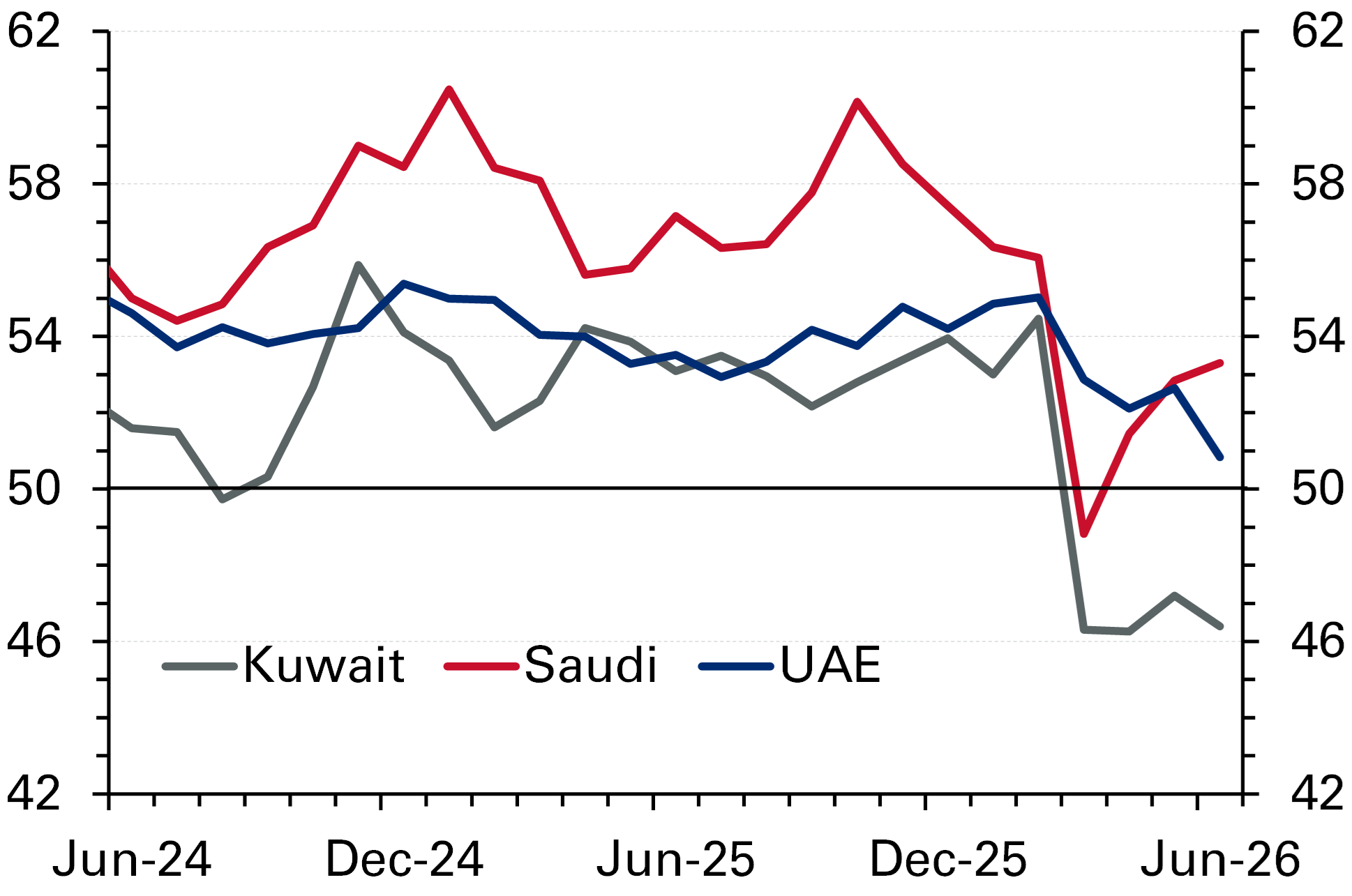
Kuwait: Non-oil PMI contracted in June. The non-oil private sector saw the fourth consecutive month of contraction in June, with the PMI falling to 46.4 from 47.2 in May, reflecting weaker business conditions amid the ongoing geopolitical tensions, rising costs, and subdued demand. New orders, output, employment, and purchasing activity all declined, while export orders recorded one of the sharpest falls since the survey began due to geopolitical tensions and logistical disruptions. In response to lower workloads, firms continued to reduce employment, purchasing activity, and inventories, with the latter falling at a record pace. Meanwhile, higher electricity, transportation, and marketing costs pushed input prices higher, prompting firms to raise selling prices at the fastest pace since September 2021. Although supplier delivery times improved, business sentiment remained cautious as companies continued to face uncertainty, rising costs, and challenging market conditions.
Saudi Arabia: Business activity strengthens in June as domestic demand rebounds. Saudi Arabia’s non-oil private sector gained further momentum in June, supported by stronger domestic demand and improving business confidence, despite continued weakness in export markets and elevated cost pressures. The Purchasing Managers’ Index (PMI) rose to 53.3 in June from 52.8 in May, its highest level in four months, signaling a solid expansion in business activity. The improvement was driven by stronger new orders and higher output, as businesses reported a recovery in investor sentiment and domestic spending following the easing of regional tensions. The recovery, however, remained largely domestic. Export orders contracted for the fourth consecutive month, highlighting that external demand is yet to fully recover despite improving conditions at home. Businesses also faced rising input costs, reflecting continued inflationary pressures, although firms remained increasingly optimistic about the months ahead. Business confidence climbed to its highest level since January, supported by expectations of stronger domestic demand, ongoing government investment, and continued progress under Vision 2030. June’s PMI suggests that Saudi Arabia’s non-oil economy is regaining momentum after the disruption caused by the regional conflict. While export demand remains weak and cost pressures persist, stronger domestic activity and improving business confidence point to a more resilient second half of 2026 for the non-oil economy.
UAE: PMI falls to a five-year low as firms cut jobs and margins come under pressure. The PMI fell to 50.8 in June from 52.6 in May, its lowest reading since February 2021. While the index remains above the neutral benchmark, the latest reading points to a significant loss of momentum amid the continued fallout from regional geopolitical tensions, softer tourism activity, and cautious spending. Among the key sub-components, output weakened to its lowest level in five years, while new orders improved slightly to reach a three-month high, though remaining well below historical averages. External demand continued to underperform, with new export orders contracting for a third consecutive month, marking the first sustained quarterly decline in export business since 2016. The most notable deterioration was in the labor market, with employment falling below 50 for the first time in over four years as firms responded to weaker demand and tighter margins. On the price front, input costs remained elevated due to higher transport costs and commodity prices, although inflation eased to a four-month low. In contrast, output prices rose only modestly after declining in May, suggesting firms continued to absorb a large share of cost increases. Supply-chain conditions improved as shipping disruptions eased while purchasing activity rebounded as firms restocked and built precautionary inventories. Meanwhile, the Dubai PMI fell to 50.7 in June from 52.0 in May, its lowest level since January 2021, as demand growth softened and employment declined at the fastest pace in more than five years.