
 +965 2292 4888


Daily Economic Update
18.10.2026
US: Warsh avoids offering clues about the near-term policy rate path; AI and jobs taskforce to hold hearing next month. Fed Chair Warsh, in a discussion at the IMF meetings on Friday, stated that “the world has broadly conformed with our expectations” over the past month and he wouldn’t “prejudge [policy] meetings”, reiterating his view about not providing any forward guidance. Though he avoided offering clues about the outlook for the FOMC’s October 27-28 meeting, the market further trimmed the probability of a rate hike next week to 15% from around 27% prior to his comments. Over the past few weeks, several key Fed officials have sounded wary of back-to-back rate increases after September’s hike, seeing no such urgency. Separately, Warsh expressed his optimism about AI-driven productivity gains being hugely consequential but acknowledged that the path will be “very bumpy”. He also mentioned that his taskforce on AI and jobs, one of the five taskforces he constituted on various topics to seek recommendations on improving the Fed’s policy frameworks, will hold a field hearing on November 16.
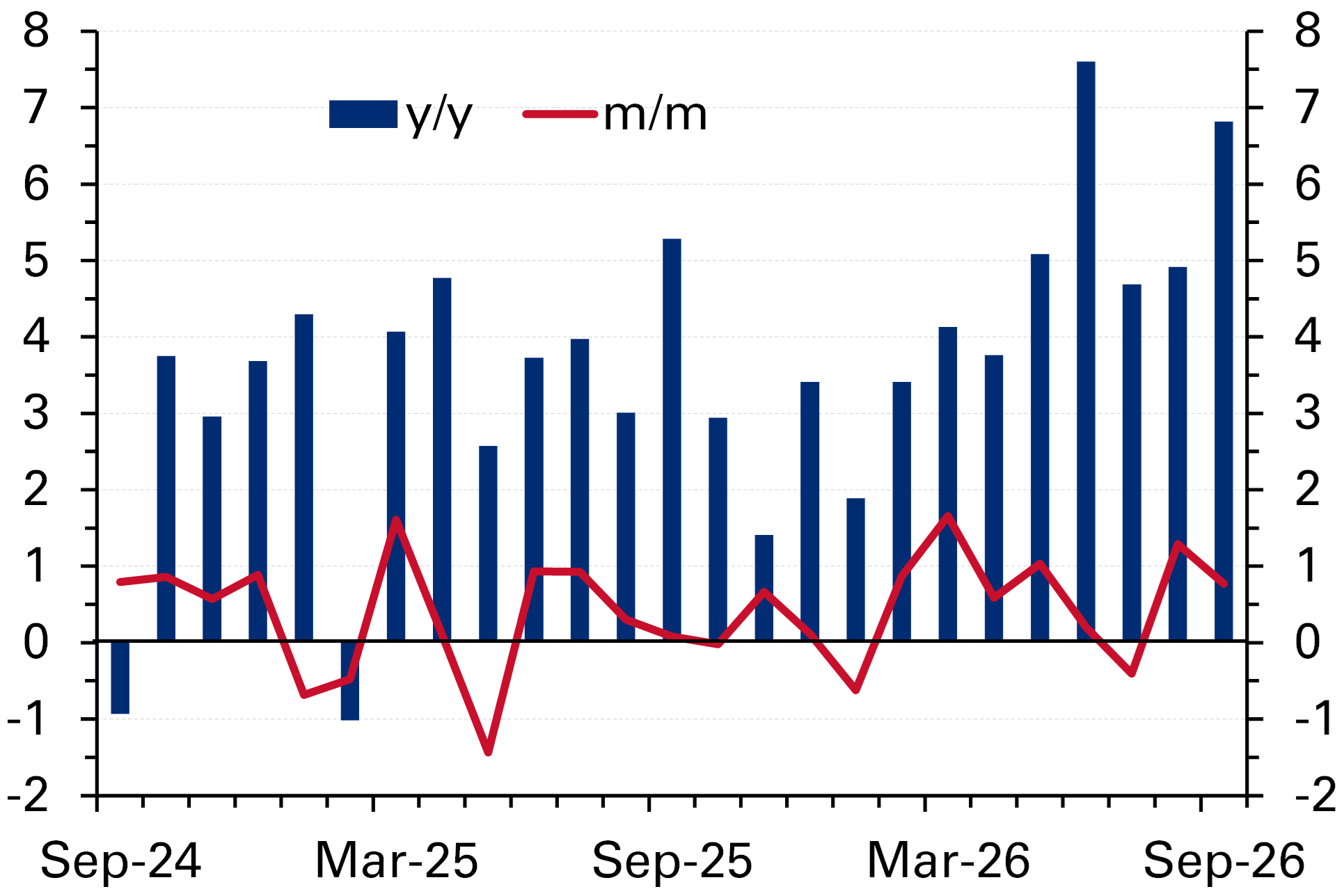
US: Retail sales growth resilient, PPI inflation much higher than expected, fiscal deficit rises to around 6% of GDP. Retail sales growth in September eased to 0.8% m/m (6.8% y/y) from an upwardly revised +1.3% (4.9% y/y) in August, easily exceeding the 0.3% consensus forecast. Growth was mainly driven by surging receipts at gasoline stations (partly reflecting higher fuel prices) and rising food services spending. A narrow measure of sales (excluding auto, gasoline, building materials, and food services) rose by 0.1% after an outsized 1.2% increase in August. Retail sales have remained resilient, absorbing the shocks from higher energy prices and supporting the broader economy. Meanwhile, signaling more consumer price pressures ahead, September PPI inflation for final demand came in much hotter than expected, accelerating to 6.3% y/y (1.3% m/m) from August’s 5.6%, with the core rate also rising to 5% (0.7% m/m) from an upwardly revised 4.8%. Reflecting the impact of the renewed surge in energy costs, the energy component climbed 10.8% m/m, while transportation and warehousing services costs jumped 3.4% following August’s 2.2% increase. Finally, the US fiscal deficit in FY2025-26 (ending September) widened to $2 trillion (+12% y/y), reaching around 6% of estimated GDP versus 5.8% the previous fiscal year. Total spending rose by 6%, with net interest expense increasing by 8%, while revenue grew at a much slower rate of 3%.
UK: GDP in August rises, beating expectations and keeping economic resilience intact. UK GDP in August rose 0.1% m/m following solid growth of 0.4% m/m each in June and July, and against the consensus forecast of a 0.1% drop. On an annual basis, GDP grew 2.1% from July’s upwardly revised increase of 1.8%. August’s rise also lifted growth in the three months through August to 0.7%, accelerating from 0.5% in the May-July period. The dominant services sector remained the key growth driver during the three months ending August, rising 0.9% (0.7% in May-July), while both production and output sustained falls of 0.2% and 1%, respectively. Within services, the largest positive contribution came from computer programming and related services, which rose 5% over the last three months, suggesting continued benefits from AI-driven activities. The UK economy has repeatedly defied slowdown predictions in recent months, absorbing the shocks from higher energy prices and supply chain disruptions. The IMF, in its latest World Economic Outlook, lifted its UK GDP growth forecast for 2026 to 1.3% from 1% in July, but slightly lowered 2027 growth to 1.2% from 1.3%. Still, headwinds remain from a further anticipated pickup in inflation, the potential for higher BoE policy interest rates and uncertainty surrounding the Autumn budget later this month.
Eurozone: Industrial production down for the third straight month in August. Industrial production in the Eurozone fell 0.5% m/m in August following a downwardly-revised 0.3% drop in July, marking a third consecutive monthly decline and undershooting expectations. The decline was driven mainly by lower production of non-durable consumer goods (-2.7% m/m in August), intermediate goods (-0.8%) and energy (-0.6%), while capital goods output recorded a modest increase. Meanwhile, on an annual basis, output contracted 1.1% in August (-0.3% in July), the steepest drop since March. So far this year, industrial production has dropped y/y every month, except for a slight increase in April. The latest data suggest that industrial momentum remains subdued, underscoring the challenges facing the euro area's industrial sector amid elevated energy costs, tighter financial conditions, and ongoing global uncertainty.
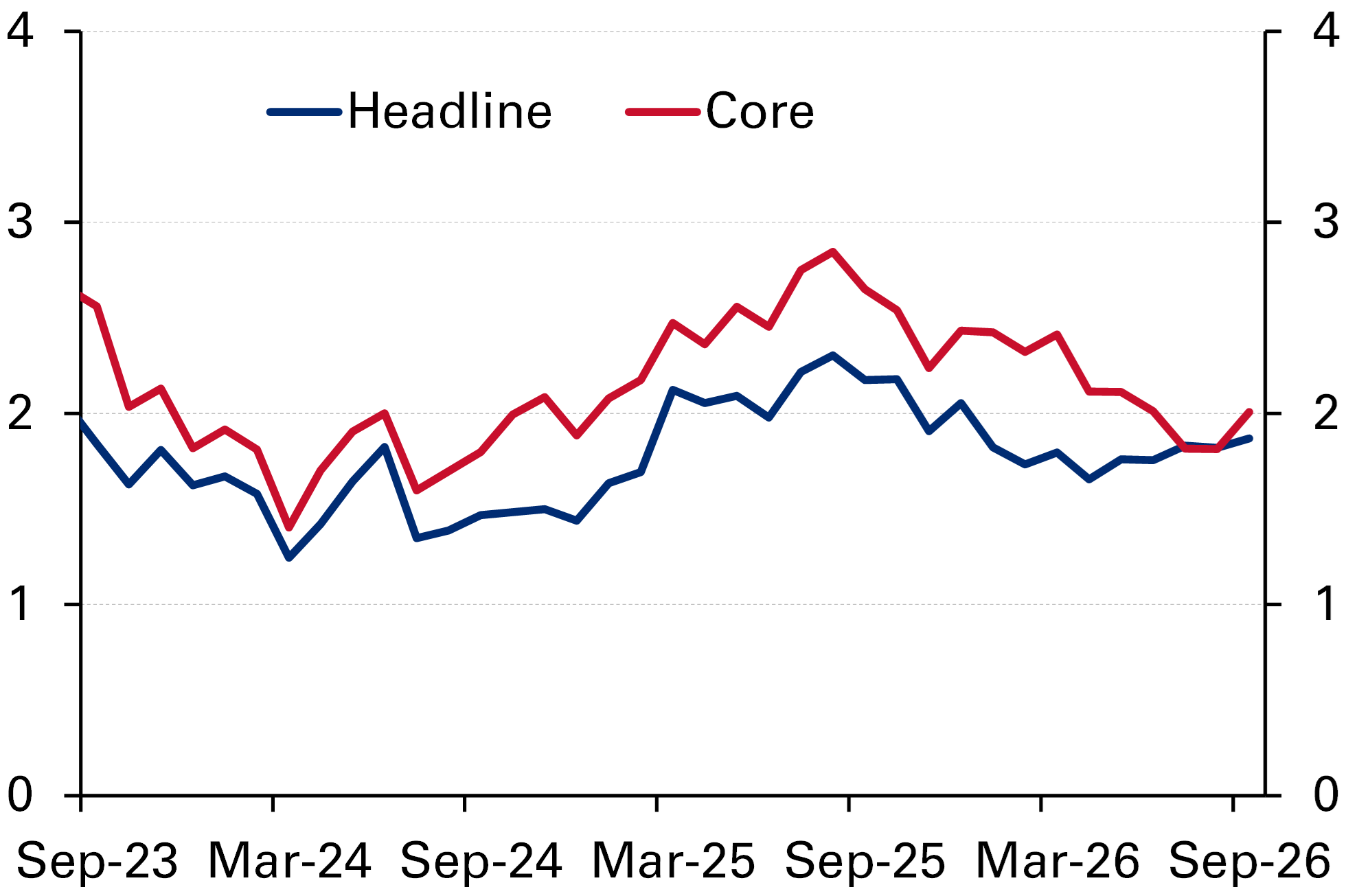
Saudi Arabia: CPI inflation edges up slightly in September. CPI inflation rose to 1.9% y/y in September, from 1.8% in each of the previous four months, while core inflation increased to 2.0% from 1.8% in August, according to GASTAT. The latest figures suggest that consumer prices have remained relatively stable so far, with no clear sign of inflationary pressures from the recent Houthi escalation. Housing and utilities remained the main contributors to inflation, although price pressures eased. Utilities inflation slowed to 3.6% y/y from 3.9% in August and 4.2% in July, contributing 0.7 percentage points to headline inflation. Actual rents rose by 3.5%, down from 3.9% in August and well below the 6.7% recorded in September 2025. Prices of personal items rose by 3.3%, largely reflecting a 12.9% increase in jewellery and watches. Recreation, sports, and culture prices rose by 2.5%, driven by a 4.5% increase in holiday-package prices, while transport prices increased by 2.3%. Food and beverage inflation remained unchanged at 1.4%. Meanwhile, furnishings, household equipment, and routine home maintenance prices fell by 0.5% y/y, while clothing and footwear prices declined by 0.4%. These were the only consumer categories to record annual price declines.
Oman: CPI inflation eases to 3.2% in September. Consumer price inflation eased to 3.2% y/y in September from 3.4% the previous month thanks mainly to a notable deceleration in transportation costs (4.8% from 8.5% previously), and miscellaneous goods and services inflation (4.8% from 8.5%). Food and beverage inflation remained the main inflationary impulse, accelerating to a multi-year high of 8% y/y (from 7% in September), led by significant rises in vegetable (20%), fruit (16.3%), and meat prices (10.3%). Inflation in other items was mostly unchanged. Inflation varied across governorates, with Al Dhahirah recording the highest rate at 4.4% and Dhofar the lowest at 2.1%, while Muscat registered 3.3%. For the first nine months of 2026, Oman’s average inflation rate stood at 3.0%, indicating continued but manageable price pressures across the economy.
Egypt: Moody’s upgrades credit rating to B3 with positive outlook. Moody’s upgraded Egypt’s local and foreign currency ratings to B3 from Caa1 on Friday, maintaining a positive outlook. The agency attributed the upgrade to several years of fiscal consolidation and structural reforms, noting that the shift to a flexible exchange rate and tighter monetary policy has helped the economy withstand higher oil prices and regional uncertainty. Moody’s expects fiscal discipline to continue after the IMF program ends in December. The upgrade brings Moody’s rating closer to those of S&P and Fitch, which affirmed Egypt’s B rating earlier this month, both with stable outlooks. Moody’s is now the only agency among the three with a positive outlook on Egypt. A further upgrade could follow if public debt and interest costs decline faster than expected, supported by stronger economic growth, improved revenue collection, and lower domestic borrowing costs as inflation eases.