
 +965 2292 4888


Daily Economic Update
23.06.2026
UK: PM Starmer resigns after mounting pressure from Labor MPs to step down. As was widely speculated, Keir Starmer resigned as UK PM and as leader of the Labor party yesterday after spending two years in office. Dissent within the Labor Party had steadily intensified over the appointment of now-sacked Peter Mandelson as Ambassador to the US, who had links with convicted offender Jeffery Epstein, and a series of policy missteps as well as Labor’s poor performance in recent local elections. The final blow came after his main would-be challenger, ex-Mayor of Great Manchester, Andy Burnham, won an MP byelection decisively last week. Nominations in a race to be the new Labor leader would open on July 9 and close by July 16, but the contest may not be needed, and Burnham – who has emerged as the likely successor – could be appointed as the next PM soon after. Financial markets’ reaction was relatively uneventful as Starmer’s departure was anticipated, but attention will be on choices for the Chancellor of the Exchequer’s role and what that could mean for fiscal policy especially. In all cases, the incoming PM and Chancellor will inherit a sustained poor fiscal situation, a slow-growing economy, and a volatile geopolitical climate, which would make any bold policy moves complicated to deliver. An additional issue is whether the new leader would gamble on calling an early general election to try and secure a fresh political mandate.
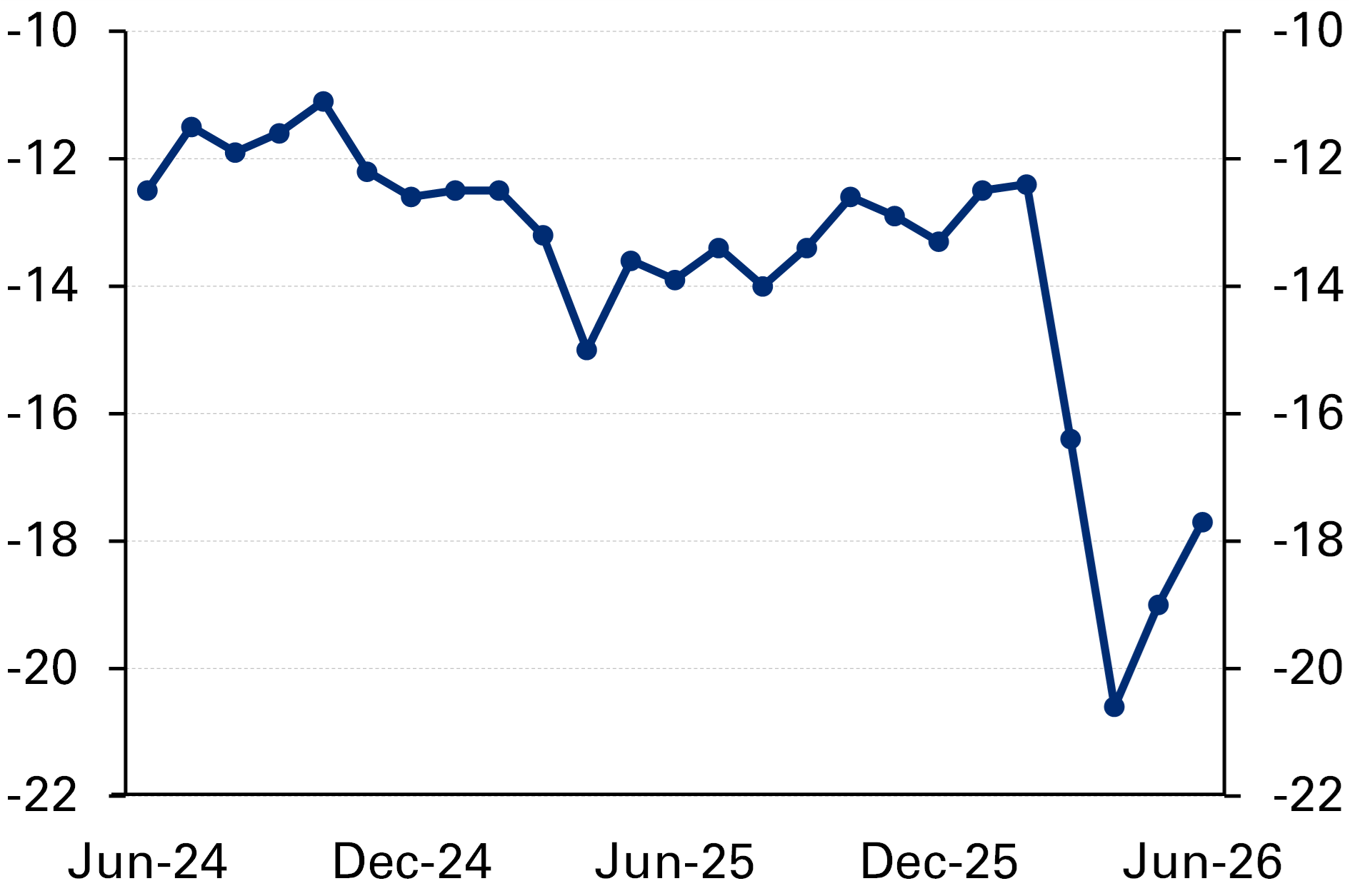
Eurozone: Consumer confidence improves in June, but remains well below pre-war levels. Eurozone flash consumer confidence improved in June, rising to -17.7 from -19.0 in May, marking a second consecutive monthly gain. While the rebound does signal a gradual easing in household pessimism, the index remains well below pre-war levels (-12.4 in February) and its long-term average, underscoring still-fragile sentiment amid persistent concerns around purchasing power and macro uncertainty. From a policy perspective, the still deeply negative level continues to point to cautious household behavior, implying limited support for near-term consumption-led growth and reinforcing the case for a data-dependent ECB stance as underlying demand remains subdued.
Japan: PMIs improve in June despite continuing headwinds related to the Middle East war. Flash estimates for Japan’s S&P Global composite PMI rose to 52.5 in June (51.1 in May), marking a three-month high and the 15th consecutive month in the above-50 expansion zone. Similarly, the services PMI hit a three-month high of 51.8 (50.0 in May), while the manufacturing PMI improved to 54.9 (beating consensus estimates of 54.5) as both sectors experienced a sharp increase in new orders, partially driven by stockpiling amid supply chain concerns. Input costs accelerated at the fastest pace since July 2022, with fuel, energy and raw materials leading the rise. Companies reported raising output prices again, with the rate of inflation only slightly easing from May’s survey record high.
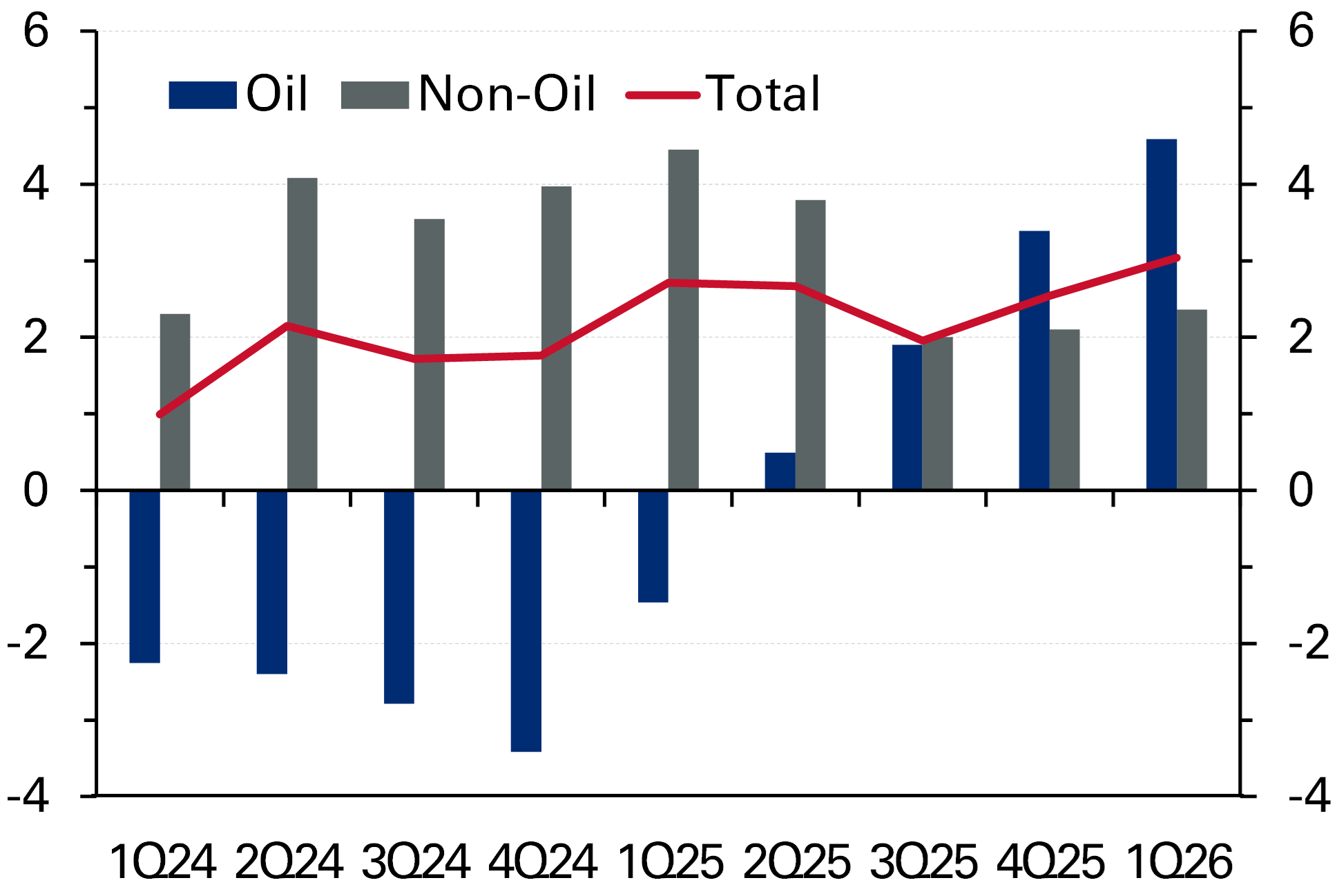
Oman: The economy logs faster growth in Q1 amid softer war-related disruptions. The economy grew by 3.0% y/y in the first quarter of the year, up from 2.5% in Q425, the fastest pace in three years, according to official data. The Q1 reading was driven mostly by the oil sector where growth reached a three-year high (4.6%), benefitting from higher OPEC+ production quotas. Non-oil sector growth also accelerated to the strongest level (2.4%) since Q225, supported by faster expansion in most sectors, notably in transport (3.1%), telecom (8.3%), health (5.1%), and financial services and insurance sectors (9.6%). In contrast, negative growth was registered in the manufacturing (-3.1%) and construction sectors. On a quarterly basis, the economy contracted by 6% q/q, affected by seasonal weakness in the Q1 period and base effects from strong Q425 rather than war-related factors. We expect Oman to lead GCC economic growth this year given its relatively minimal exposure to conflict disruptions compared to its more vulnerable GCC peers.
Saudi Arabia: Construction cost inflation reaches a record high in May. Construction costs rose to their highest level on record in May, reflecting continued pressure on contractors as housing projects accelerate and large-scale Vision 2030 developments maintain strong momentum. According to GASTAT, the Construction Cost Index (CCI) increased by 2.6% y/y in May, the fastest annual rise since the series began in January 2024. On a monthly basis, costs rose by 0.2%, indicating that price pressures remain elevated, although the pace of increase has moderated from previous months. Construction costs in the residential sector rose 2.5% y/y, while those in the non-residential segment recorded their strongest increase on record (+3%). These increases reflect robust demand from infrastructure projects, commercial developments, and industrial facilities that continue to form a core part of the Kingdom’s diversification agenda, driving construction activities. With industry estimates suggesting that annual contracting activity could approach SAR1tn between 2025 and 2030, the sector appears to be entering a prolonged growth phase. However, rising construction costs also underline challenges for developers and contractors. As project pipelines expand, maintaining profitability will increasingly depend on efficient cost management, labor productivity, and the ability to secure materials and equipment in a market experiencing one of the largest construction booms in the Kingdom’s history.
Egypt: Parliament approves FY26/27 budget amid calls for more realistic assumptions. The House of Representatives has given final approval to the government’s FY26/27 budget and economic development plan, following weeks of discussions and review by the Planning and Budget Committee. The approved budget targets EGP4tn in revenues including EGP3.5tn from taxes, EGP5.1tn in expenditures, a 5% primary surplus, and an overall fiscal deficit of 4.9% of GDP. However, lawmakers noted that the budget was originally drafted before the recent escalation of regional tensions and was based on assumptions of an exchange rate of EGP47/$ and an average oil price of $75/bbl, both of which may prove optimistic given current market conditions. During the discussions, parliament called for more realistic budget assumptions, stronger oversight of public finances, and greater transparency in future fiscal planning. Lawmakers also urged the government to improve tax administration, tighten controls on customs exemptions, accelerate the digitalization of the property tax system, and address loopholes in the public-sector wage framework. For its part, the Ministry of Finance reiterated its commitment to avoiding new taxes, instead focusing on broadening the tax base, improving compliance, and enhancing tax collection efficiency to support revenue growth. The budget reflects the government’s ongoing efforts to balance fiscal consolidation with social spending priorities, while navigating a challenging external environment marked by elevated energy prices and regional geopolitical uncertainties.