
 +965 2292 4888


Economic Insight
27.01.2026
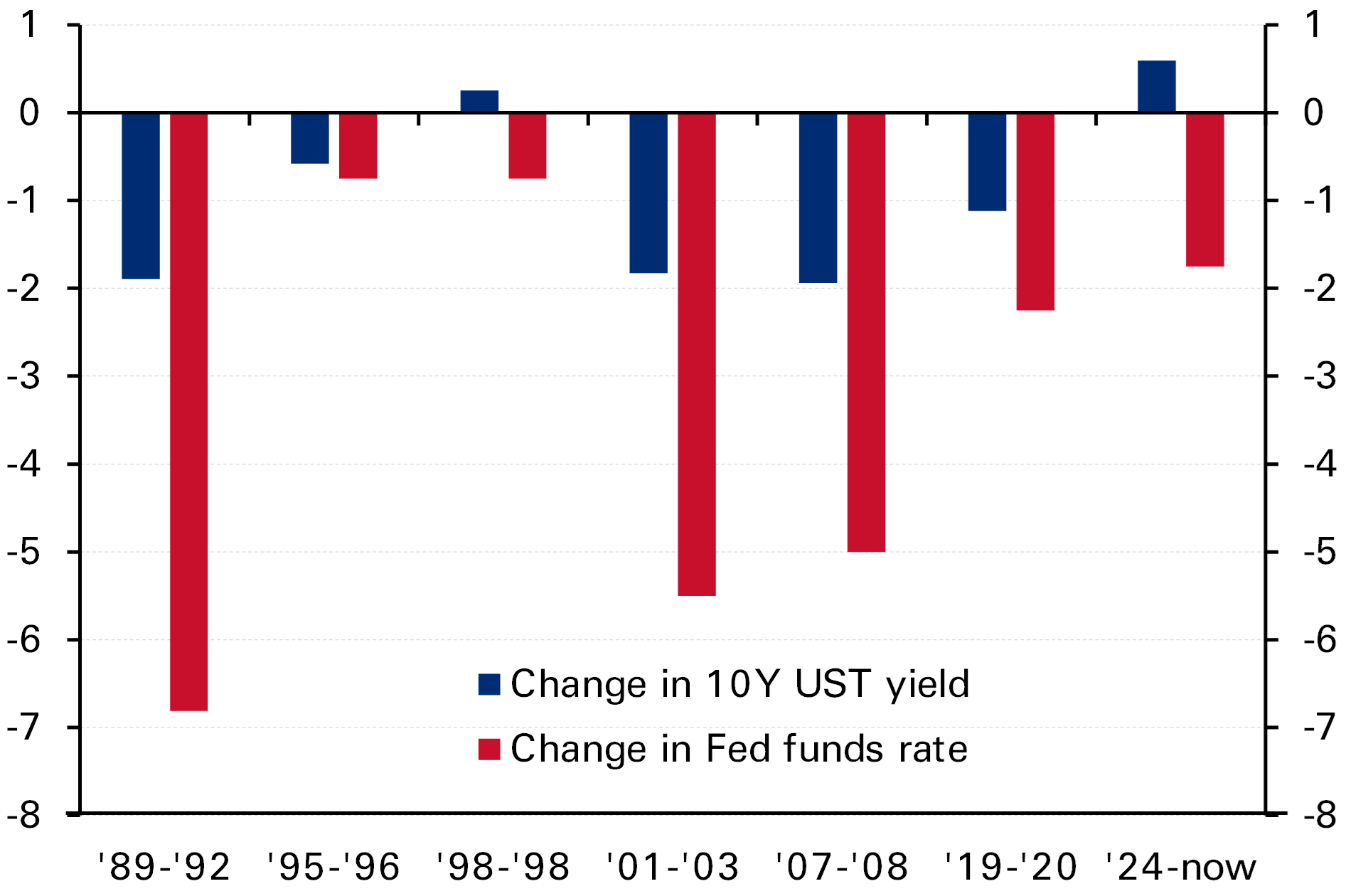
Long-term US Treasury (UST) bond yields and the Federal Funds Rate (FFR) have unusually diverged since the start of the current easing cycle in September 2024, with the 10Y yield up by around 60 bps while the FFR is down by 175 bps. This divergence likely reflects street expectations of ongoing above 2% target inflation, resilient economic growth that is even accelerating in 2026, and further deterioration in already-poor fiscal metrics. Given this backdrop, if the Fed still delivers additional easing, there is no guarantee whatsoever that bond yields will drop, and especially if that easing is judged by the market as being driven by a Fed that is prone to political pressure from the administration. If bond yields do not track the FFR lower, then the US administration will not get what it wants from that Fed easing, which are lower rates on business, consumer, and mortgage loans as well as lower interest payments on the ever-increasing debt. In addition, and irrespective of the specific macro outlook, bond yields will likely react sharply (widening the divergence with the FFR) to erratic economic and political decisions that lead to a significant rise in uncertainty, such as the reciprocal tariffs drama in April 2025 and the recent Greenland-related developments.
The rise in UST 10Y yield defied Fed easing on elevated inflation, resilient growth, and poor fiscal metrics
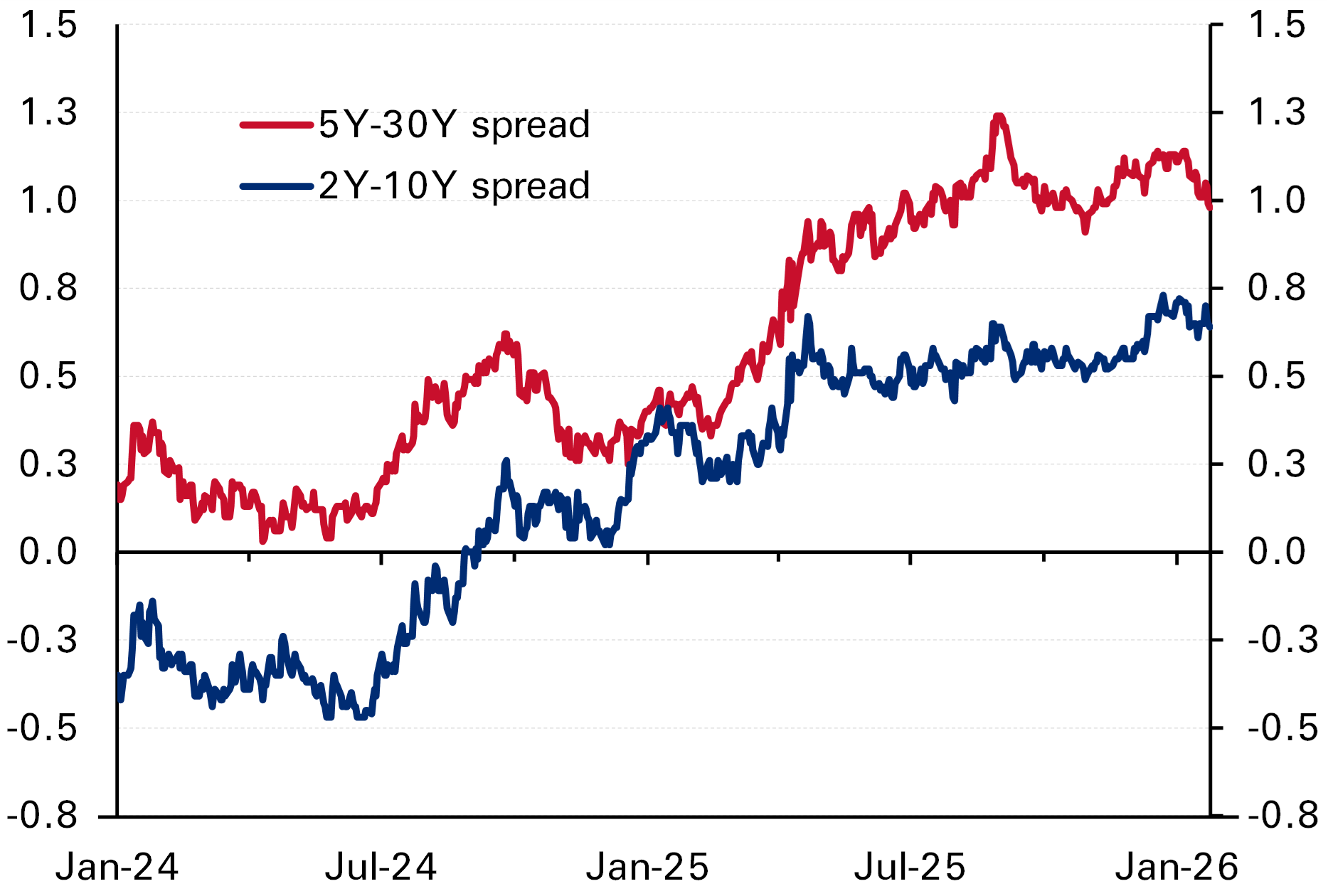
The Fed began cutting interest rates in September 2024, kicking off the current easing cycle, slashing the FFR by a cumulative 175 bps so far. However, on the contrary, yields on long-dated UST bonds have in fact increased since, with the 10Y yield rising by around 60 bps. With the exception of a minor divergence in the easing cycle in 1998 (when the Fed reduced the FFR by a smaller 75 bps), a divergence did not happen in any previous easing cycle since 1989. Since the first interest rate reduction in September 2024, the 2Y-10Y yield spread has widened from almost nil to around 65 bps now as investors demand a higher return for holding duration.
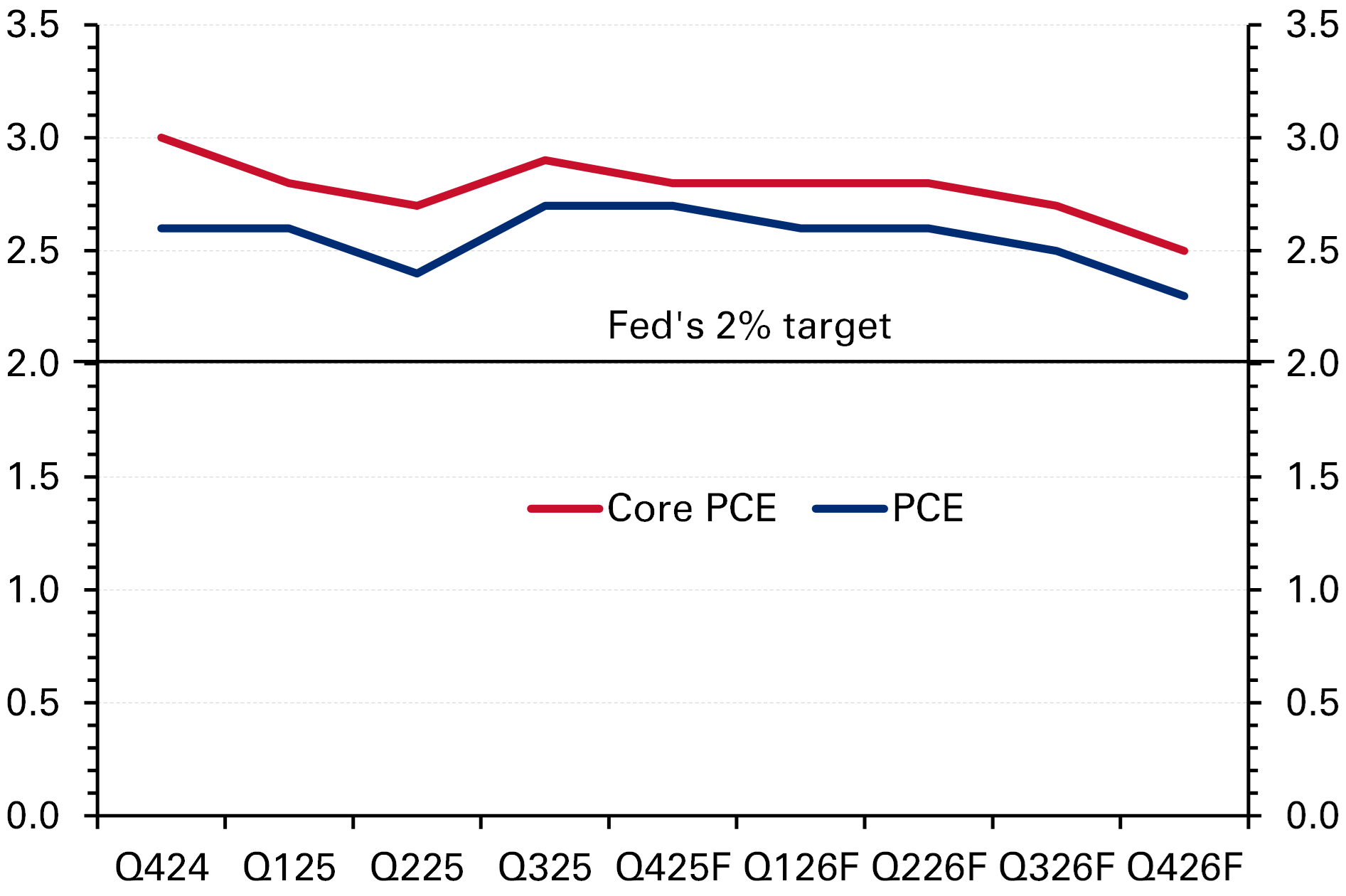
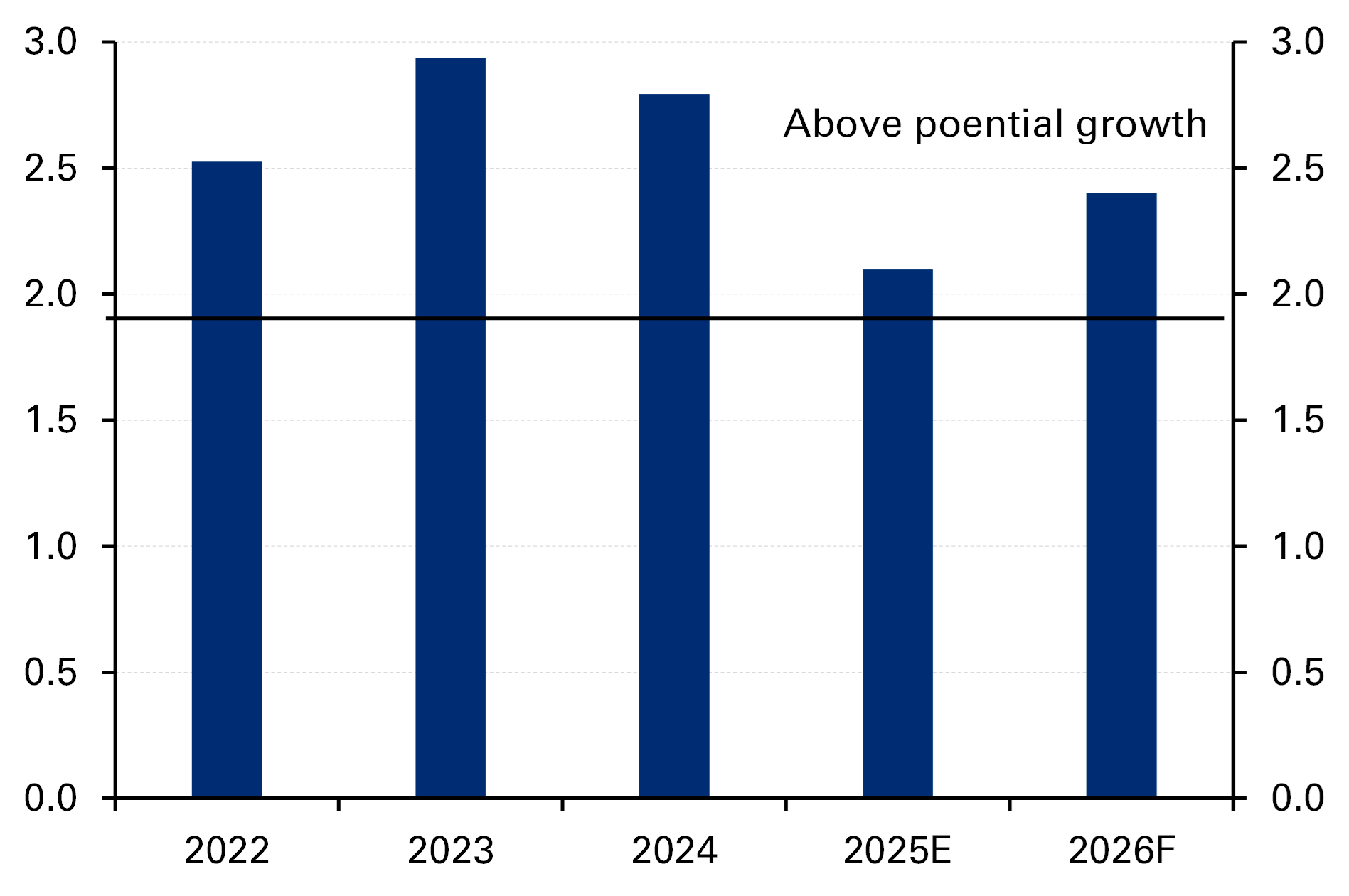
We think there are at least three major reasons that can explain this unusual divergence in the current easing cycle, 1) the outlook on inflation, which continues to be elevated and above target 2) resilient economic growth, which is seen even accelerating in 2026 and 3) already-poor fiscal metrics, which are seen deteriorating further over the medium-to-long-term. On inflation, the extensive tariffs imposed last year have contributed to inflation remaining firmly above the Fed’s 2% target as can be seen in price levels of many CPI components, and as per several independent studies as well. Looking ahead, even if the peak tariff passthrough is behind us, consensus estimates still indicate that inflation will remain above target in 2026 (for the sixth straight year) while the FOMC’s latest projections indicate that inflation will revert to the bank’s target only by 2028. On economic growth, recession predictions continued to be defied despite many headwinds such as higher tariffs, immigration crackdowns, a weakening labor market, and government policy uncertainty. As we enter 2026, with peak policy uncertainty behind us (notwithstanding the recent Greenland-developments and the upcoming Supreme Court ruling on tariffs), hiring activity should gradually pick up, underlining stabilizing if not improving labor market conditions. In addition, the fiscal boost from the One Big Beautiful Bill (OBBB) will further support consumer spending, a key source of economic resilience in 2025. Furthermore, AI-and-other-technology-linked spending is set to continue for now, keeping overall business investment strong. Along with ongoing expected labor productivity gains, this should keep US economic growth solid (at 2.4% in 2026 as per the IMF), and easily above potential growth, indicating that the economy does not need any monetary policy easing.
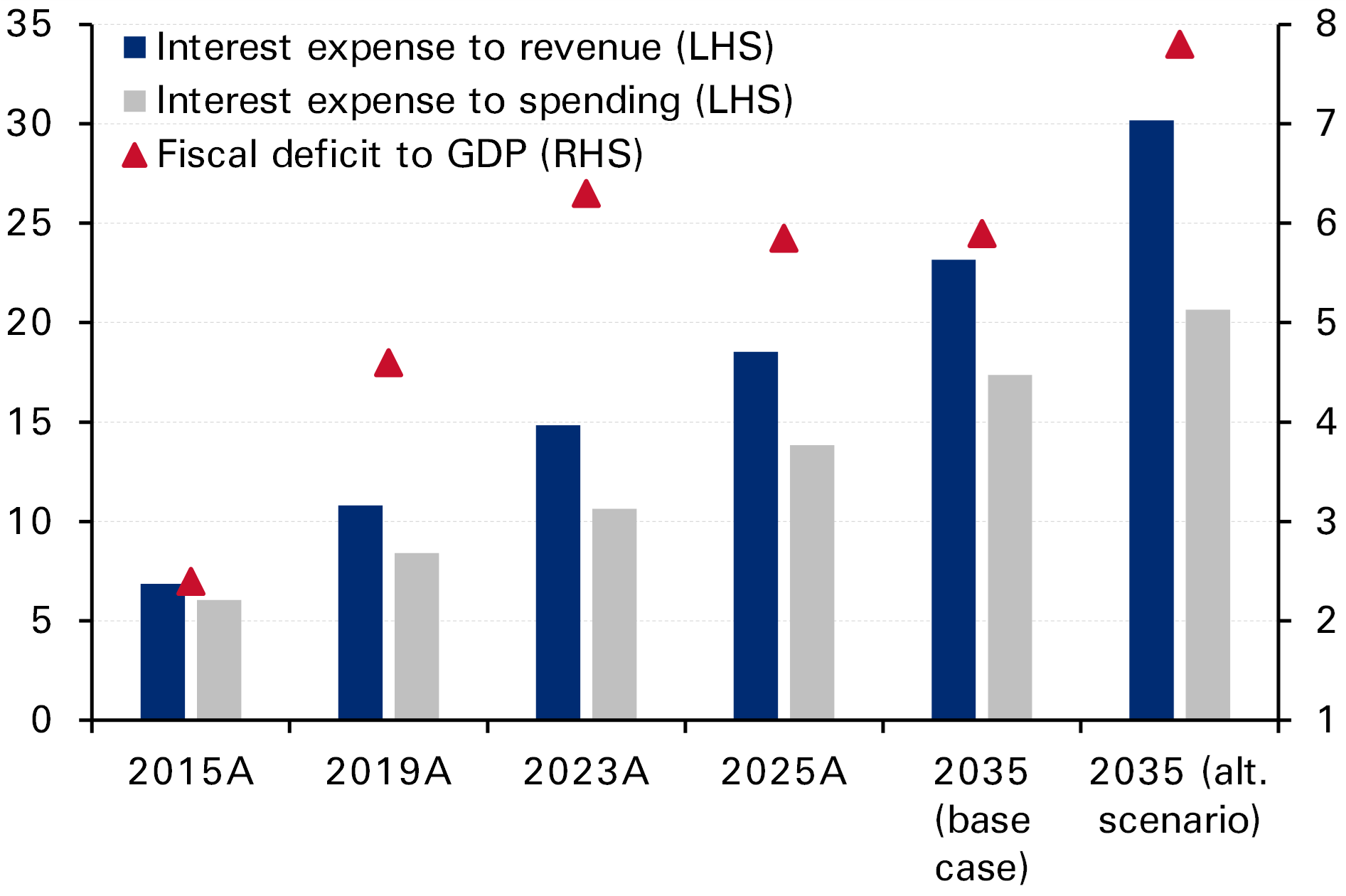
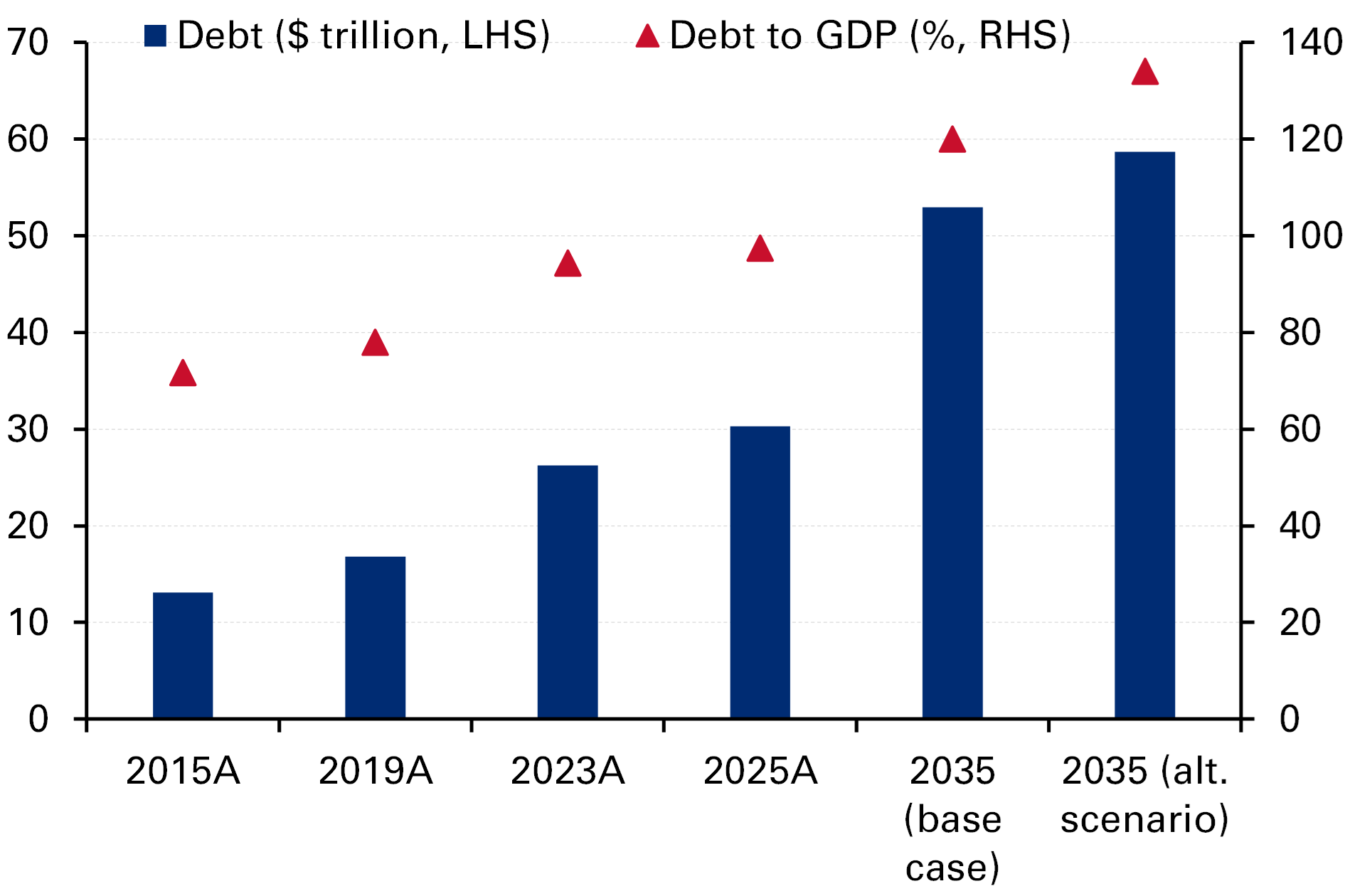
In terms of the fiscal situation, US government debt remains on an unsustainable trajectory, even before the passage of the OBBB last year. The OBBB extended the expiring tax cuts and enacted new tax breaks, worsening the debt trajectory further. The independent Committee for a Responsible Federal Budget (CRFB), in its base case, projects that the debt held by the public to GDP will increase to 118% by 2035 from close to 98% currently. The CRFB’s base case assumes that the current tax break provisions will expire as scheduled, which seems improbable under any future administration. Revenue from the higher tariffs, which stands at around $30bn per month is reflected in the base case. The fate of most of these tariffs continues to be with the Supreme Court; if the court strikes them down, the immediate fiscal situation will deteriorate sharply. However, the administration has vowed to rebuild the tariff wall through other mechanisms in case of a legal setback, reigniting uncertainty in the interim. The CRFB, in an alternate scenario of a permanent extension of tax cuts, the rollback of reciprocal tariffs, projects that debt will swell to 134% of GDP, with interest payments eating up a whopping 30% of revenues by 2035 compared with less than 19% currently. Furthermore, President Trump recently pushed for the defense budget to jump by more than an eye-popping 50% to $1.5 trillion in 2027. If that were to be approved, the deterioration in the fiscal metrics will accelerate even further, almost certainly pushing long-term bond yields higher.
In addition to the three main factors mentioned above, another factor that may have played a minor role in the divergence was the Fed’s QT program, which had commenced in 2022 but halted in early December 2025. While it has always been a tricky matter to quantify the impact of QT, and previously QE, the movement in UST yields since early December indicates that this factor likely played a very limited role, if at all, in that divergence.
Rate divergence may widen if growth outlook remains solid, Fed independence compromised, or Washington policy is erratic
If the outlook on inflation, jobs, and economic growth evolves as mentioned above, the Fed should see limited need, if at all, to cut interest rates further in 2026. If the Fed still delivers additional easing in such a resilient macro backdrop, there is no guarantee whatsoever that bond yields will drop. On the contrary, this may drive yields higher if, for example, that easing fuels a stock market melt-up amplifying the positive wealth effect and feeding the loop of solid consumer spending, elevated inflation, and robust economic growth. Or, if that easing is judged by the market as being driven by a Fed that is prone to political pressure from the administration, then it is very likely that the bond vigilantes will push bond yields higher. If bond yields do not track the FFR lower, then the US administration will not get it wants from that Fed easing, which are lower rates on business, consumer, and mortgage loans as well as lower interest payments on the ever-increasing debt.
In addition, some of the US administration’s erratic economic policies or geopolitical overreaches can lead to sudden spikes in bond yields (amplifying the divergence with the FFR) as seen in last April’s Liberation Day tariff episode or the recent Greenland-related issues. In April 2025, the 10Y bond yield jumped by almost 50 bps in just one week, while it rose by around 15 bps over a few days earlier this month following the Greenland-related geopolitical escalation. Hence, irrespective of the specific outlook for economic growth, inflation, and the fiscal situation, bond yields will likely react sharply to unhinged economic and political decisions that lead to a significant rise in uncertainty.