
 +965 2292 4888


Economic Insight
11.03.2026
With the end of Chair Powell’s term in May, the Fed is set to face challenging times given the US administration’s repeated attempts to influence monetary policy – even before additional complications stemming from the conflict with Iran and the impact on energy prices and inflation. Incoming Fed Chair Kevin Warsh – assuming he is confirmed by the Senate – will face two key challenges: the first is being able to rally FOMC members to agree with his policies, and second is his ability to build credibility with the markets. We think that his prior scathing criticism of the Fed, the fact that he is coming with a pre-set mandate to steeply cut rates, and his pledge for “regime change” at the Fed are matters that will not be helpful. Moreover, and likely more importantly, some of his monetary policy views may be starkly different than those of other FOMC members. For example, his desire to shrink the Fed’s balance sheet may prove very difficult not only to implement but also to build consensus around. Ultimately, his success will depend on how pragmatic he is going to be, how much he is willing to adjust some of his views, how good he will be in building FOMC consensus, and whether he will safeguard the Fed’s independence.
With the end of Chair Powell’s term in May, the Fed is set to face challenging times given the US administration’s repeated attempts to influence monetary policy. This can be seen in scathing criticism for not cutting interest rates, the launch of a criminal investigation into Powell, and an attempt to fire Governor Lisa Cook. The nomination of Kevin Warsh as the next Fed Chair amplifies the challenges facing the Fed. To start with, Warsh’s approval process in the Senate is on a bumpy path as a key Republican Senator (Thom Tillis) on the Senate Banking committee, whose vote is needed to advance the nomination, has vowed to block all Fed Chair confirmations (even confirmations of Fed Governors), until the criminal investigation case involving Powell is resolved.
Warsh’s key challenges are the need to rally FOMC members and build credibility with the markets
Assuming Warsh will get confirmed, he will face two key challenges in our opinion. First, is being able to rally the FOMC members to agree with his policies as he is only one vote out of 12 voting members. Second, is his ability to build credibility with the markets. Obviously, not faring well on the first challenge will almost certainly lead to failure in terms of the second challenge. In terms of the first challenge above, we believe the following matters will not be helpful. First, Warsh has, on several occasions, delivered scathing criticism of the Fed and FOMC members, stating one time that there is a need to “break some heads”. However, his track record does not necessarily give him much authority to deliver such remarks. For example, he had warned that the steep drop in interest rates after the Global Financial Crisis (GFC) risked igniting inflation, a prediction that turned out to be unfounded.
Second, Warsh is coming with a pre-set mandate to steeply cut rates, which is far from being the consensus view among current FOMC members. While some FOMC members until now still favor some additional easing conditional on the outlooks for inflation and the labor market, none, except maybe temporarily-appointed Stephen Miran, is for an additional steep drop in rates from here. If anything, the FOMC, in its most recent dot-plot (from December), narrowly saw just one rate cut by the end of 2026. Furthermore, the minutes of the January FOMC meeting even showed that some members are willing to entertain a hike in rates if inflation continues to be above target. It also remains to be seen to what degree the current energy price shock – which promises to push inflation up in the near term – affects appetite for rate cuts.
Third, Warsh has pledged for a “regime change” at the Fed, criticizing what he claims are a backward data-driven approach and outdated models, and he is against the forward guidance practice. In addition, he wants to revisit the 1951 Fed-Treasury accord, which had established the Fed’s independence in terms of conducting monetary policy. Depending upon the changes envisaged, it may be perceived that the Fed is ceding some of that independence to the Treasury. All of the above “regime” changes that are envisaged may face fierce resistance from FOMC members.
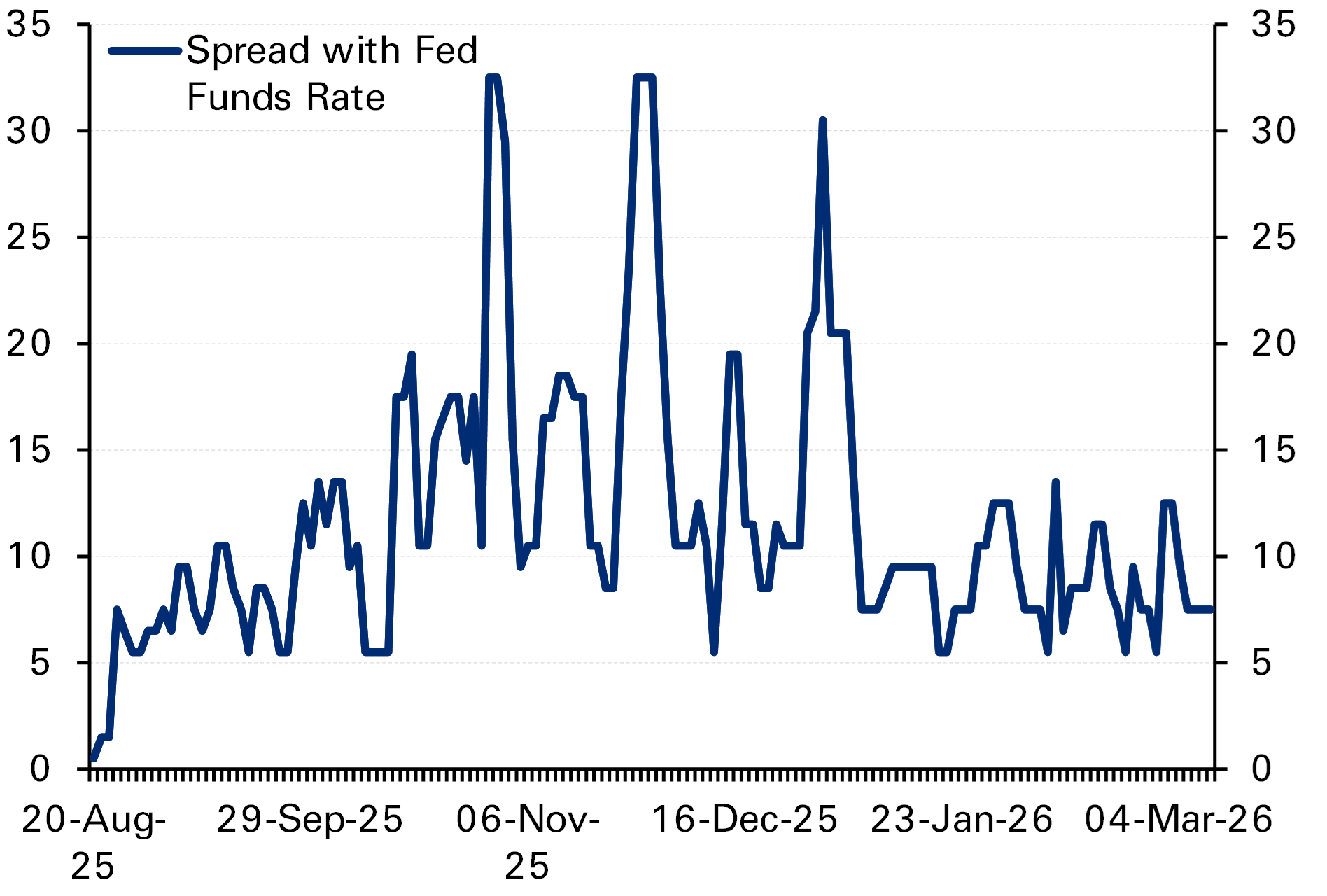
Fourth, on policy, potential disagreements with other FOMC members may be stark. Trimming the Fed’s balance sheet is a central idea of Warsh’s thinking. For many reasons, he believes that a smaller Fed balance sheet is needed. We note that the Fed gradually cut it assets over 2023-25 (by $2.2 trillion cumulatively) but was forced, shortly after stopping that quantitative tightening (QT) to start increasing the size of the balance sheet again by resuming T-bill purchases ($40 billion/month until April) when reserves dropped from “abundant” to “ample”, with signs of stress in the repo market. The spread between the repo rate (specifically the UST “marker general collateral overnight repo rate”) and the Fed Fund rate jumped to over 30 bps in October and November, sharply above the 2025 median of around 4 bps. That stress in the repo market mirrored, although on a significantly narrower basis, September 2019 when reserves had fallen to levels deemed insufficient.
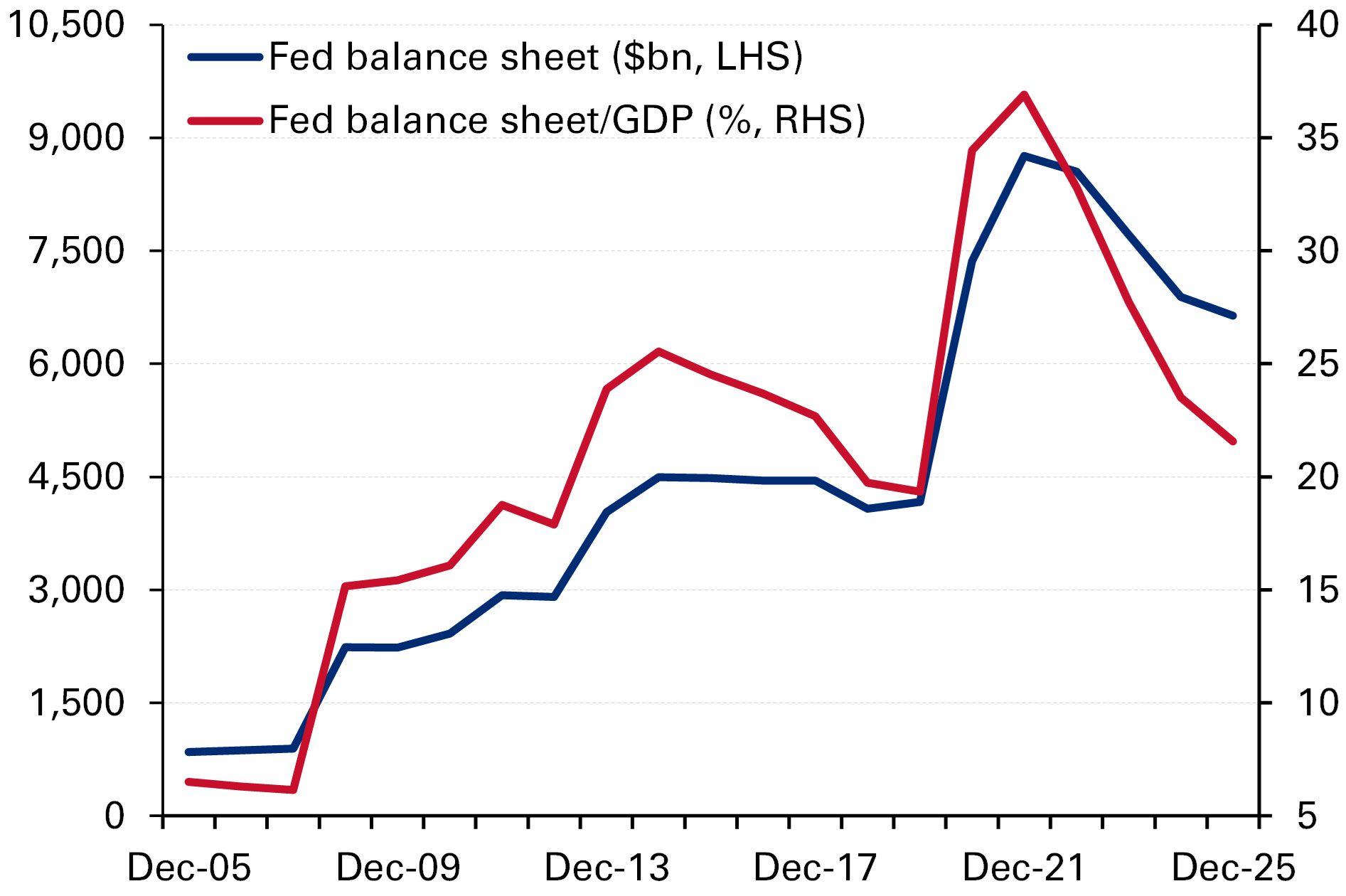
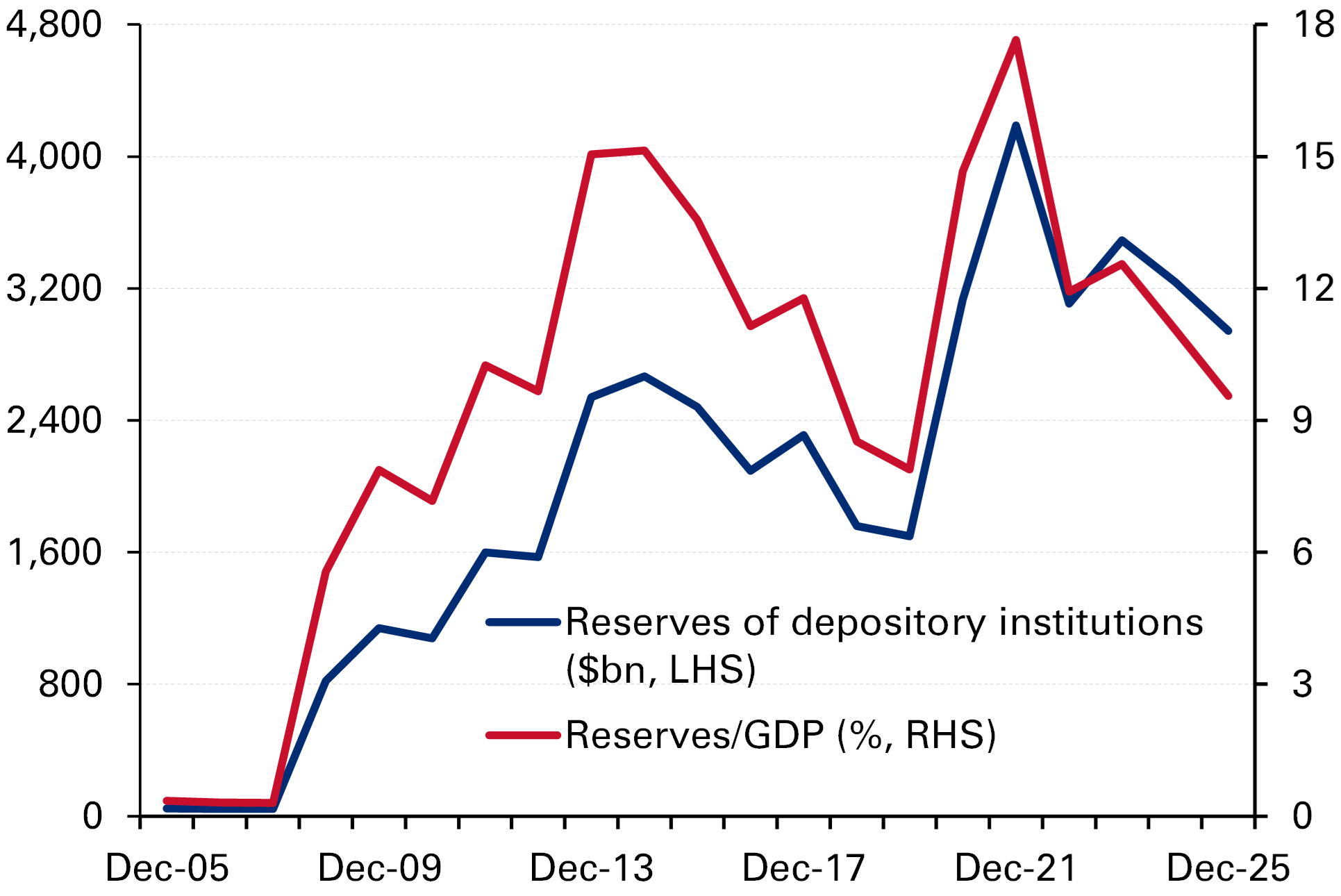
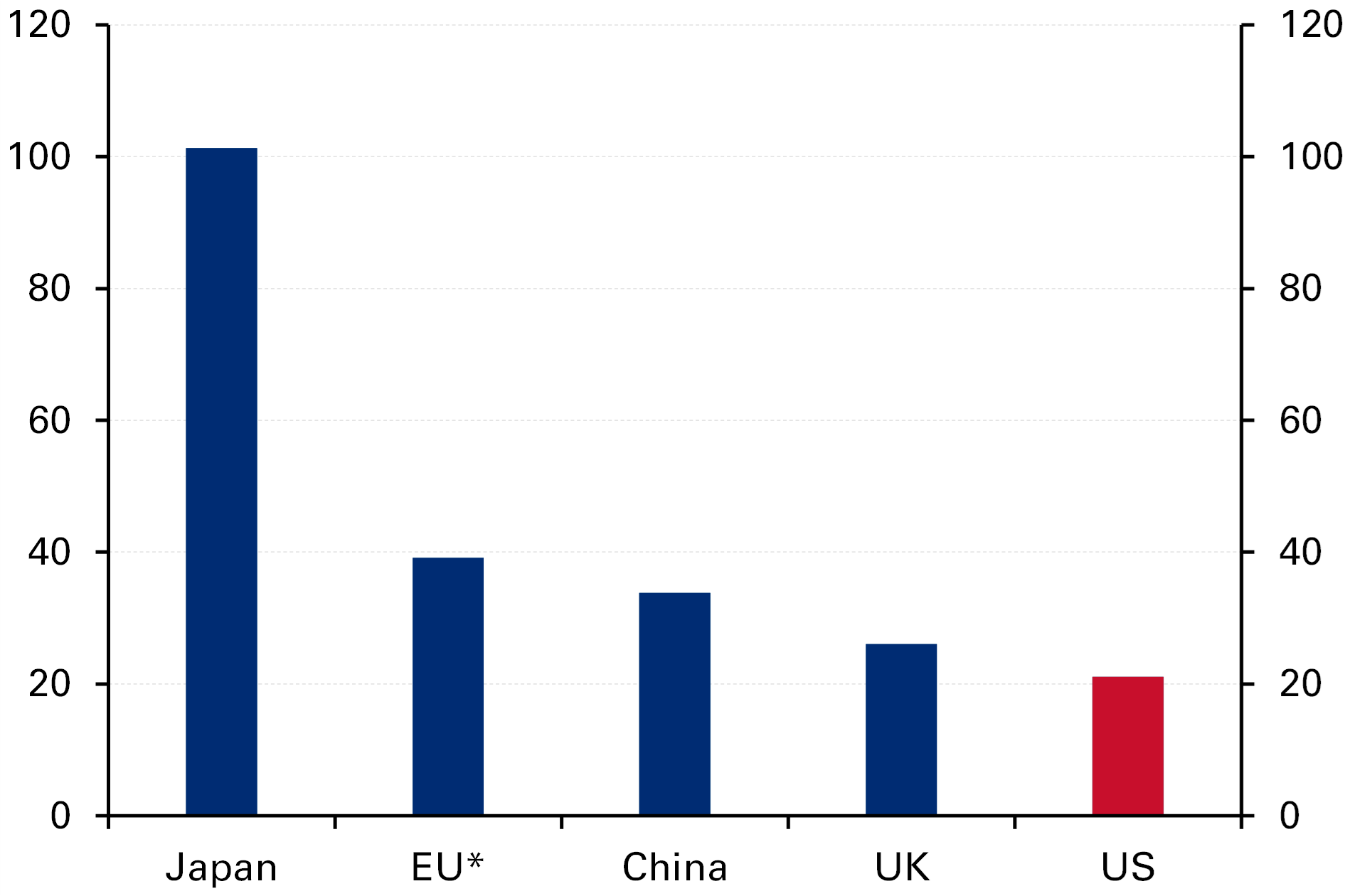
Hence, it may be that a slightly increasing balance sheet size (growing in tandem with an expanding economy) is what is needed for the proper functioning of money markets. This makes the goal of orderly reducing the balance sheet far-fetched. If anything, the Fed’s assets and reserves as a fraction of GDP had fallen back in December to the lowest level since 2019. In addition, the current size of the Fed’s balance sheet in relation to GDP is the smallest in the US compared with the large peers globally. For all these reasons, Warsh may end up being a lone voice on the FOMC, in calling for a smaller Fed balance sheet.
A second pillar of Warsh’s current thinking is his belief that AI-led productivity gains are a supply boost to the economy that will keep inflation low, and hence, give room for reducing interest rates. This may be partly true. If AI leads to productivity gains, which may be already happening, that is indeed a supply boost that will help in keeping unit labor costs low, and hence inflation low. However, these same productivity gains would lead to stronger real GDP growth and hence higher real interest rates as well as a higher neutral interest rate. This is a reason for higher policy interest rates, not lower ones. Some of that thinking has been voiced by current FOMC members, such as Governor Michael Barr, who recently emphasized that higher productivity would imply a higher neutral rate.
Hence, given all the above, Warsh (and the Fed) seems to be approaching a challenging period. However, once Warsh is confirmed, his success will depend on how pragmatic he is going to be, how much he is willing to adjust some of his views (even abandon some of them), how good he will be in building consensus, and whether or not he will safeguard the Fed’s independence.