
 +965 2292 4888


Oil Brief
18.02.2026
Oil prices have been buoyed so far in 2026 by elevated Iran-linked geopolitical risk, supply outages in Kazakhstan, buyer hesitancy over sanctioned Iranian and Russian crude as well as a weaker US dollar. The tense stand-off between Iran and the US may have cooled recently, pushing Brent down to $67/bbl from a high of $71 in January, as the two explore diplomatic options, but prices remain especially sensitive to geopolitical developments given the ramifications of a US-Iran conflict. The IEA continues to forecast a sizeable supply overhang this year amid soft global oil demand and rising non-OPEC supply. OPEC-8, having paused unwinding supply cuts for Q1, may decide to resume from April if current price levels hold, the physical market continues to absorb barrels and if supply outages, whether geopolitics-related or otherwise, begin to stack up. We maintain our average Brent price forecast for 2026 at $65/bbl.
Markets: Prices start year on solid footing amid heightened geopolitical risk, output disruptions
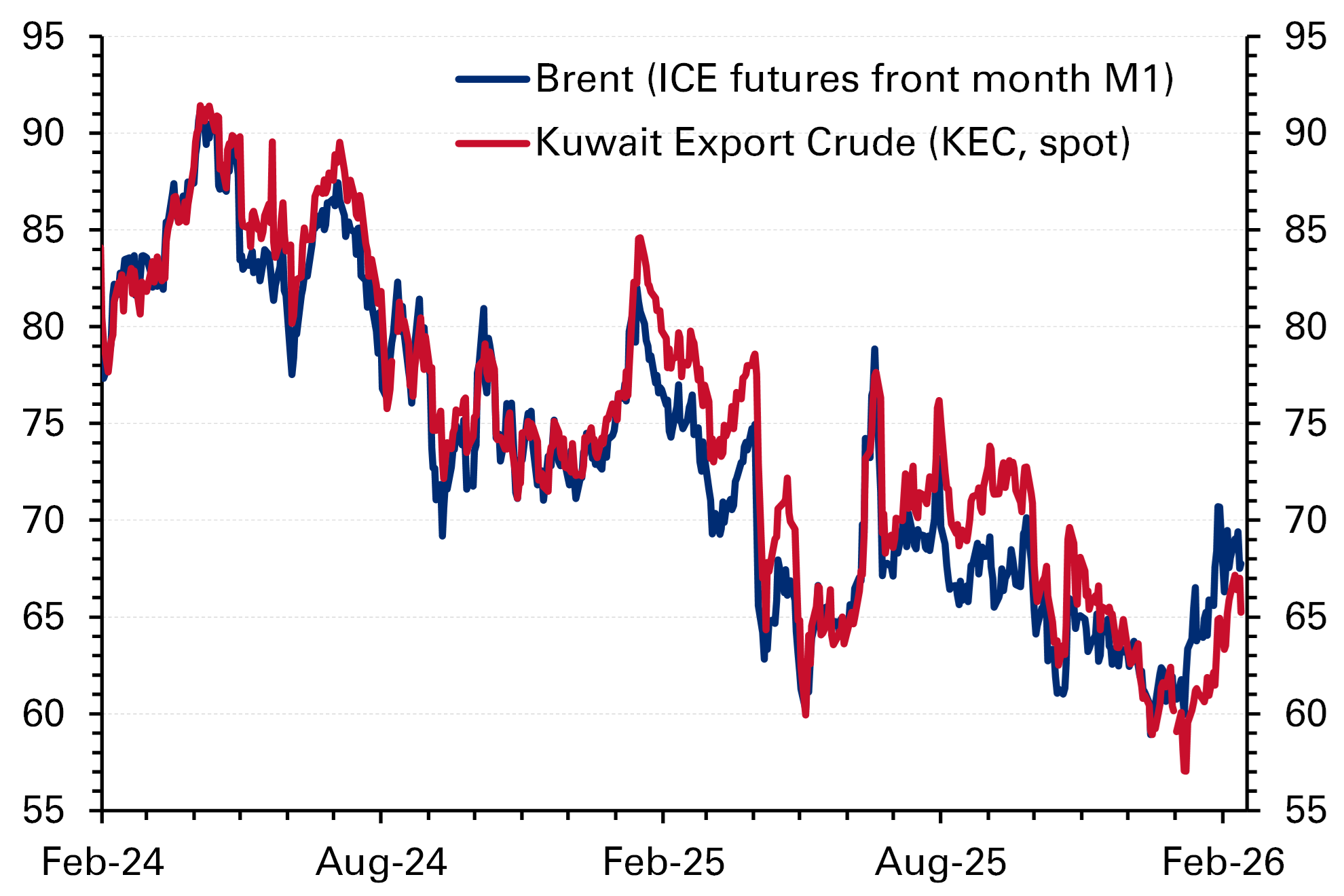
A strong start for oil prices in 2026 saw Brent end January up more than 16% at its highest level, $70.7/bbl, in six months on the back of intensifying geopolitical risk. (Chart 1.) Geopolitical flashpoints in Iran, Venezuela and even Greenland raised oil’s risk premia in tandem with material supply losses in Kazakhstan partly caused by the Russia-Ukraine conflict. A weaker dollar has also been a factor. As of mid-February, however, prices were trending lower, with Brent posting its first back-to-back weekly loss of the year, heading lower to around $68/bbl as the US and Iran engage in diplomacy to break the impasse, negotiations that Iranian president Pezeshkian called “a step forward” and which President Trump appears content to play out for the time being—while ordering a second aircraft carrier group to the Middle East. Pressure is also being applied through stricter sanctions enforcement, while the US administration’s impact on the oil complex is also being felt indirectly through its pursuit of secondary tariffs on importers of sanctioned Russian, Venezuelan and Iranian crude, which is forcing buyers to look elsewhere for higher priced crude (or risk falling foul of US sanctions and President Trump’s ire) and causing a sizeable buildup of oil stocks at sea. The optics of these ‘oil on water’ stocks, more than two-thirds of which (179 mb) the International Energy Agency (IEA) estimates are sanctioned Russian and Iranian crude barrels, has tended to skew the overall market assessment, exacerbating the oversupply narrative that dominated oil markets in 2025 and which led to oil prices declining for a third consecutive year and by the most (-19%) since the Covid-19 pandemic. Oil’s geopolitical risk premium is probably in the range of $5-7/bbl currently.
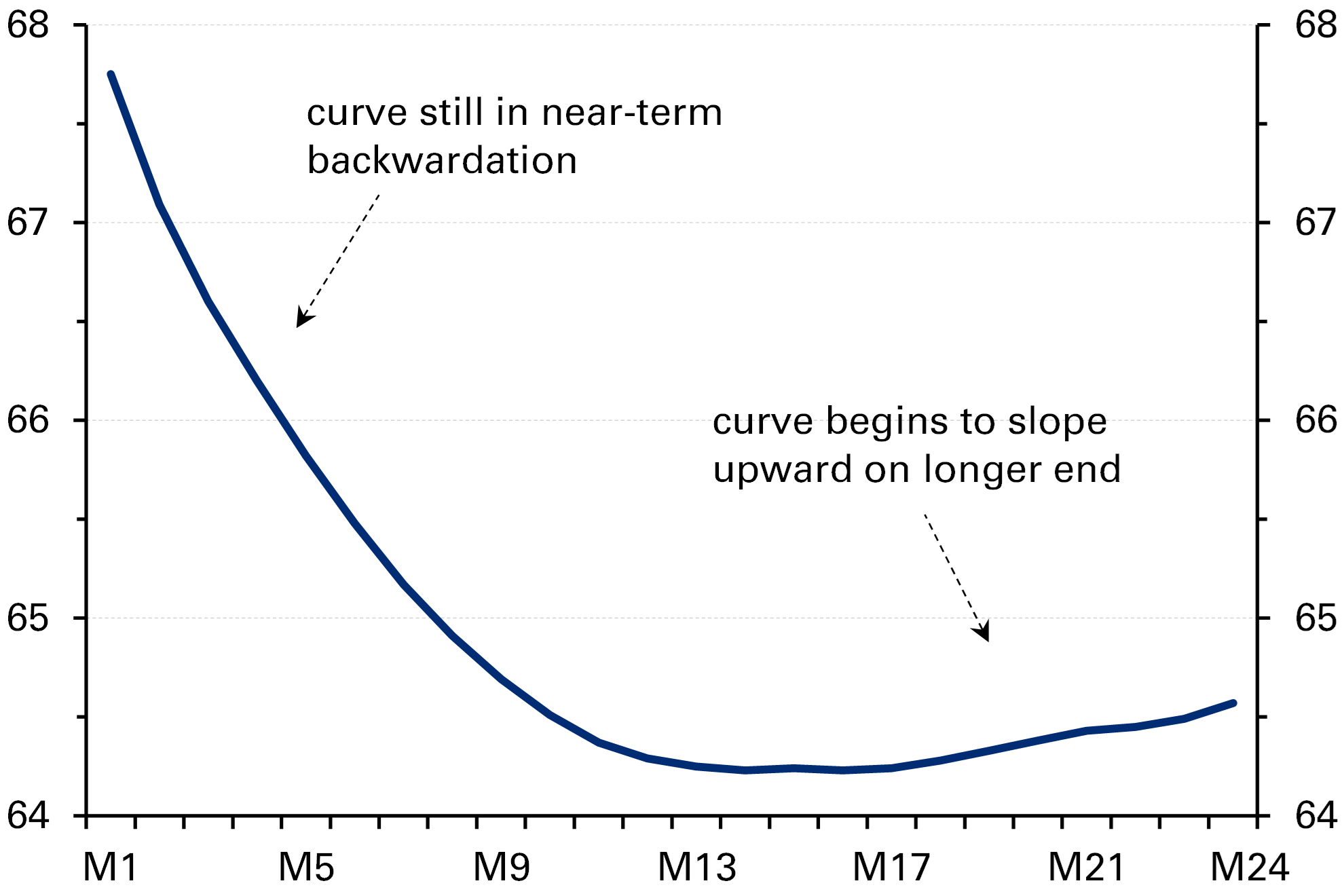
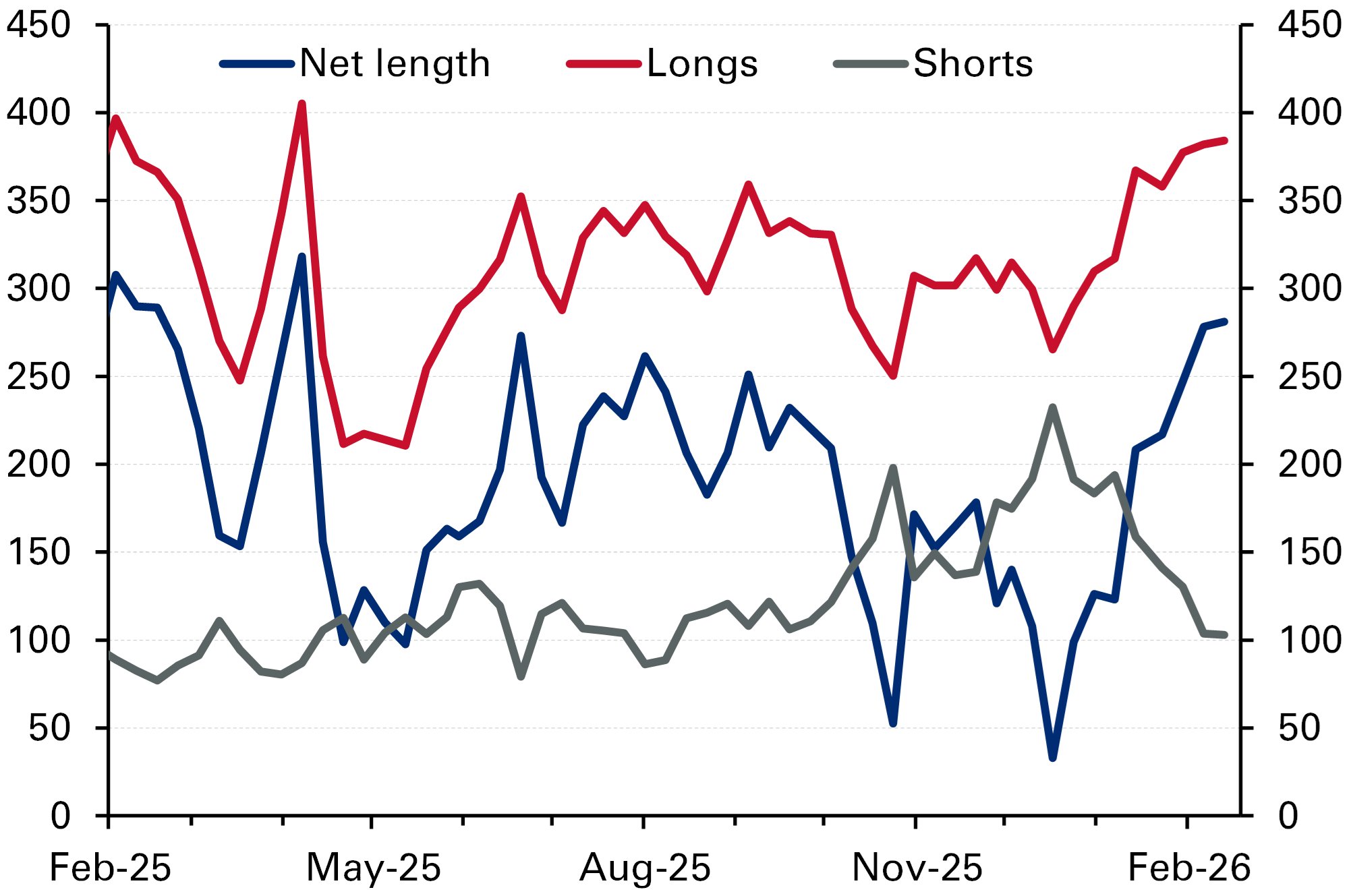
A look at the Brent forward curve, where near-term prices are much higher than longer-term prices, illustrates the strength of market participants’ views on the heightened risk of near-term supply constriction amid still firm demand. (Chart 2.) Beyond about 17 months, however, the curve becomes upward sloping, signaling a looser market amid ample supply and softer demand and therefore more incentive for storage. In terms of money manager positioning, it is notable that as Iran-related risks became more acute, speculators rushed to reverse their short positions—which had reached a record 232,000 lots in mid-December—in favor of bets on prices rising. Long only positions on Brent increased by 19,409 lots to 377,371 in the week-ending January 2026, the highest in ten months. (Chart 3.)
The amplification in near-term Iran-associated geopolitical risk, though, reflects the view held by oil market observers and geopolitical analysts that the possibility of US action in coming weeks is strong. At risk from conflict escalation is 14.5 mb/d of crude and condensate, 3.8 mb/d of refined products and at least 77 mta of LNG, according to the Middle East Economic Survey (mees). Iran’s own production stands at around 3.3 mb/d, just under half of which (1.5 mb/d) is exported to China in violation of US sanctions.
Oil demand: IEA maintains below-trend growth forecast for 2026, OPEC sees demand more robust
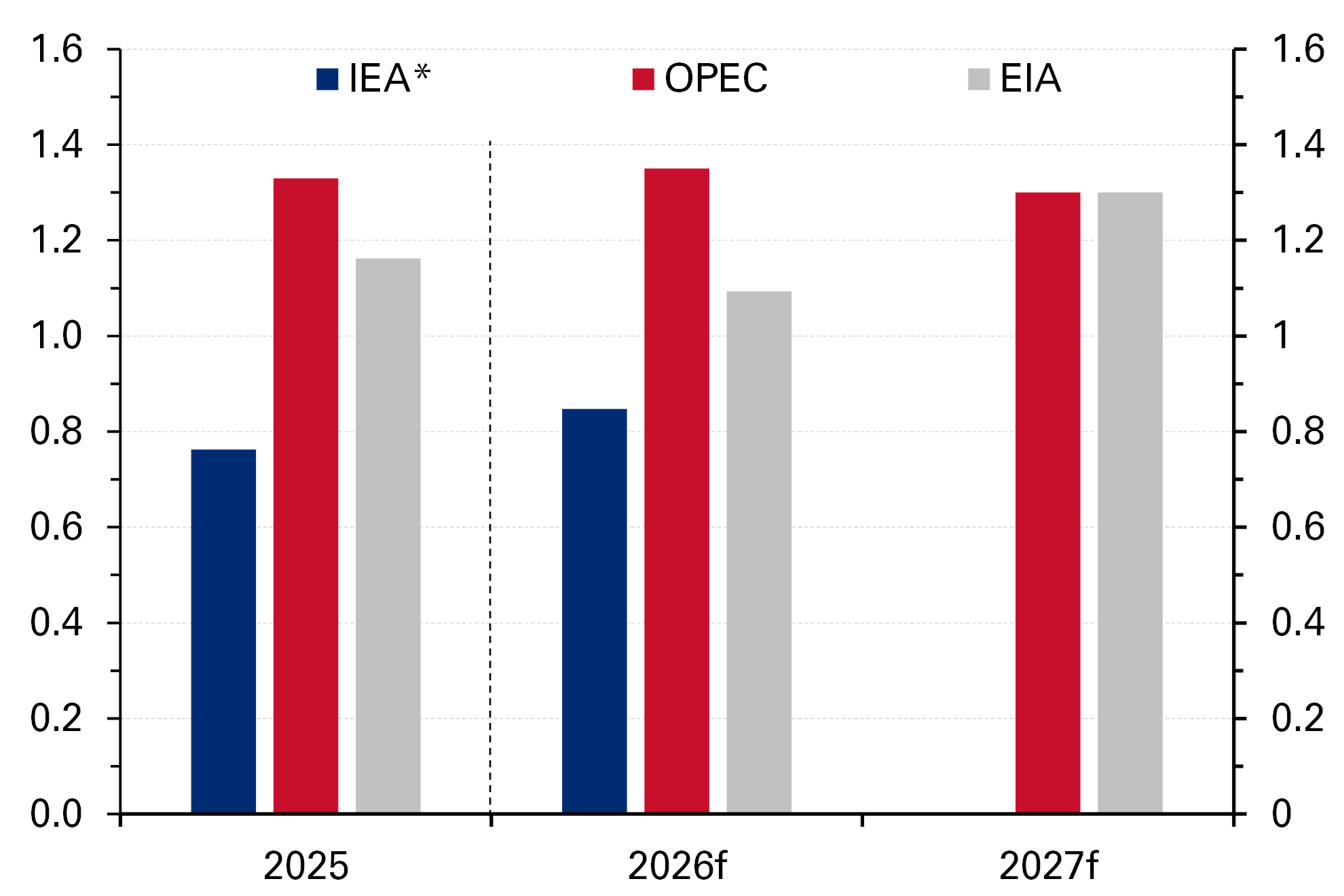
The IEA, having upgraded its 2026 oil demand growth forecast just last month to echo the IMF’s upward revision to global GDP growth (to 3.3% y/y from 3.1%), lowered it in February by 80 kb/d m/m to 850 kb/d. (Chart 4.) The IEA explained that ‘economic uncertainties and higher oil prices’ were weighing on consumption. OPEC, nevertheless, cited improving macroeconomic fundamentals for its much stronger global oil demand growth forecast of 1.4 mb/d. While both agencies agree that non-OECD economies will remain the lynchpin of oil consumption growth, they differ in their view on the sources of growth at the product level, with the IEA anticipating a sharp deceleration in gasoline demand growth due to increasing adoption of electric vehicles and OPEC maintaining a more robust outlook based on what it sees as still-considerable demand for cheaper fossil fuel-run vehicles in the developing world. It is worth noting that the IEA has repeatedly underestimated gasoline demand growth, including in its annual “Oil 2025” report, where it expected gasoline demand to peak in 2025. Both agencies see demand for petrochemical feedstocks as the primary growth driver, however. The US Energy Information Administration (EIA), meanwhile, sees oil demand growth in 2026 as being somewhere in the middle of the range, at a moderating 1.1 mb/d. Looking ahead to 2027, both OPEC and the EIA forecast oil demand growth at 1.3 mb/d, supported by a pickup in global economic activity.
Supply: OPEC+ pauses output hikes for Q1 2026, but may opt to resume from April onwards
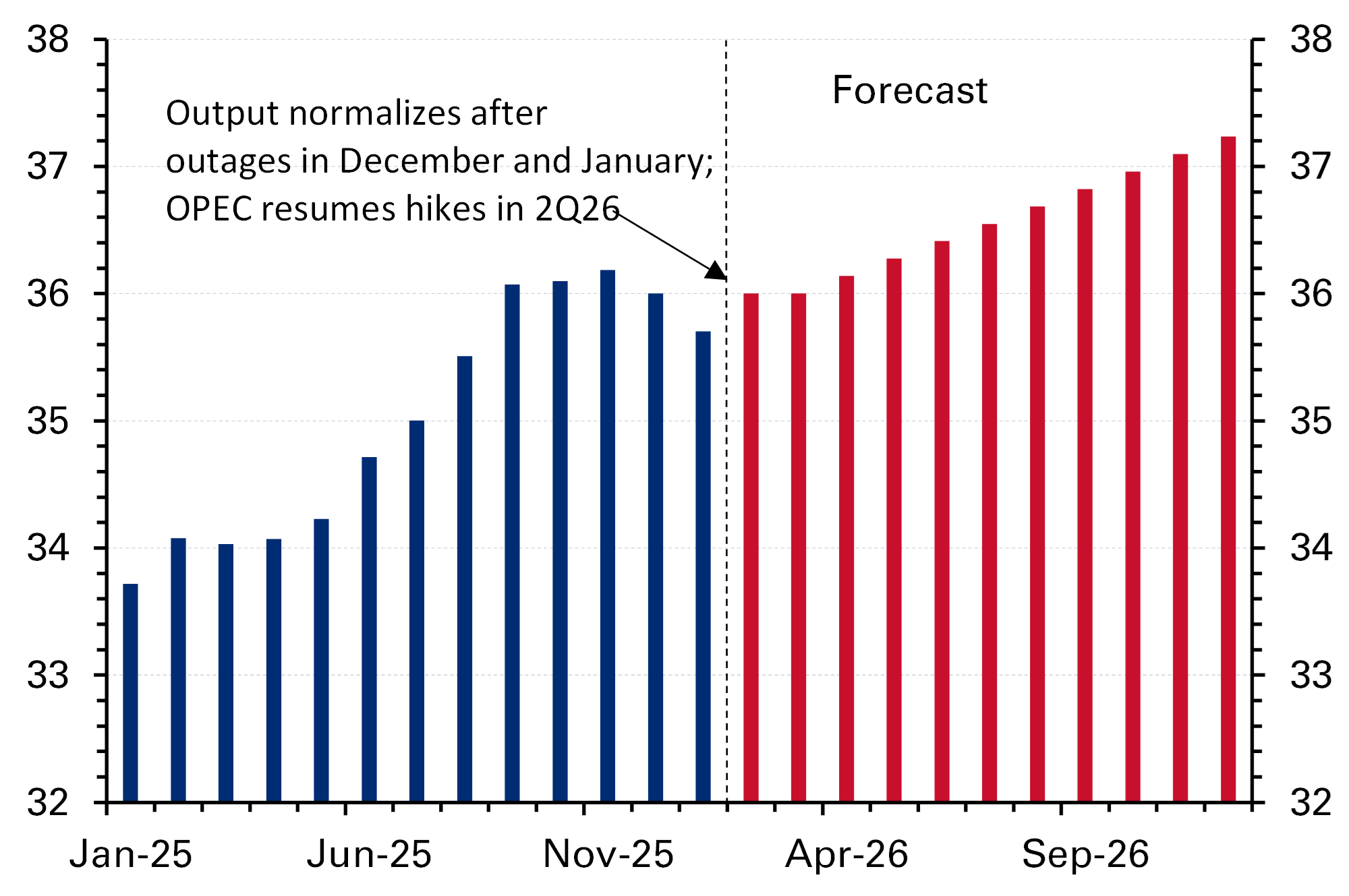
OPEC-8, citing winter seasonality, decided in the last quarter of 2025 to pause their supply cut unwinding schedule for the duration of Q1 2026, having restored only 411 kb/d of the second tranche of 1.65 mb/d of supply cuts from 2023. Markets will have to wait for the March meeting for guidance on OPEC-8 policy going forward. With prices currently around $67/bbl and above where they were in early November 2025 when OPEC-8 first announced its intention to pause supply gains for Q1 2026, there is a strong possibility that the group will opt to resume unwinding supplies from April onwards. The media reported recently that some OPEC+ producers believe there to be “scope” for output hikes amid a market that is tighter than it looks since the surplus barrels that markets have been eyeing are mainly sanctioned Russian and Iranian barrels and not widely available. To ease market oversupply worries, OPEC-8 could of course decide to resume output hikes at a less aggressive monthly pace than the 137 kb/d the group had been tracking in Q4 2025. In 2025, according to OPEC secondary sources, OPEC-8 supply increased by 2.4 mb/d after the group aggressively reversed the first tranche of voluntary cuts worth 2.2 mb/d from 2024 and started on the second tranche as noted above. This was less than the 2.87 mb/d hike that was scheduled on paper, however, due to a combination of offsetting compensatory cuts, supply outages and capacity constraints.
Of the crude volumes realized in 2025, nearly half came from Saudi Arabia (+1.1 mb/d), followed by the UAE (+481 kb/d), Russia (+300 kb/d), Kuwait (+159 kb/d), Iraq (+136 kb/d) and Kazakhstan (+73 kb/d, which would have been higher were it not for Q4 disruptions caused by Ukrainian drone attacks on its export terminals). Total OPEC+ production (Declaration of Cooperation, DoC) fell by 440 kb/d to 42.45 mb/d in January 2026, with declines in Kazakhstan (-249 kb/d), Venezuela (-87 kb/d), Iran (-81 kb/d) and Russia (-58 kb/d). On the other hand, Saudi Arabia, the UAE and Kuwait posted modest gains in January, the first month that production was supposed to have been kept flat.
Nevertheless, looking ahead, we see the trend of delivered volumes trailing on-paper volumes persisting amid capacity constraints in Russia and Iraq especially. These two countries were only able to restore about half of their quota increases. In Russia, the country continues to struggle to diversify its export market given strict US and G7 sanctions, with US President Trump lately using tariffs and other pressure tools on India to discourage imports of Russian crude. An upside scenario for Russian crude could be disruptions to Iranian crude flows, which would allow Moscow to sell higher volumes to China.
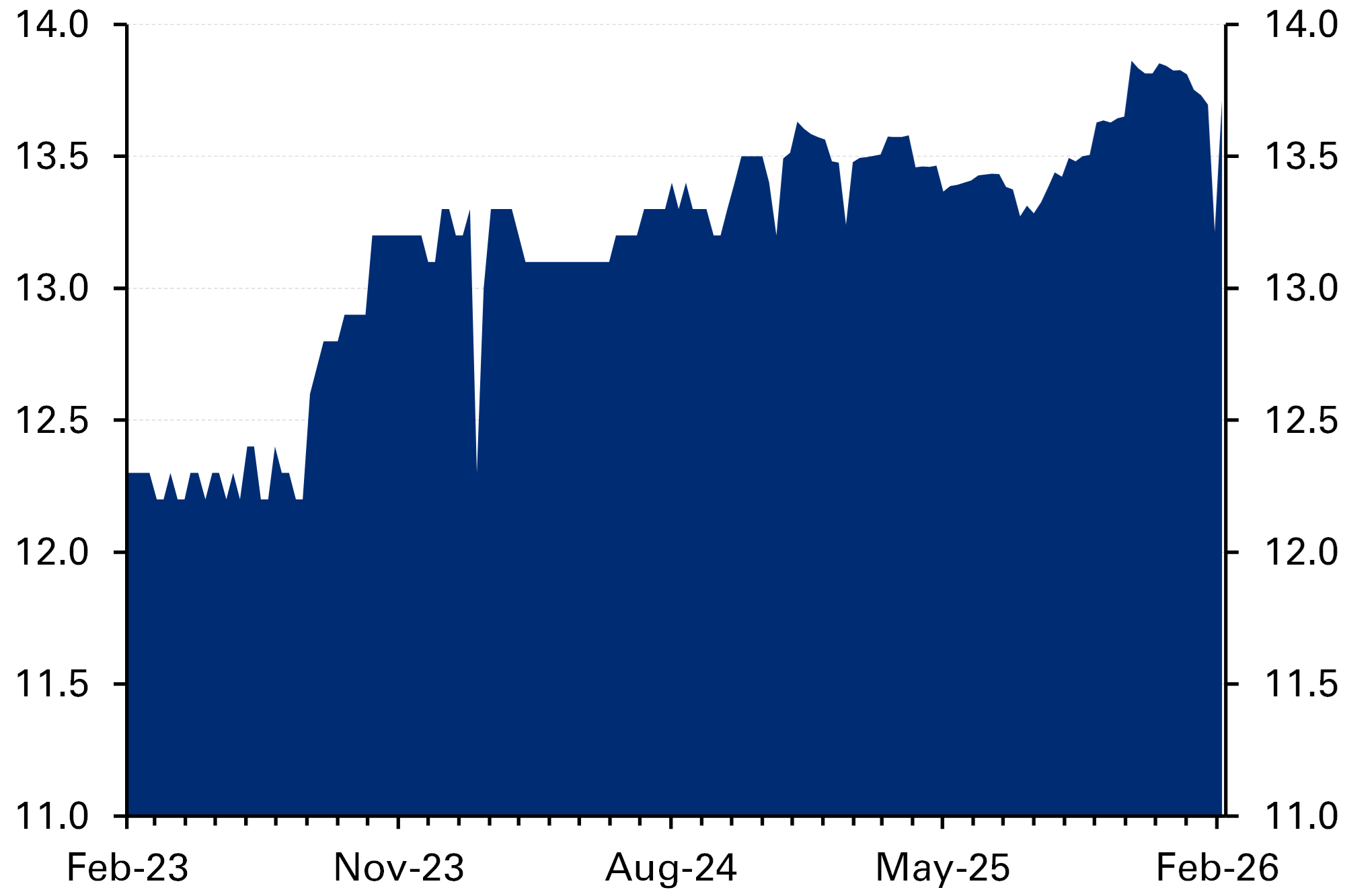
Outside of the OPEC+ group, US crude production surged to a record 13.8 mb/d in December. (Chart 6.) And while production fell in January due to a winter storm, output has since returned. The EIA, in its February Short-Term Energy Outlook, sees average crude production flat this year at 13.6 mb/d and down in 2027 by 280 kb/d to 13.3 mb/d. The forecast is shaped by expectations of a lower price environment; the latest Dallas Fed Energy survey revealed a breakeven oil price of $61/bbl (WTI) for the US oil industry.
Market balance and price outlook: Higher supply surplus, but geopolitics imbues upside risk
Market fundamentals continue to signal a more oversupplied market than was the case in 2025 and may reassert themselves in the oil price if and when the geopolitical risk premium dissipates, which could lead to downward price pressures. Notwithstanding the potential for negative supply side developments arising from the US-Iran stand-off, we expect OPEC-8 to resume unwinding supply cuts from April 2026 in search of volumetric gains and market share, especially at current oil price levels. While we accept that the market will be somewhat looser this year, we do not anticipate a supply glut anywhere near the size forecast by the IEA (nearly 4 mb/d). This is based on the expectation that non-OECD economic activity and emerging market oil demand especially will be firmer than expected and, on the supply side, that actual OPEC+ production gains will lag paper gains due to a combination of capacity constraints, outages, compensatory cuts and international sanctions. The latter, in conjunction with the threat of US secondary tariffs, is pressuring buyers to pare back purchases of Russian, Iranian and even Venezuelan crude, adding upside to oil prices. Of course, the bulk of upside risk is Iran-related, with markets especially skittish over the potential for conflict escalation and miscalculation. Geopolitics could also be the leading contributor to downside risks, in for example a Trump-brokered peace deal between Moscow and Kiev that brings that conflict to a close, or in laying the investment groundwork for faster-than-expected Venezuelan production increases, a scenario most observers, including ourselves, see as being more realistic in the medium-to-long term.