
 +965 2292 4888


Oil Brief
10.05.2026
The US and Iran are in a fragile ceasefire that has seen oil prices retreat to around $100/bbl having peaked at a four-year intraday high of $126/bbl in late April. Still, the conflict and Iran’s closure of the Strait of Hormuz has upended oil markets, shutting in 15 mb/d of seaborne exports and delivering what the IEA has described as the largest energy crisis in history, culminating in a large orchestrated drawdown in global oil inventories. High prices and supply scarcity are causing acute demand destruction across the oil complex, notably in the aviation sector, and neither OPEC+, with almost all its spare capacity locked in the Gulf, nor US shale is able to plug the shortfall. The longer the Strait remains closed, the more profound the economic consequences will be for oil producers, consumers and the global economy more broadly.
Prices ease back but remain high on supply conflict-related disruptions
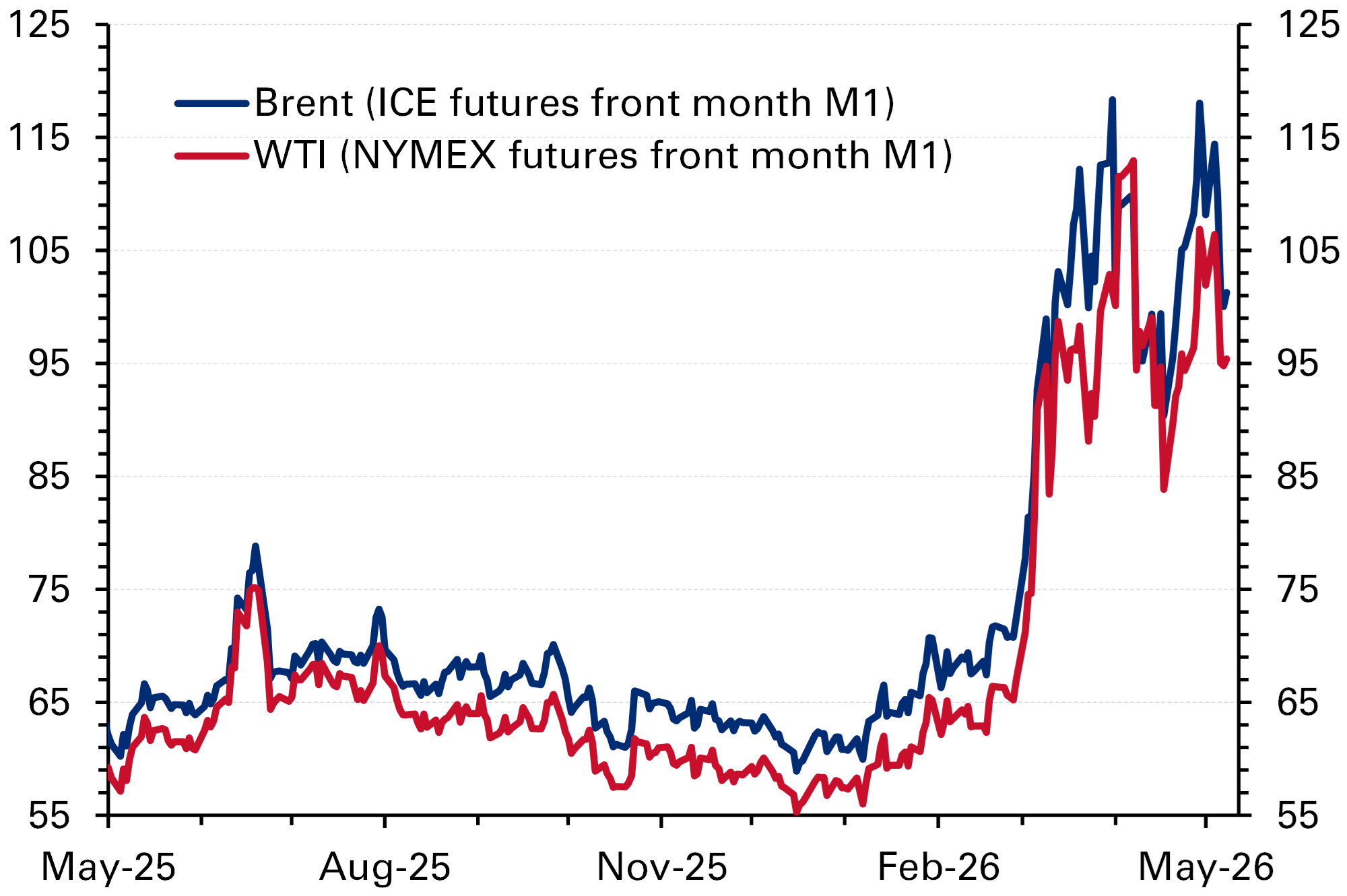
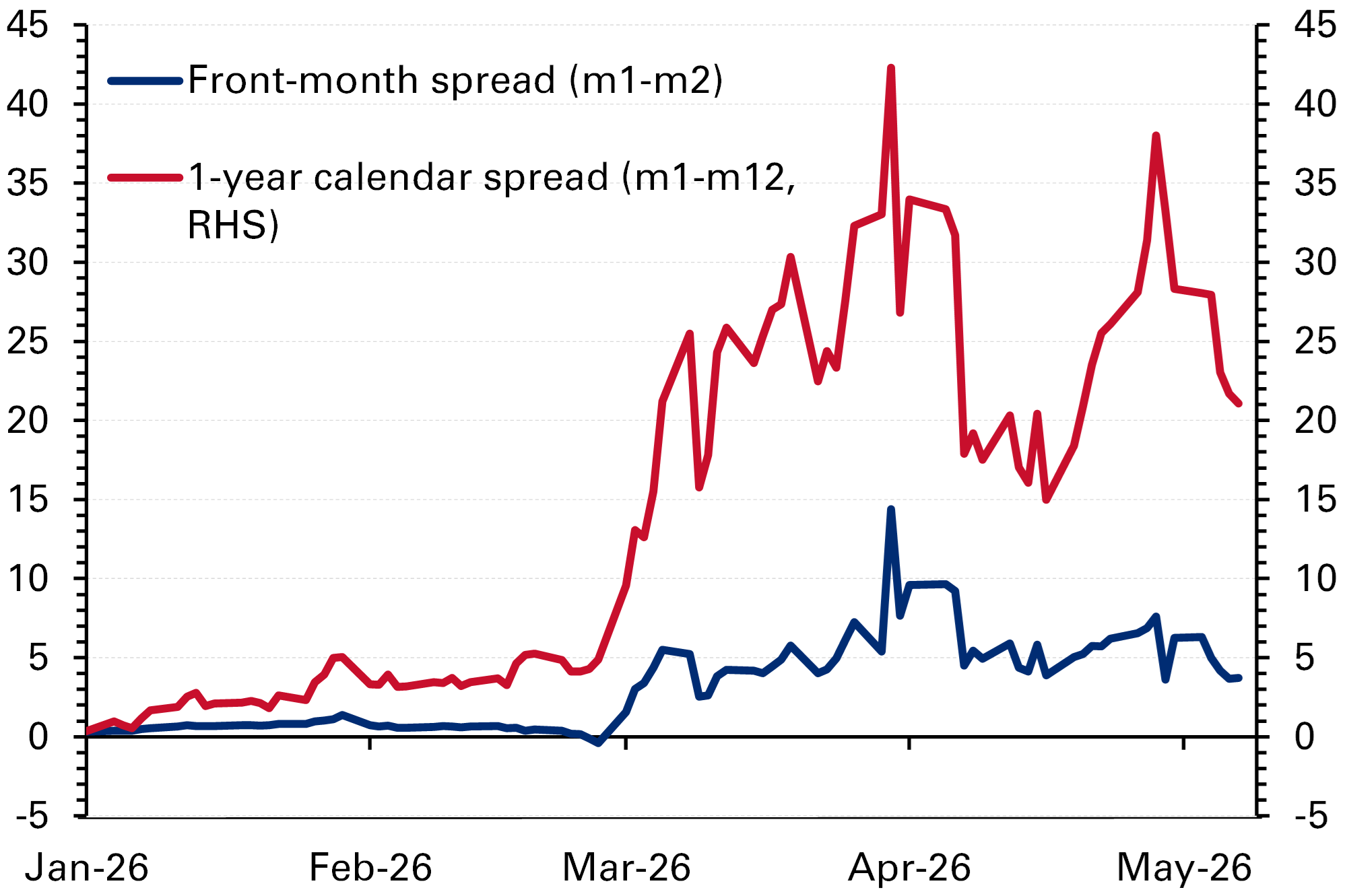
The outbreak of hostilities in the Gulf and the subsequent closure of the Strait of Hormuz by Iran to all but a handful of ‘friendly’ nations has completely upended oil markets and triggered volatility not seen since the Russia-Ukraine conflict flared up in 2022. As markets contemplated disruption to one fifth of global seaborne oil trade and an energy shock that has since exceeded in severity even the 1973 Arab oil embargo, Brent futures briefly topped $120/bbl in intraday trading in March from below $70 in mid-February. (Chart 1.) Up to 15 mb/d of regional oil exports have been curtailed as oil producers, left with no export outlet for their barrels, were forced to shut-in production after exhausting available storage space. A ceasefire was agreed on April 8th, but with the Strait of Hormuz remaining effectively closed. As of mid-May, although reportedly close a diplomatic breakthrough was yet to materialize as the protagonists look to bridge the wide divide between Iran and the US especially over the former’s nuclear program. Brent’s forward curve, meanwhile, shifted significantly upwards to reflect the severity of the supply shock. (Chart 2.) Front month time spreads (M1-M2) widened to a record $14.4/bbl in March and year-ahead time spreads (M1-M12) by as much as $42.3/bbl. Both ratios remained elevated by early May, underscoring the premium associated with securing near-term barrels.
Futures markets underappreciate the severity of supply losses
That said, the contrast between the futures market, dominated by speculative trades, and the physical or spot market, where parties make and receive delivery of real oil barrels over a much more compressed timeline (2-4 weeks), has been stark. Dated Brent, the benchmark physical price, soared to above $144/bbl in early April, the highest level on record, opening a more-than-$30 premium over Brent futures on the day. The spot price for delivery of regional oil barrels, from Saudi Arabia’s benchmark Arab Light, which topped $140/bbl in March, to Kuwait’s own, mostly unavailable, KEC grade, which hit $164/bbl, demonstrate the divergence that has occurred between ‘paper’ and real-world prices. Indeed, the concern is that prices paid by refineries are a truer representation of the degree of supply losses and that the more commonly tracked and quoted futures prices will have to ‘catch up’ at some point to the higher price level.
The largest supply shock in history called for the largest global stock drawdown ever orchestrated
To help mitigate the supply shock, IEA member countries agreed in March to release 400 mb of oil from their strategic petroleum reserves—the largest coordinated release on record—with the US contributing the largest share at 173 mb. Delivery will reportedly take place over a 2-3 month period. At the same time, the US temporarily waived and eased sanctions on Iranian oil at sea and Russia oil flows, respectively, and suspended its own Jones Act (which prevents non-US owned and built ships from transporting goods including oil between US ports) for 60 days to help ease an otherwise tightening market.
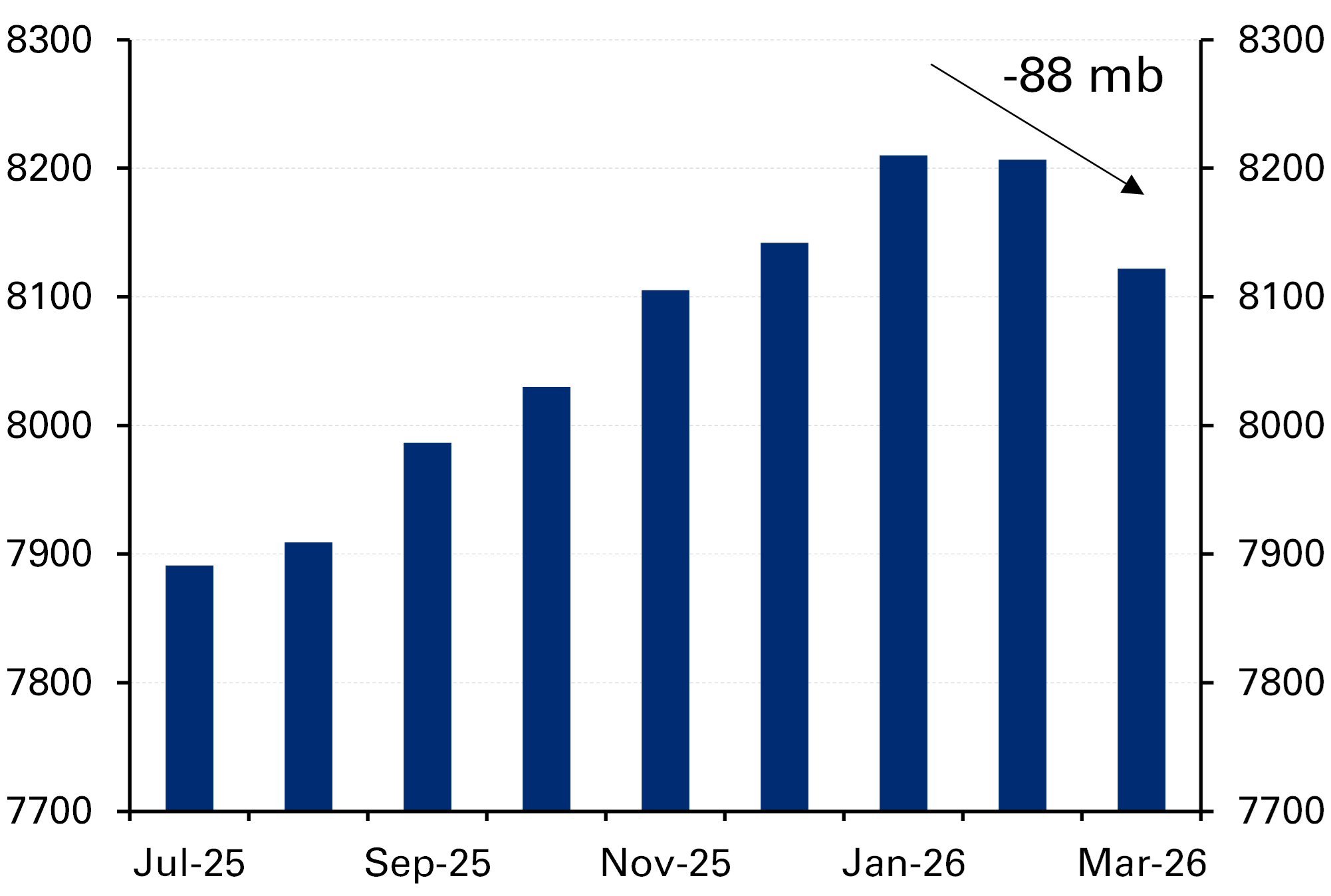
The above measures, along with surplus oil on water inventories, help to explain why price rises so far have fallen short of 2022’s highs despite the volume of oil taken off the market this time around being multiples higher than during the Russia-Ukraine conflict. That said, global releases have been capped at roughly 6 mb/d, a volume that is insufficient to bridge the gap between disrupted exports, at nearly 15 mb/d, and largely inelastic global demand, leaving a sizeable deficit in balances. Inventory data reflect this strain, with global oil stocks falling to 8.13 billion barrels in March, following a substantial withdrawal of 205 mb during the month (-6.6 mb/d) from inventories outside the Middle East. (Chart 3.)
The IEA projects the first contraction in oil demand since the Covid-19 pandemic
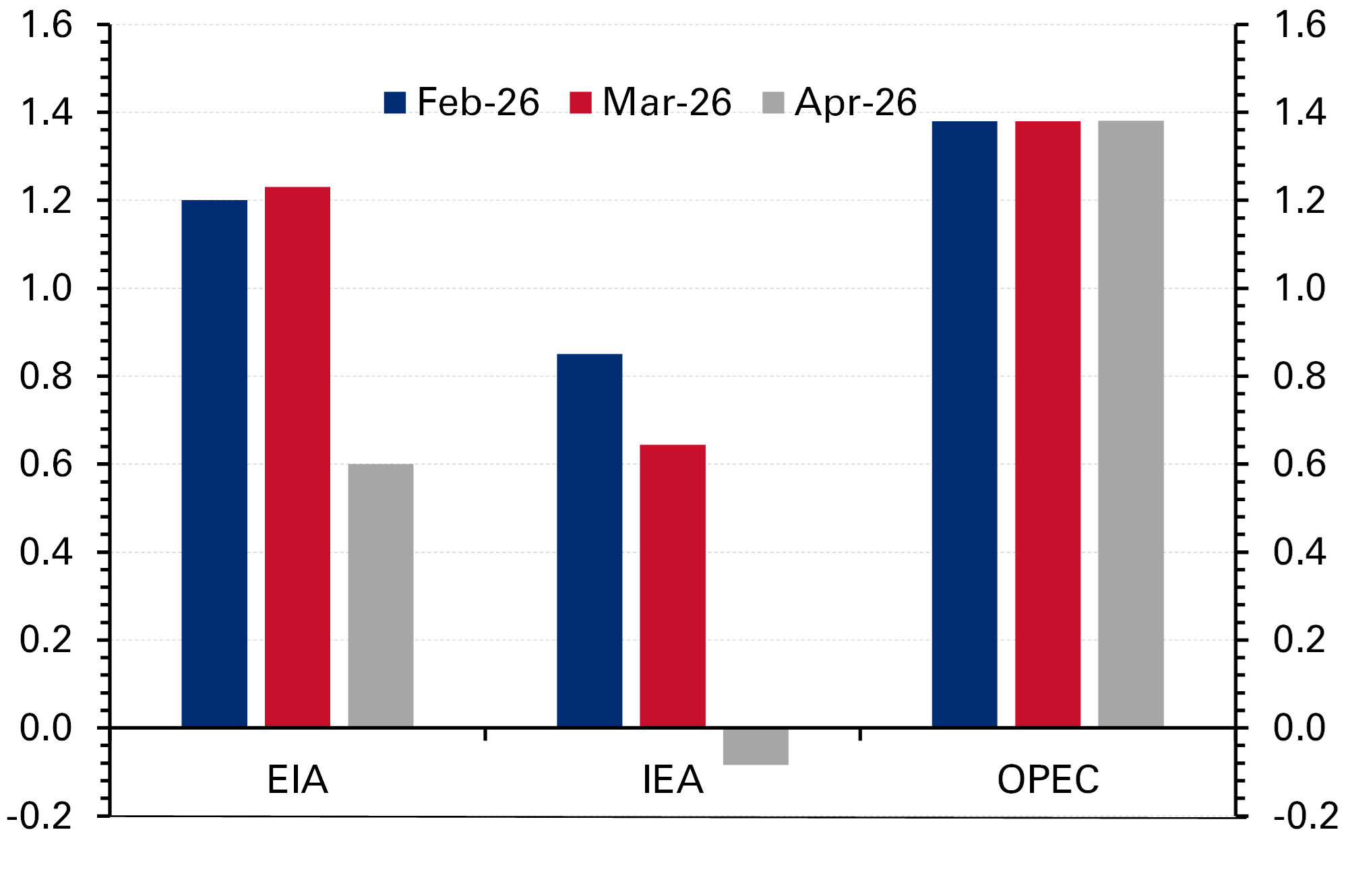
The IEA, in its April oil market report, downgraded oil demand growth in 2026 by a huge 730 kb/d from its March estimate, the largest decline since the pandemic in 2020. It now sees oil demand contracting by 80 kb/d on average this year, versus 2025’s increase of 0.8 mb/d, with oil consumption especially affected in the Middle East and Asia Pacific through lower usage of naptha, LPG and jet fuel partly reflecting cuts in Asian petrochemicals production. (Chart 4.)
The IEA also warns of spreading demand destruction. Indeed, often overlooked due to the markets’ attention on crude oil prices are the extreme rises witnessed in the prices of refined products and natural gas, which in many instances have been far steeper, reflecting actual losses of these products as exports from source and not just as derivatives of crude reduced refinery runs. Middle distillate prices rose sharply in March and remained historically elevated in April. US diesel futures surged to around $4/gal, while jet fuel markets experienced even greater stress, with Chicago wholesale jet fuel prices briefly exceeding $5/gal in early April – both roughly twice their pre-conflict levels. Similar patterns emerged in Europe and Asia, where gasoil and jet markets tightened sharply amid increased reliance on US imports, limited Gulf supply and reduced refinery runs.
Two-thirds of regional oil supplies disrupted
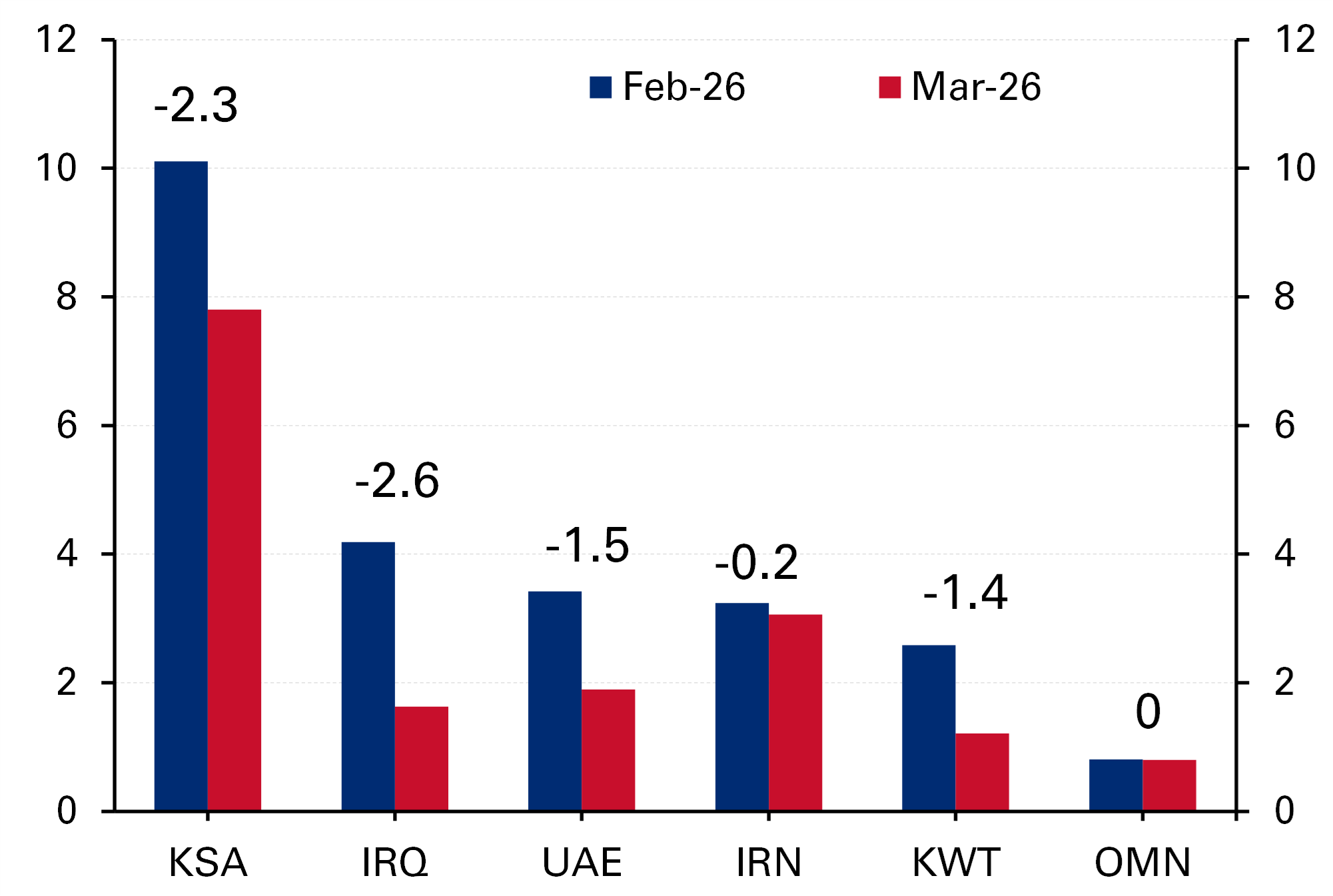
Iran’s threats to Strait of Hormuz shipping (and the US’s blockade of Iranian ships) have led to the loss of an estimated 15 mb/d of seaborne crude and product flows, more than two thirds of pre-war volumes. This is after accounting for the diversion of some exports via alternative land-based routes, with only Saudi Arabia, with its 7 mb/d capacity East–West pipeline to the port of Yanbu, and the UAE, with its 1.5 mb/d Habshan–Fujairah pipeline, able to reroute and bypass the Strait. Yanbu, though, can only handle 4.5 mb/d of crude loadings. Meanwhile, crude exports from Iran were brought to a halt by the US naval blockade in early April, taking a further 2 mb/d of crude off the market. OPEC, in its April monthly oil market report, highlighted the scale of the disruption, with DoC production (including the UAE) falling by 7.7 mb/d to 35.1 mb/d in March, led by sharp monthly declines in Iraq (-2.6 mb/d) and Saudi Arabia (-2.3 mb/d), according to secondary source data. (Chart 5.) Kuwait’s production was reduced by 53% to 1.2 mb/d in March amid a lack of alternative export routes. The UAE announced that it would leave OPEC from 1 May, making it not subject to OPEC quotas in future.
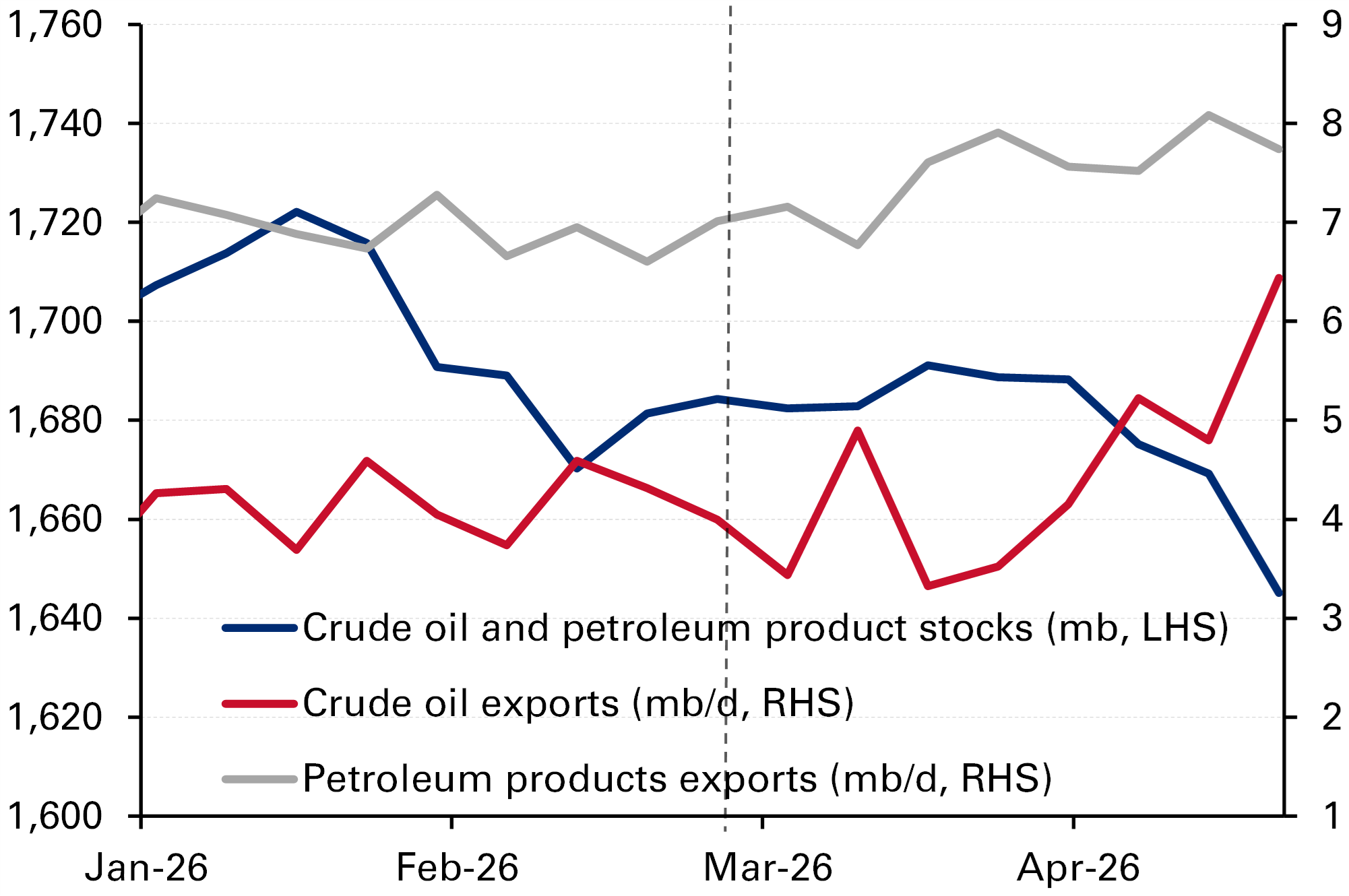
Given the scale of the oil supply disruption, partial offsets have emerged outside of the core Middle Eastern swing producers. Within OPEC+, Venezuelan output increased by 165 kb/d between January and March, reaching nearly 1 mb/d, with exports reportedly exceeding 1.2 mb/d in April. Kazakhstan’s production rebounded to 1.73 mb/d in March, as outages linked to the Tengiz field were largely resolved. Outside of OPEC+, total US crude production has remained largely flat at 13.6 mb/d, likely reflecting general uncertainty surrounding the conflict and long lead times to ramp up output. That said, total US oil exports, including petroleum products, have surged to record levels, as US producers have drawn down oil stocks (crude, gasoline, and distillates especially) to capitalize on higher prices. (Chart 6).
High oil prices jeopardize global economic growth, but could boost fiscal positions of some oil exporters
The unprecedented disruption to global oil supplies, concentrated in the Gulf, has had knock-on effects that extend well beyond oil and the region. Global inventories have had to be deployed on an unprecedented scale, supplies from outside the region sought and, where they have proved insufficient to satisfy demand given the magnitude of the supply loss, prices have had to move sharply upwards to do the rest. The economic ramifications extend across the transportation, power, plastics and agricultural sectors, with worries about a potential global economic recession intensifying the longer the Strait of Hormuz remains closed. Given the climb in prices, for regional oil producers able to export via alternative routes such as Saudi Arabia, the UAE and Oman, the fiscal implications could be positive even though broader economic activity is negatively affected by the conflict. The geostrategic situation, however, remains fragile and highly uncertain, with the current ceasefire withstanding small-scale attacks on vessels within the Strait while constructive diplomatic signals potentially herald an end to the conflict and an eventual normalization of maritime activity within the region.