
 +965 2292 4888


Kuwait Economic Brief
03.05.2026
Overview
Kuwait has been caught in the crossfire of the US/Israel-Iran conflict, with economic activity severely disrupted by Iranian strikes on local and regional infrastructure and blockage of the vital Strait of Hormuz shipping conduit. With trade curtailed, much oil production has been shut-in, pushing oil prices above $100 for the first time since 2022. Economic outcomes are expected to weaken, to a degree that reflects the intensity and duration of the conflict. Up until the outbreak of hostilities, economic growth had been accelerating, on the back of upbeat economic readings including strong credit growth, rising real estate activity, higher project awards, above-trend PMI readings and relatively strong non-oil GDP growth on average in H2 25. Government policymaking was also gaining traction, with strong project approvals and a substantial jump in capex in the budget for FY26/27. That said, the current conflict is expected to have a deleterious effect on liquidity and the public finances, with oil revenues down to a trickle even as oil prices soar and business and consumer activity impaired, while supply chain disruptions put upward pressure on input costs. We believe the non-oil economy can escape a recession, though the outlook naturally depends upon how the conflict plays out.
Latest developments
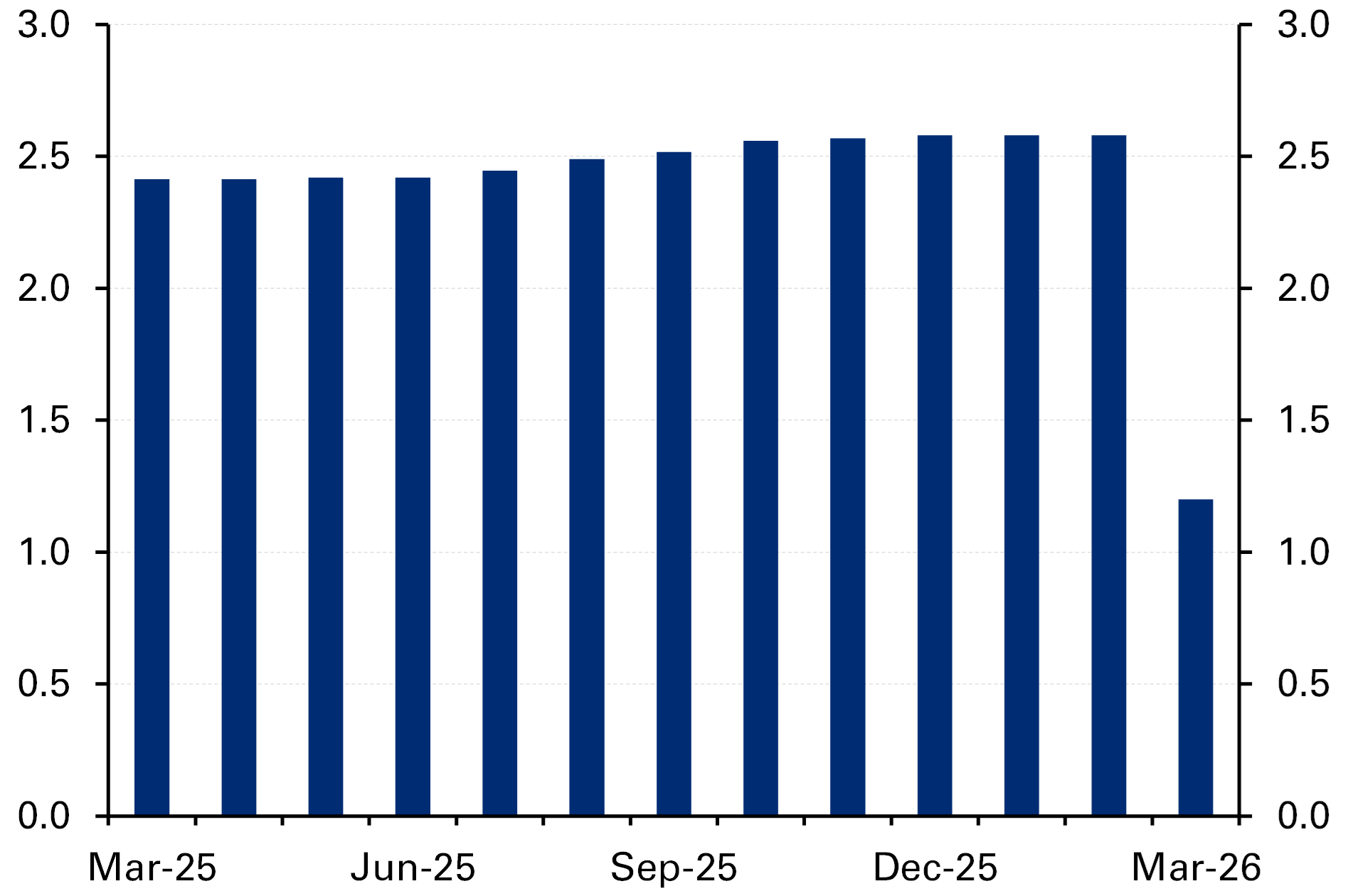
• Kuwait’s economy caught in Iran-US/Israel crossfire; oil prices spike but oil output shut in. The outbreak of hostilities between the US/Israel and Iran on February 28 was followed by a series of Iranian retaliatory actions on US interests in the region including Kuwait and the closure of the Strait of Hormuz, severely disrupting regional trade, tourism, and broader economic activity. Brent futures surged to nearly $120/bbl in early March before easing back to $114 by end-April. The halt in tanker traffic through the Strait of Hormuz has forced oil production shut‑ins as storage tanks filled up. According to OPEC secondary sources, Kuwait’s crude output fell 53% m/m in March to just 1.2 mb/d. OPEC‑8 announced that it would restart production quota hikes by 207 kb/d per month from April after pausing increases in Q1, with a similar increment agreed for May. However, physical supply is likely to lag materially, particularly in Kuwait, where production is expected to fall well short of its 2.6 mb/d quota in both April and May due to prolonged operational shut‑ins.
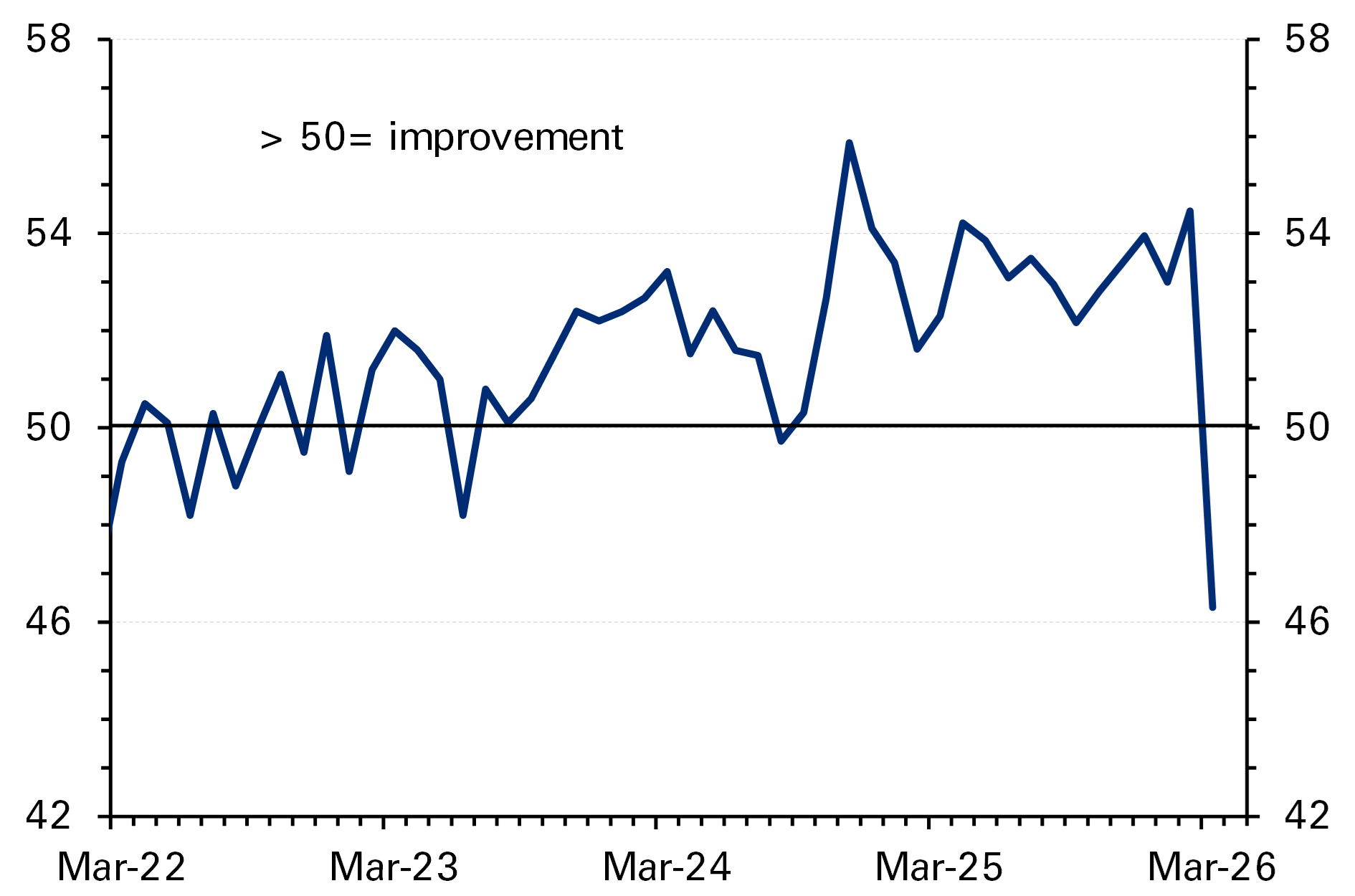
• Non-oil private sector activity declined sharply in March, with the PMI falling to 46.3, the first contraction since August 2024, weighed by the conflict. Weaker demand conditions amid a suspension of flights and shipping saw both output and new orders subindices drop to multi-year lows. (Report here.) Firms’ input prices recorded the first decline since April 2020 on a decrease in purchase prices and staffing costs. Nevertheless, prices charged rose, albeit at a slower pace, likely reflecting dwindling supplies of available goods amid supply chain disruptions. Meanwhile, business sentiment 12-months ahead fell to a 31-month low. The figures if sustained would clearly point to sharply weaker official non-oil GDP growth in H1 26; the most recent official preliminary figures for Q3 25 show non-oil growth at a robust 6.5% y/y, when the PMI averaged 53. (Report here.)
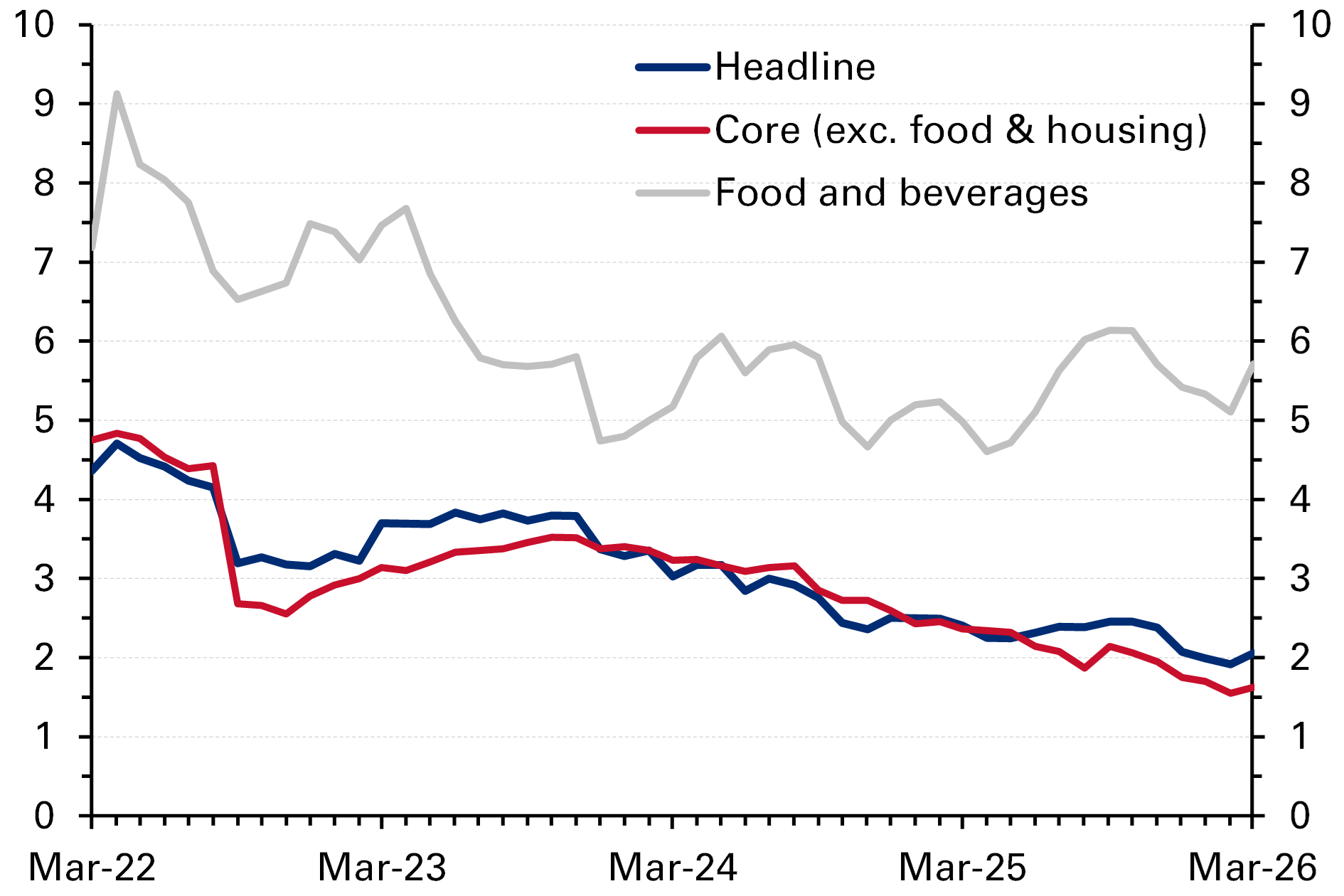
• CPI inflation rose to 2.1% y/y in March (February 1.9%), breaking a four-month easing streak amid trade disruptions stemming from the closure of the Strait of Hormuz. (Report here.) The increase was moderate, however, revealing a limited passthrough effect from the regional conflict, helped by a government ban on food exports and the enforcement of price controls. The reading may also have been influenced by seasonal effects including Ramadhan and Eid. Prices in the housing services component were steady, but prices in the food & beverages category rose 1.2% m/m, the highest since mid-2022, likely reflecting import disruptions. Excluding food and housing, core inflation ticked up to 1.7% y/y from 1.6%, with the increase largely tied to higher precious metals prices.
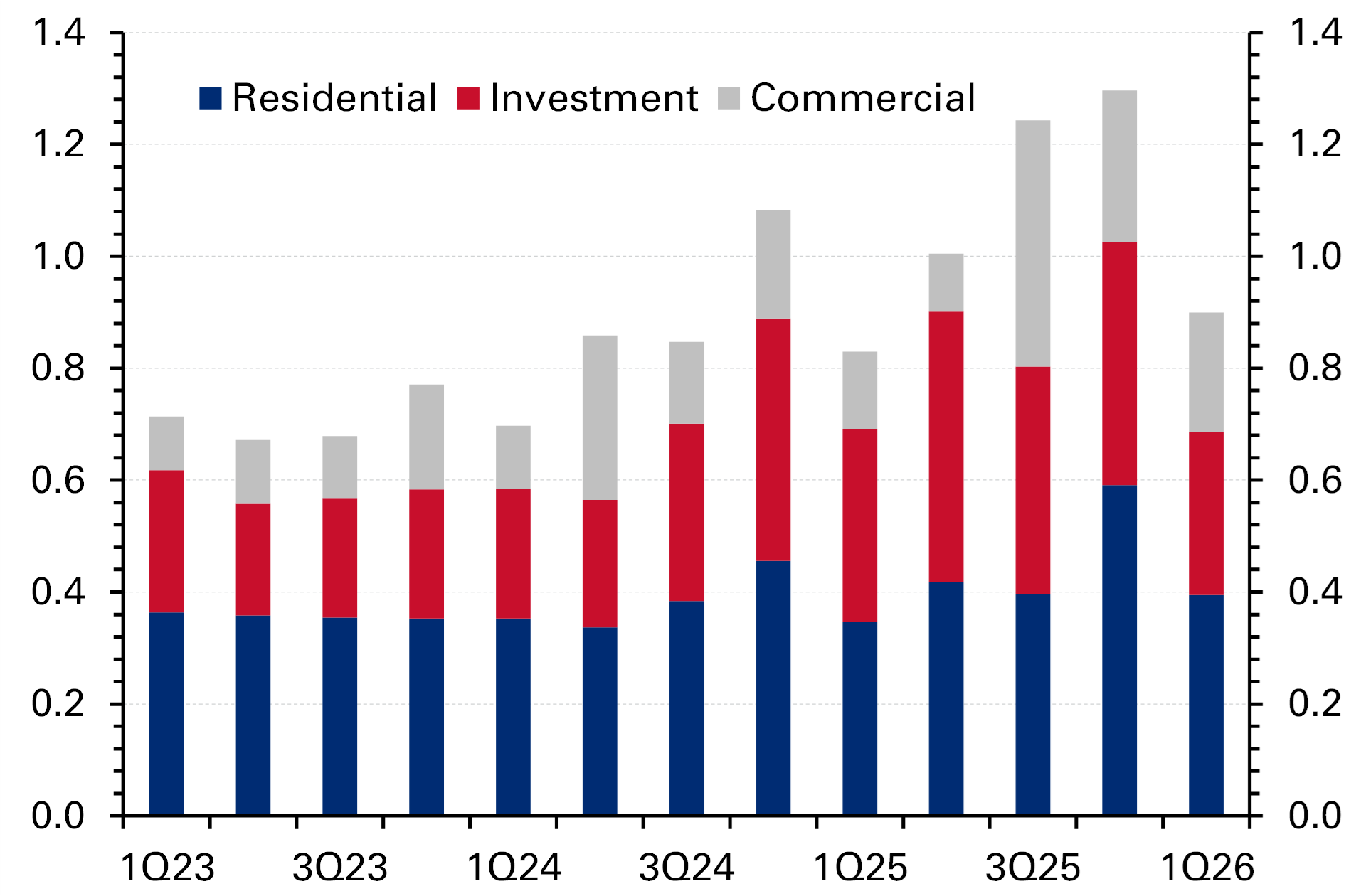
• Real estate activity in Q1 2026 remained relatively resilient despite a sharp late-quarter slowdown driven by the US-Iran conflict. (Report here.) Property sales fell in Q1 by 31% q/q to KD899 million with the decline broad based and across all segments. The pullback was driven by an abrupt fall in March, weighed down by the US-Iran conflict and the seasonal slowdown associated with Ramadan and the Eid holiday. Residential and commercial sales logged quarterly declines of 33% and 21%, respectively, though registering solid positive growth on a yearly basis while investment sales declined 33% q/q and 16% y/y reflecting a pullback in investor sentiment.
• Strong project awards momentum continued in Q1 2026, surging 300% y/y, according to MEED Project figures. Total project awards reached KD1.8 billion, notching the second highest reading since 2016. The bulk of activity was concentrated in January and February, with 2025’s strong momentum carrying over. March saw activity slow sharply, with awards at just KD100 million amid regional turmoil. On a sectoral basis, power and water sector awards accounted for roughly 70% of total awards, boosted by the North Kabd water treatment plant (KD991 million) contract. Meanwhile, positive performance in the oil and gas sector persisted, thanks to the awarding of crude oil pipeline contracts by KOC. Activity across the other sectors, however, remained largely muted.
• Public finances have also faced severe disruption from the regional conflict, especially given the halt to oil exports. The scale of the disruption means that projections in the government’s draft budget for FY26/27 released in early February are more outdated. The budget had projected a huge deficit of KD9.8 billion deficit (19% of GDP) with revenues based upon an assumed oil price of $57/bbl and average oil production of 2.6 mb/d – both of which seem unlikely to be met. Spending was projected up 6% b/b to KD26.1 billion, incorporating a large non-recurring transfer to the social security fund and a sharp 37% jump in capex. At the current juncture, we still think the deficit will come in narrower than the official budget projection (but less so than previously, see forecast below). Nevertheless, the government has tapped debt markets in recent weeks, which will help address any near-term liquidity shortfall. It issued a total of KD500 million in across maturities of 2, 3 and 5 years, in addition to a $2 billion private issue. This brings the total debt issued so far in 2026 to KD1.4 billion, on top of KD5.65 billion in 2025. The public debt-to-GDP ratio remains very low at 17%.
• The Central Bank of Kuwait (CBK) unveiled a targeted stimulus package aimed at reinforcing banking sector resilience during the US-Iran conflict. The measures include a temporary easing of key ratios, with the minimum Liquidity Coverage Ratio and the Net Stable Funding Ratio both reduced from 100% to 80%, and the minimum Regulatory Liquidity Ratio lowered from 18% to 15%, enhancing banks’ short-term liquidity flexibility. The CBK also raised the Maximum Lending Limit to 100%, expanding banks’ capacity to extend credit to households and businesses. In parallel, the CBK authorized the release of 1% of the Capital Conservation Buffer, lowering the total regulatory capital requirement from 13% to 12%, to support banks’ balance sheets and sustain lending activity.
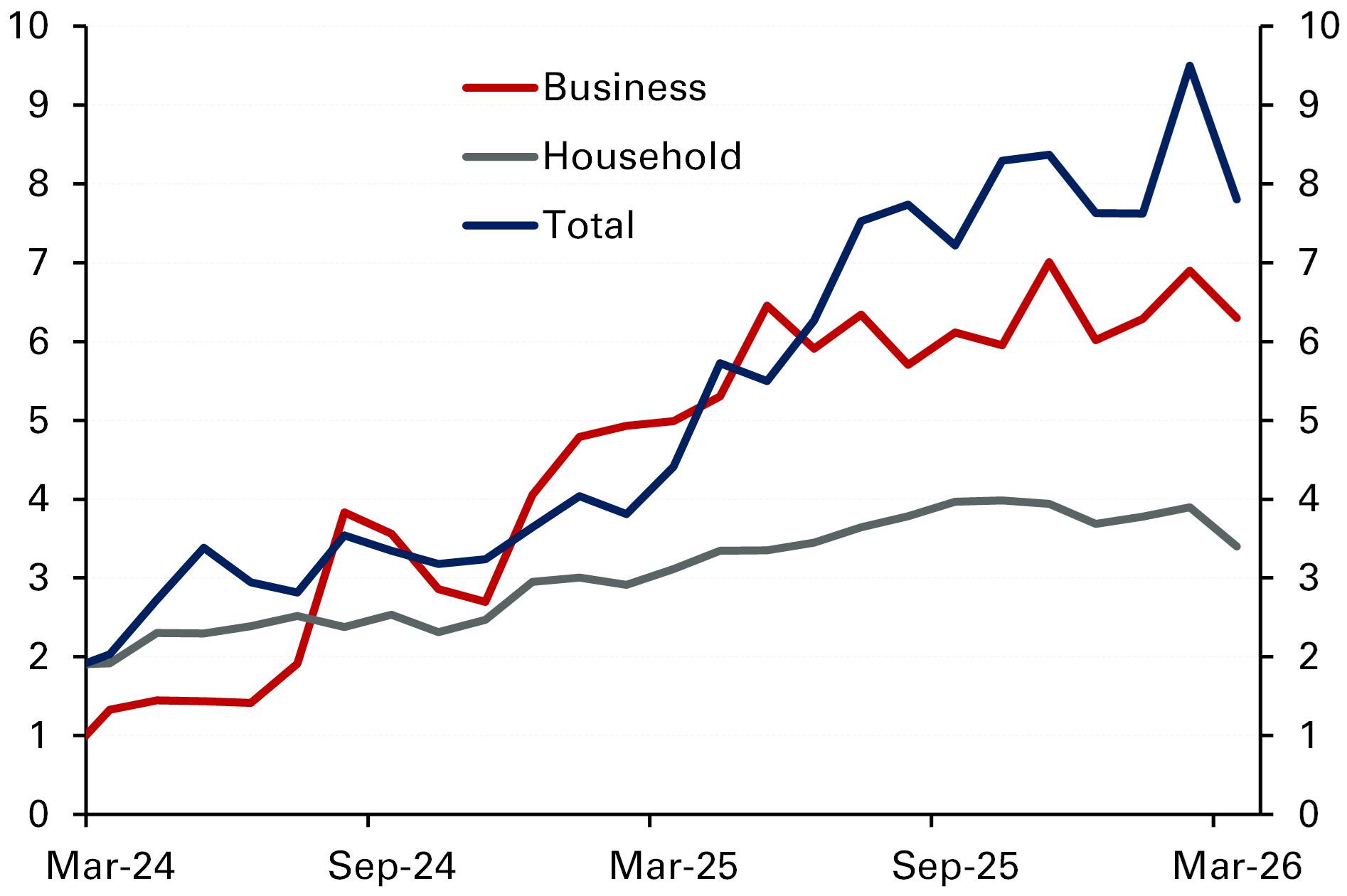
• Domestic credit growth reversed course in March, contracting by 0.6% m/m after February’s robust expansion and easing y/y growth to a still solid 7.8% (Chart 5. Report here.) The fall was driven by a sharp pullback in credit to financial institutions (13% m/m) while business lending growth slowed to +0.6% m/m, slowing y/y growth to 6.3%. Credit to trade contracted by -5.5% m/m, while lending to construction, public services, and oil & gas sectors eased. Household credit fell by 0.4% m/m, its first monthly contraction since March 2024 and at 3.4% y/y it continues to lag business credit. On the liabilities side, residents’ deposits rose by 1.6%m/m (7.4%y/y), supported by a jump in public and government deposits while private sector deposits fell by 1.0% m/m, the steepest drop since December 2020, leaving private sector deposits growth at 1.8% on y/y basis.
Forecast
Conflict expected to hit growth in 2026
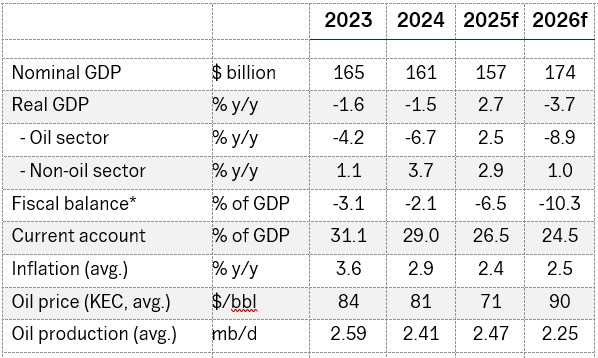
Ongoing geopolitical turmoil has put the brakes on the positive growth momentum seen in 2025, in which we estimate GDP to have risen by 2.7%. The extent of the impact clearly would depend on the intensity and duration of the conflict, as well as how it ends. In our baseline scenario where the conflict is resolved in Q2 and the Strait of Hormuz is soon reopened, resulting in a gradual normalization of shipping over subsequent weeks, GDP contracts by 3.7% in 2026 from a pre-conflict forecast of 4.5%. However, a recession in the non-oil economy is avoided, with downside risks curbed by the government’s large role in the economy as a stabilizing force, and by the limited exposure to tourism and foreign capital relative to GCC peers.
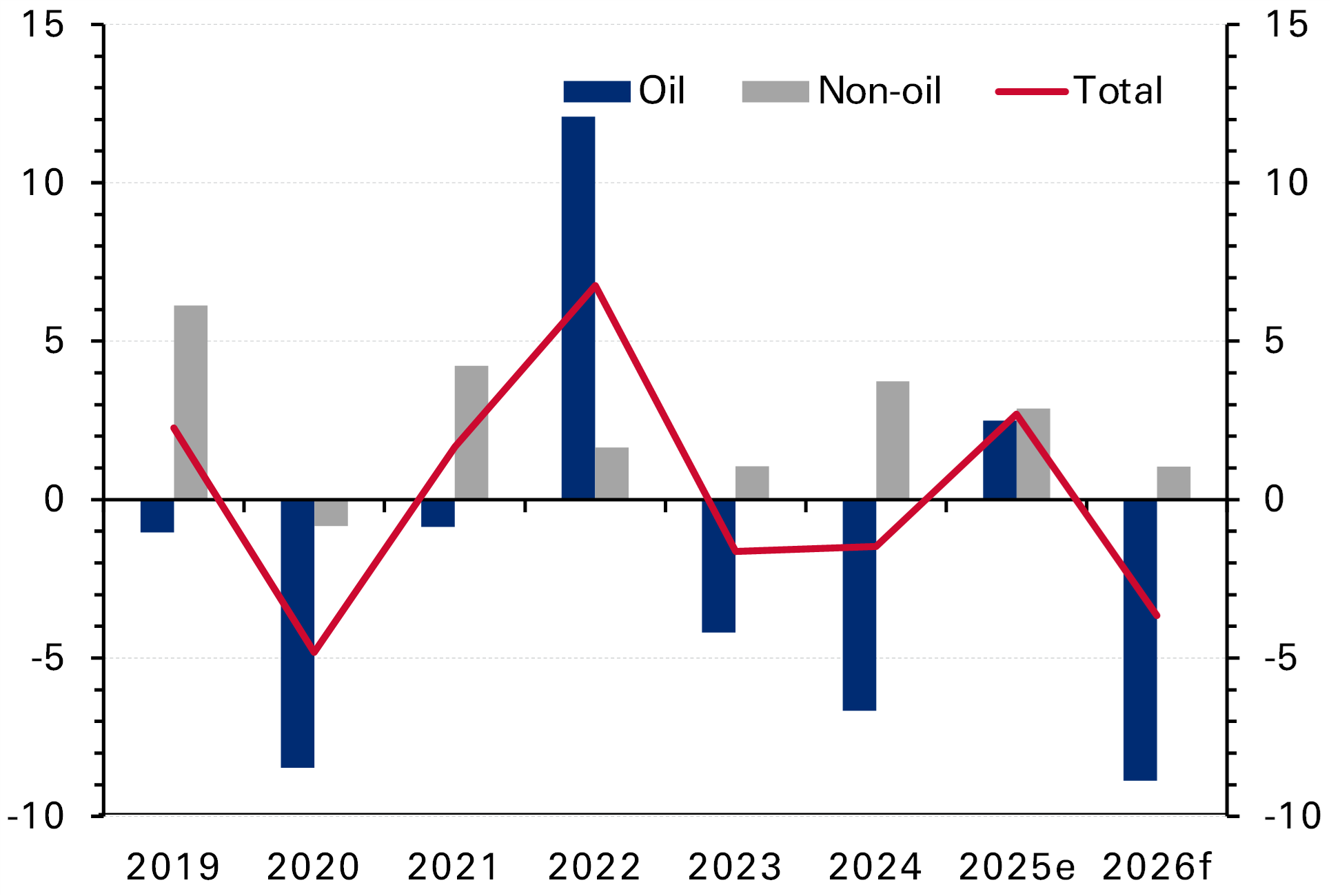
Oil output is projected to fall 9% in 2026 due to the Strait of Hormuz closure which has resulted in a halt of oil exports, pushing down crude oil production to an average of just 2.25 mb/d in 2026, from a pre-conflict expected output of 2.58 mb/d and incorporating a prompt recovery in oil production post-crisis. Meanwhile, lingering geopolitical risk, global stock rebuilding and damage to some major oil and gas facilities in the GCC are likely to keep oil prices elevated over the foreseeable future, even once the conflict concludes: we have therefore raised our forecast to $90/bbl on average in 2026 from $65 previously. We would expect prices to remain above pre-conflict levels through next year as well.
The conflict has also interrupted the momentum that had been building in the non-oil economy, whose growth is now forecast to slow to 1% in 2026 from a pre-conflict forecast of 3.3%. Trade and travel has been severely disrupted, business supply chains have been squeezed, project activity will inevitably slow, and uncertainty is likely to hit spending at least in the short run. Shock mitigation however comes from a) price controls and subsidies, which reduce the pass-through effects to the private sector from higher international food and energy prices; b) stable employment levels in the public sector; and c) the potential provision of support and liquidity to the economy from the government’s vast financial reserves and stimulus measures by the central bank (see above).
Based upon a near-term end to the conflict, we anticipate a strong rebound in economic growth in 2027 of 10% or more, led by the oil sector. As well as domestic oil production returning to pre-conflict levels promptly, we assume that OPEC may even proceed with further official output hikes, helping to recoup oil revenues lost during the conflict. In addition, the normalization of trade and travel patterns will see business and consumer sentiment improve while project activity fully resumes as the government presses on with development plan spending.
Fiscal deficit to widen sharply in FY26/27
Despite the near-term halt to oil exports, our forecast actually assumes that government oil revenues end up higher in FY26/27 than the previous year (although well down on previous years’ levels) as production recovers quickly and oil prices remain elevated. But higher spending on subsidies and post-conflict reconstruction, coupled with a decline in non-oil revenues, could push the deficit to just over 10% of GDP in FY26/27 (from 6.5% in FY25/26). We also take our cue from a 6% rise in spending in the official FY26/27 budget, which incorporated an extra KD0.7bn in non-recurring allocations to support the pensions fund.
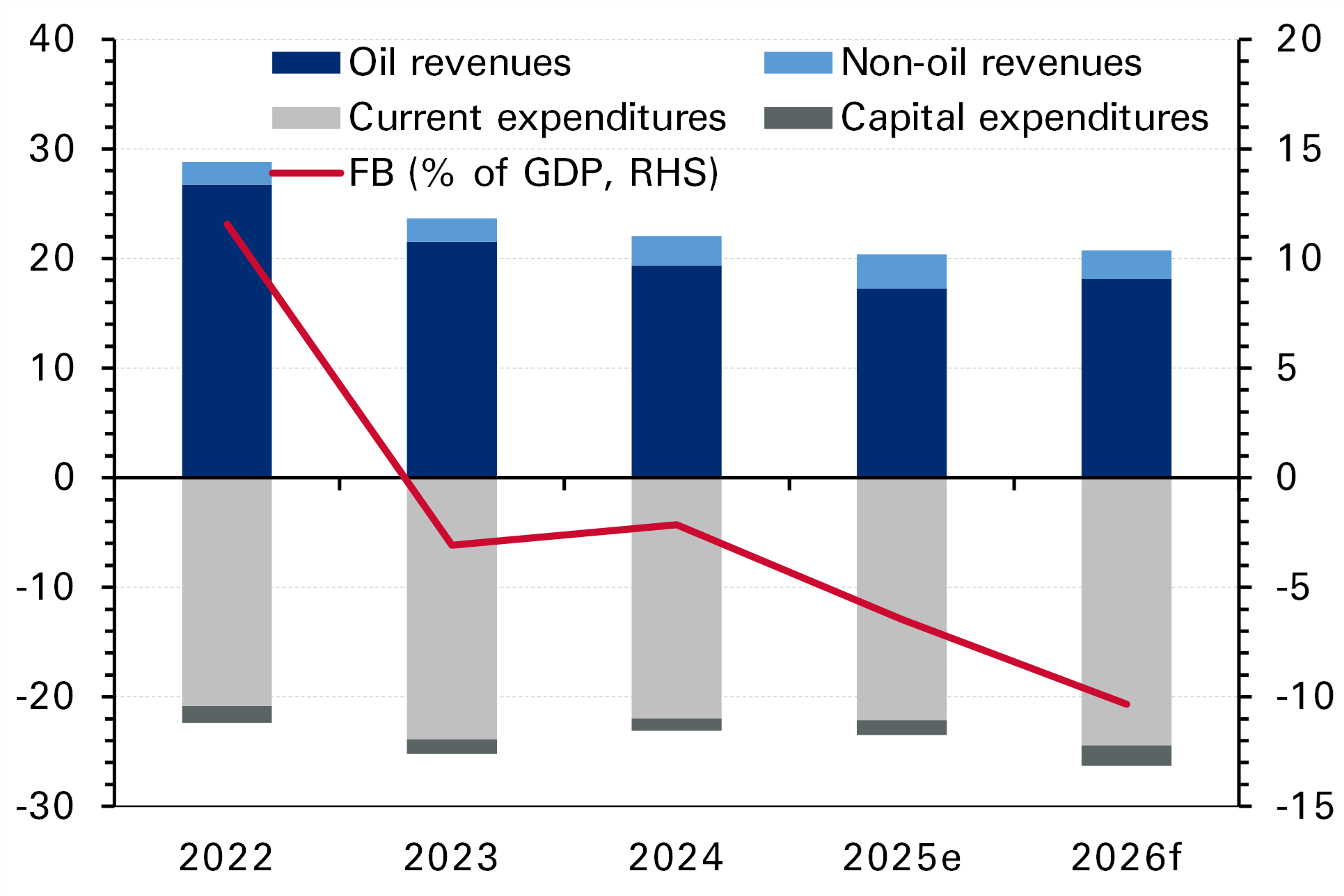
In the context, it is inevitable that the long-standing objective of fiscal reform takes a back seat to the immediate needs of responding to the conflict. The official budget had shown non-oil revenues rising 20% to a record level of KD3.5bn this year, or almost 22% of all revenues, incorporating measures to reprice service fees and the doubling of expat health insurance fees, a new vacant lands tax and corporate income tax on multinational firms. While some of these measures have been delivered, slower non-oil growth and collection lags are likely to defer the full gains until later on.
Similarly on the expenditure side, underlying progress on consolidation may be obscured by the cost of the conflict. Excluding exceptional items, we note much slower current spending growth in the budget than in previous years, thanks in part to a lower planned public sector employee intake of less than 15k (versus 20k+ in the past), representing ongoing wage bill containment efforts. Although visibility is limited, we expect the deficit to narrow to under 3% of GDP next year as oil output recovers, oil prices remain elevated, and war-related spending abates. The IMF recommended in the latest article IV review that Kuwait should undertake about 10% of GDP in fiscal consolidation over the next decade, with measures to rationalize untargeted subsidies (around KD1bn) including fuel subsidies (KD300mn), and government restructuring to boost efficiency.
Despite a wider near-term deficit, we do not foresee any meaningful financing issues. The government issued a larger than expected KD6 billion (12% of GDP) in debt through FY25/26, and a further KD1.1bn in April 2026, which has provided a major boost to liquidity on top of that already in the General Reserve. Public debt levels of 17% of GDP remain very low by international standards and both Moody’s and S&P have reaffirmed the sovereign credit rating at strong investment grade with a stable outlook since the conflict began.
Inflation seen steady despite war pressures
Inflation is forecast to average just 2.5% in 2026 (2.4% in 2025) as inevitable conflict-induced inflationary pressures are countered by government food price controls and subsidies, low housing inflation and disinflationary trends in other consumer items. US policy interest rates – often a guide to changes in Kuwaiti policy rates – are now expected to remain on hold this year or see only one cut versus three cuts at the start of 2026, given the spike in global energy prices due to the US-Iran war. The introduction of a 5% VAT could at some point add approximately 2% to the inflation rate for a year, but no firm date has yet been announced for its implementation.
Reforms still key to unlocking growth potential
The conflict has temporarily shifted the government’s near-term focus away from structural economic reforms to boost growth and diversify the economy, especially those related to the business environment, the labor market, fiscal policy, the public sector, and low investment levels – areas in which Kuwait had lagged behind some GCC peers due to political and administrative difficulties. The post-conflict environment will offer the chance to approach these reforms with increased vigor, and pursue long-term goals outlined in the Vision 2035 plan while reassessing future needs given the regional backdrop.