
 +965 2292 4888


Egypt Economic Brief
27.07.2026
Overview
Egypt’s economy continues to demonstrate resilience despite renewed geopolitical tensions and heightened external volatility. GDP growth accelerated to 5.0% y/y in Q1 2026, supported by strong household consumption and robust activity in tourism, construction, refining and Suez Canal services. Meanwhile, inflation has moderated since March, allowing the central bank to maintain its wait-and-see approach after pausing the easing cycle earlier this year. Nevertheless, regional tensions continue to weigh on business sentiment, capital flows and external balances, as reflected in weaker PMI readings, exchange rate volatility and a wider current account deficit. Looking ahead and despite the current pressures, we expect growth to edge above 5% in FY26/27 overall, supported by improving domestic demand, lower inflation and stronger investment activity. Continued fiscal consolidation, exchange rate flexibility and progress on structural reforms should help preserve macroeconomic stability, although risks are tilted to the downside given regional uncertainties.
Latest developments
• Growth proves resilient amid geopolitical headwinds. GDP growth accelerated to 5.0% y/y in Q1 2026 (January - March 2026), up from 4.8% in the corresponding quarter of last year, according to the Ministry of Planning. The stronger-than-expected outturn came despite the outbreak of the US-Iran conflict towards the end of the quarter, which disrupted supply chains and pushed global oil prices higher. Household consumption remained the main driver of growth, followed by government spending, while private investment continued to contribute only modestly. Meanwhile, net exports remained a drag on activity amid higher import costs associated with the regional conflict. Sectoral performance was broadly positive across the non-oil economy, with strong growth recorded in the Suez Canal (+24% y/y), tourism (+8.3%) and construction (+5.2%) sectors. Construction activity returned to growth following a contraction in the previous quarter, supported by continued implementation of infrastructure projects and urban expansion plans. The refining sector also posted strong growth (+15% y/y) as international energy companies resumed operations following the government’s efforts to settle outstanding arrears.
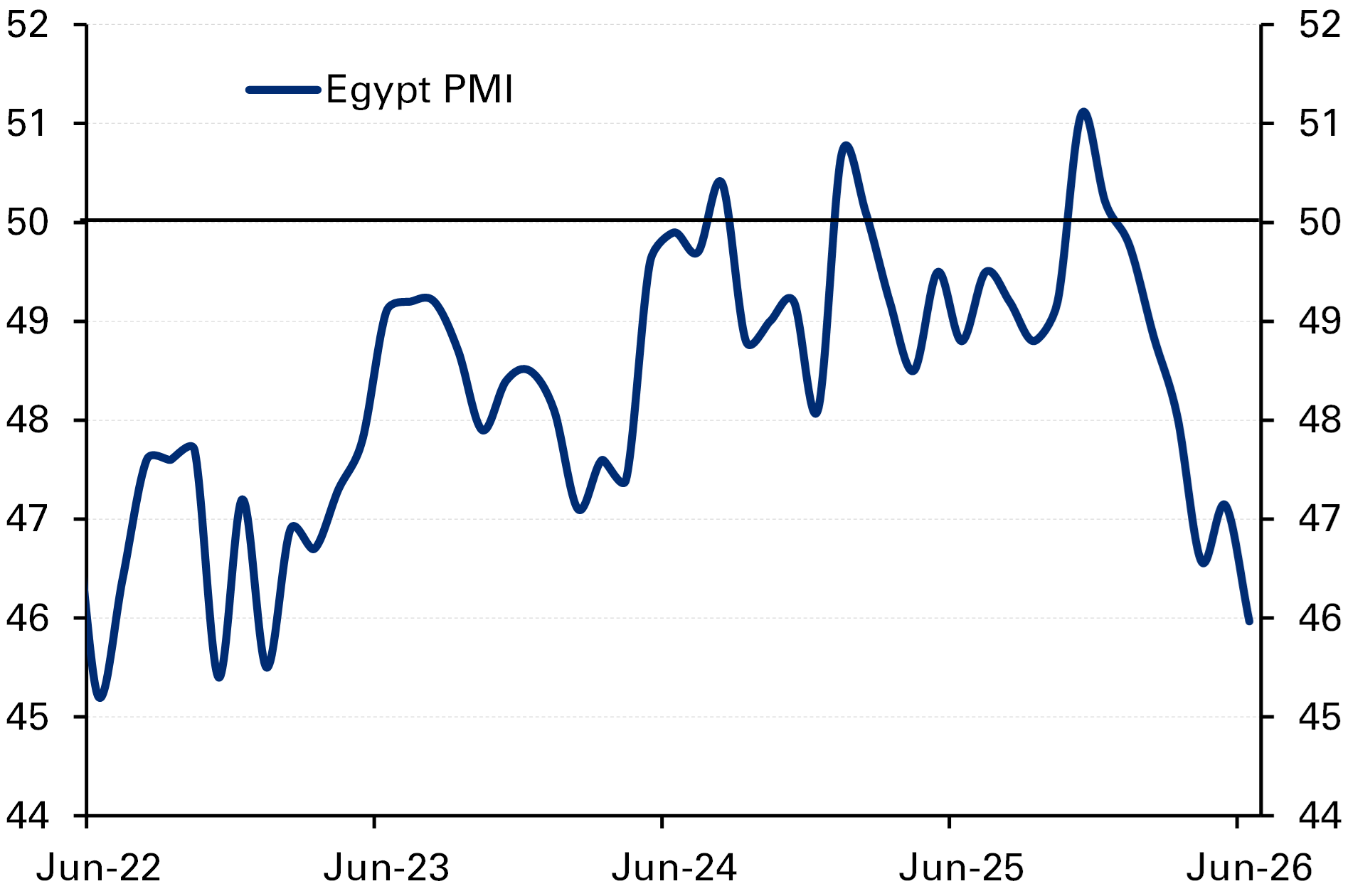
• PMI confirms non-oil business activity remains under pressure. The Purchasing Managers’ Index (PMI) fell to 46 in June, down from 47.1 in May, remaining below the 50-point expansion threshold for the sixth consecutive month. (Chart 1.) The latest reading marks the weakest business conditions since January 2023, highlighting the continued challenges facing the non-oil private sector and suggesting that GDP growth could fall to just below 4.0% y/y at the end of the second quarter. The survey revealed a broad-based slowdown, with businesses reporting weaker demand, declining new orders, lower output, and further reductions in employment and purchasing activity. Firms also cited supply chain disruptions, liquidity constraints, and shortages of raw materials, while the regional conflict continued to weigh on business sentiment. On a positive note, both input cost and selling price inflation eased from their multi-year highs in May, suggesting that cost pressures may be starting to moderate. Firms were also more optimistic about the outlook, expecting an improvement in economic activity on regional conflict de-escalation. Overall, June’s PMI suggests that Egypt’s non-oil economy remains under pressure despite recent signs of easing inflation but may quickly benefit from a normalization of economic conditions if conflict pressures abate.
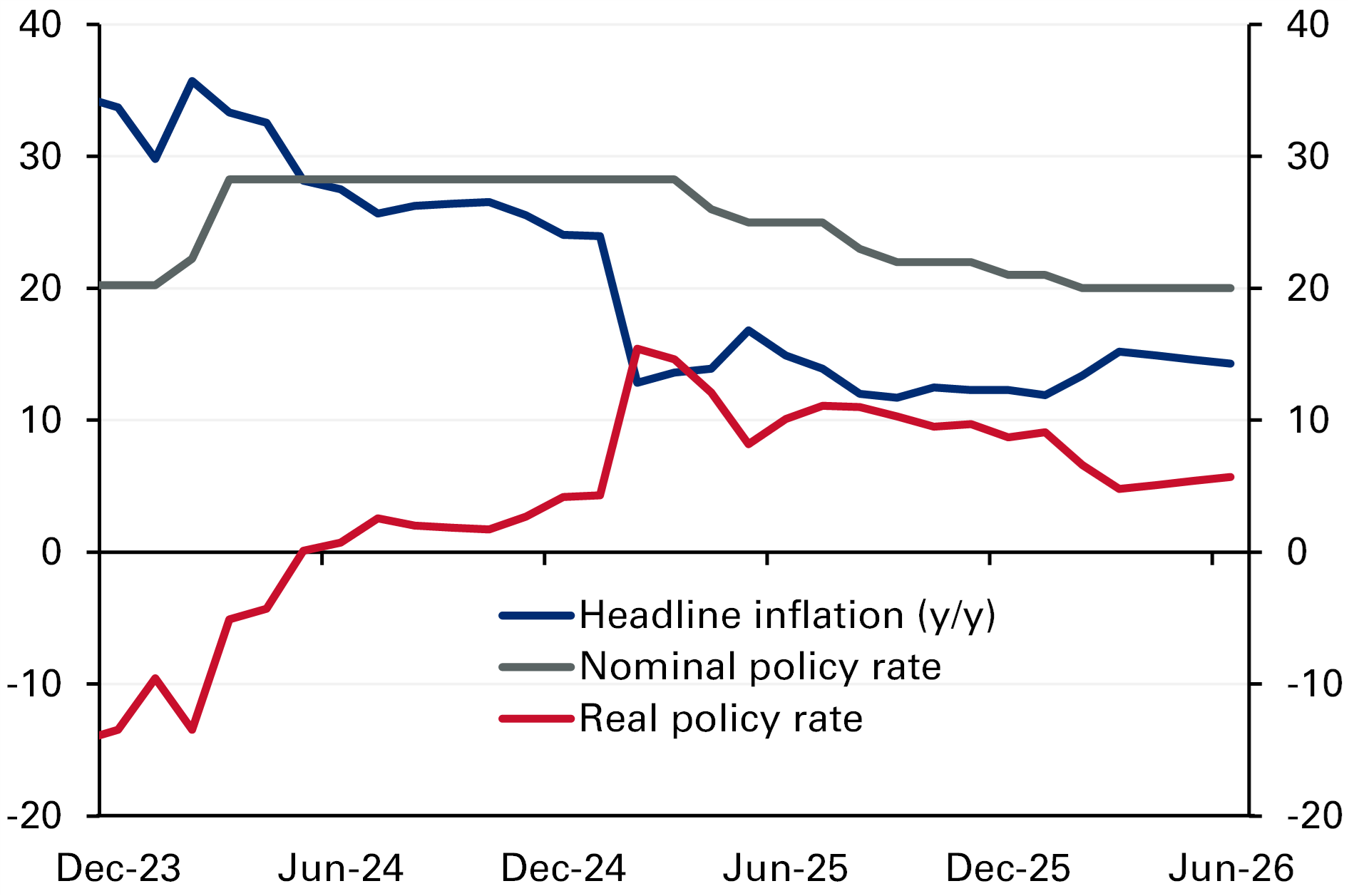
• Inflation continues to ease, supporting CBE decision to hold rates. The Central Bank of Egypt’s (CBE) Monetary Policy Committee (MPC) kept policy interest rates unchanged in July’s meeting for the third consecutive time, maintaining the overnight deposit rate at 19% and the overnight lending rate at 20%, broadly in line with market expectations. The decision came as inflation continued to moderate, with urban headline inflation slowing for a third consecutive month to 14.3% y/y (-0.4% m/m) in June, down from 14.6% in May and 14.9% in April. (Chart 2.) The monthly deflation was largely driven by lower food prices, particularly vegetables (-12%), meat and poultry (-5.2%), and dairy products (-2%). However, the picture was less encouraging below the surface. Core inflation, which excludes volatile items such as food and energy, edged higher to 14.3% y/y, suggesting that underlying inflationary pressures remain persistent despite the recent improvement in the headline figure. With real interest rates still standing at close to 6%, the CBE appears comfortable maintaining its wait-and-see approach while monitoring the impact of regional developments on prices and economic activity. For now, the latest figures support the view that the easing cycle will remain on hold until the disinflationary trend becomes more broad-based and sustainable.
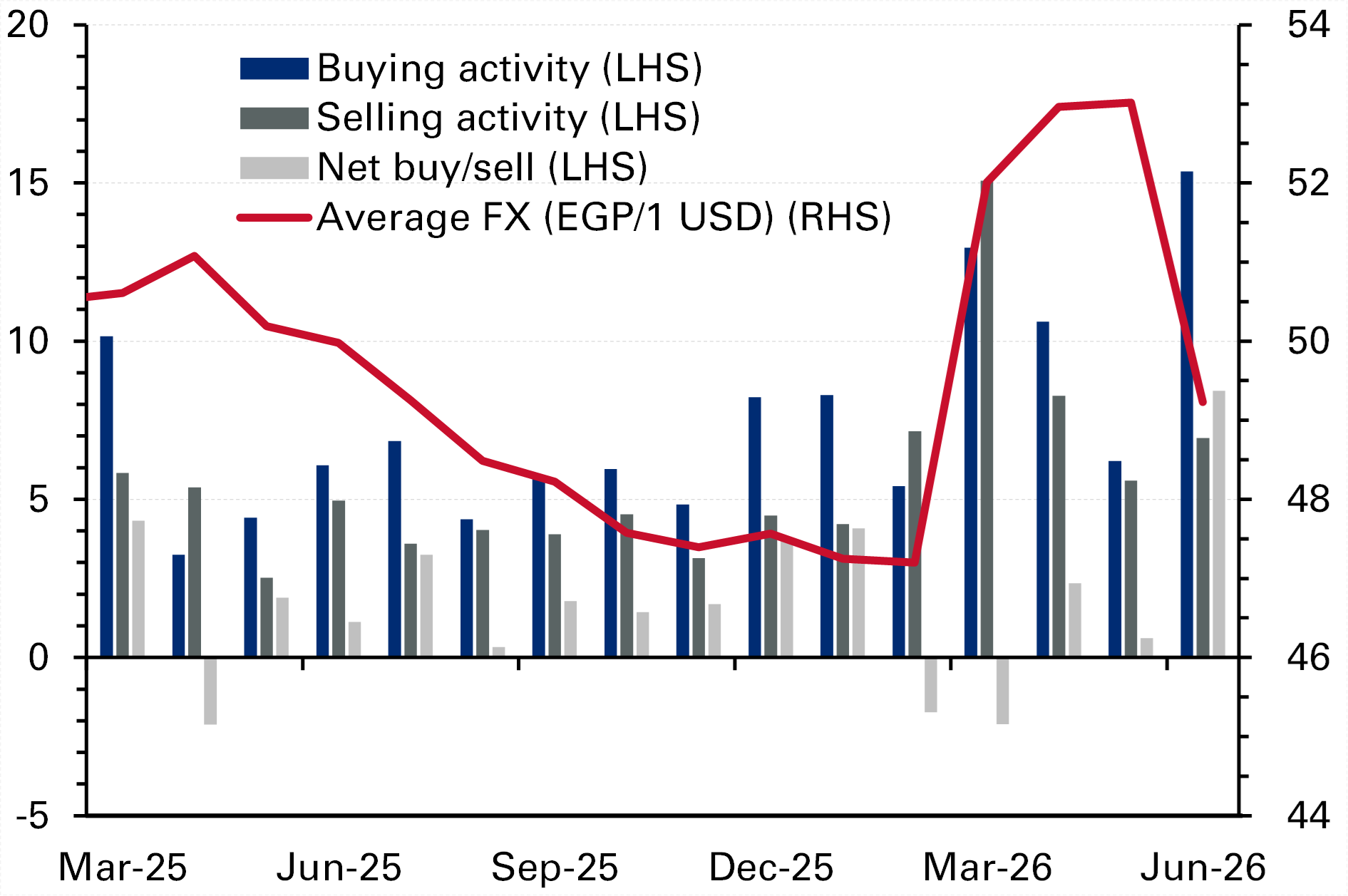
• Capital flow volatility continues to drive sharp FX swings. The continued volatility in capital flows in H1 2026 saw the Egyptian pound experience notable fluctuations, ending the first half of the year down by 3.3% against the US dollar, despite the recent recovery in foreign portfolio inflows. Foreign appetite for emerging market debt including Egyptian assets regained momentum after the US and Iran signed their MoU in June. Net portfolio inflows into Egyptian government debt were the strongest in June at $8.4 billion. However, the trend appears to have reversed so far in July amid rising US-Iran tensions. Cumulative net inflows into the secondary market recorded $11.6 billion for H1 2026, down from $12.2 billion in H2 2025. (Chart 3.)
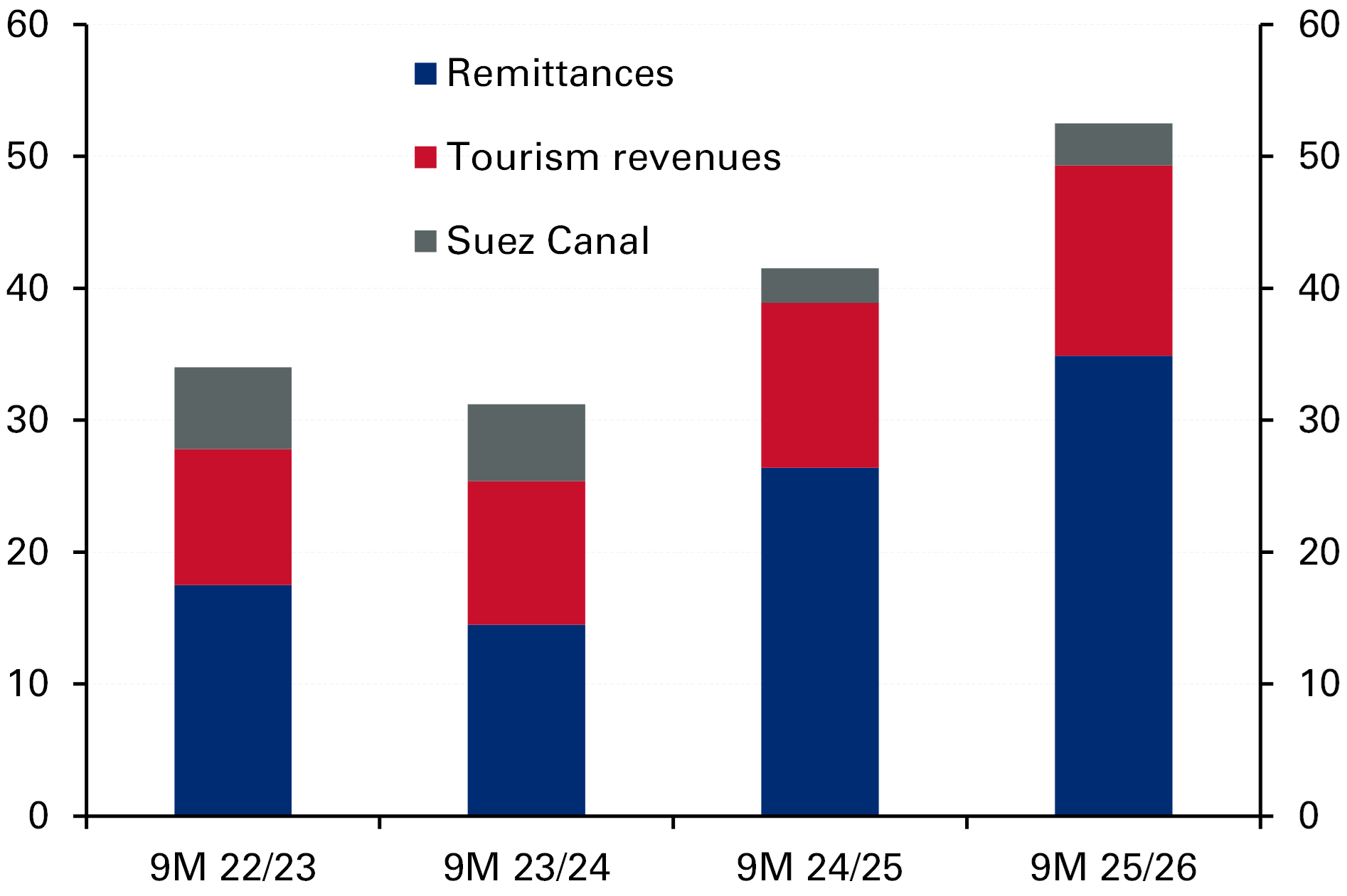
• Current account deficit remains high due to the widened trade deficit. The current account deficit widened in the first 9 months of FY25/26 (July 2025 – March 2026) to $14.6 billion as higher imports pushed the trade gap higher and extending the trade deficit to $14.8 billion. Nevertheless, Egypt’s traditional sources of foreign currency continued to provide important support: workers’ remittances increased by 32% y/y to $34.9 billion, tourism revenues rose by 14.9% to $14.4 billion and Suez Canal revenues posted solid growth of 22% y/y to reach $3.2 billion during the period. (Chart 4.) Meanwhile, the balance of payments showed signs of improvement, with the overall deficit narrowing slightly to $1.8 billion, supported by stronger foreign direct investment inflows and resilient sources of foreign currency earnings. The main highlight was a 33% y/y increase in net FDI inflows to $13 billion, boosted by large investment projects, most notably the Alam El Roum development project on the North Coast, alongside continued investments in the energy sector. In contrast, foreign portfolio flows remained volatile. The outbreak of hostilities in the Gulf during the first quarter of 2026 triggered significant outflows from Egyptian debt markets, leaving portfolio investments with a net outflow of $4.4 billion during the first nine months of the fiscal year.
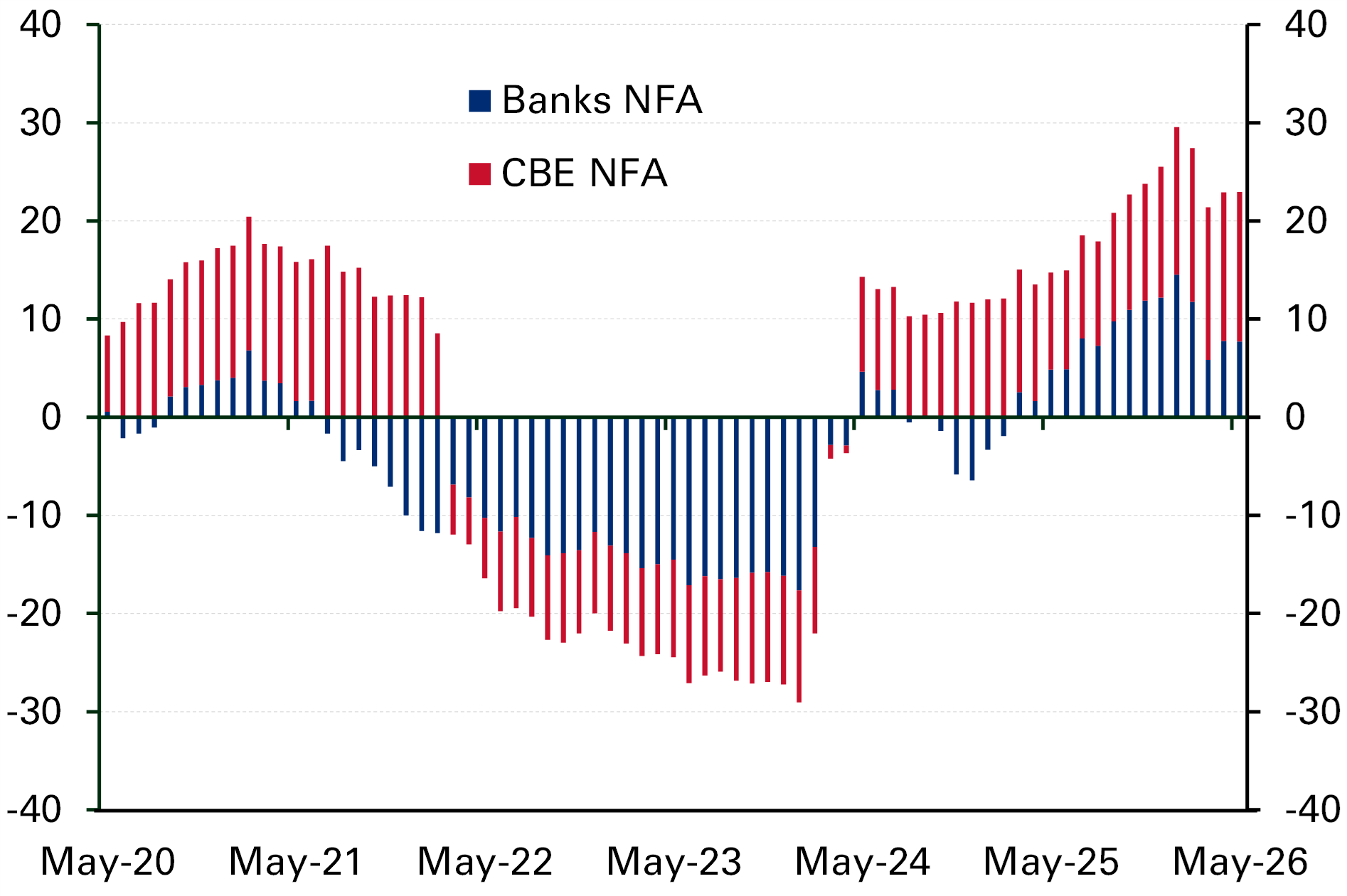
• Net foreign assets (NFAs) remained stable in May. NFAs in the banking system reached $22.9 billion at the end of May, down from a 14-year high of $29.5 billion in January. The CBE’s NFAs remained stable at $15.2 billion despite turbulence stemming from the regional conflict. Therefore, the commercial banks absorbed the whole external shock where their NFAs decreased to $7.7 billion at the end of May, down from $14.5 billion in January before the war started between US and Iran. (Chart 5.) In the same context, official net international reserves at the CBE reached a record high of $55.1 billion at the end of June, covering around 6 months of imports. In addition, unofficial reserves (consisting of securities and deposits not included in the official reserves) remained ample at $11 billion at the end of June, which provided an additional layer of support to the financial system.
Forecast
Growth to accelerate further
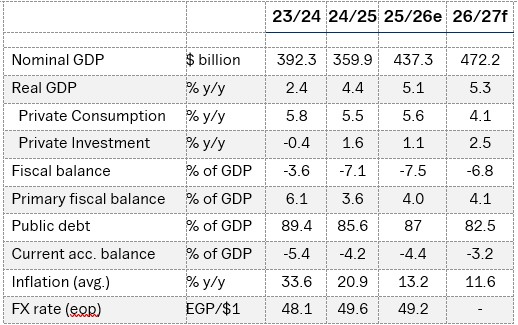
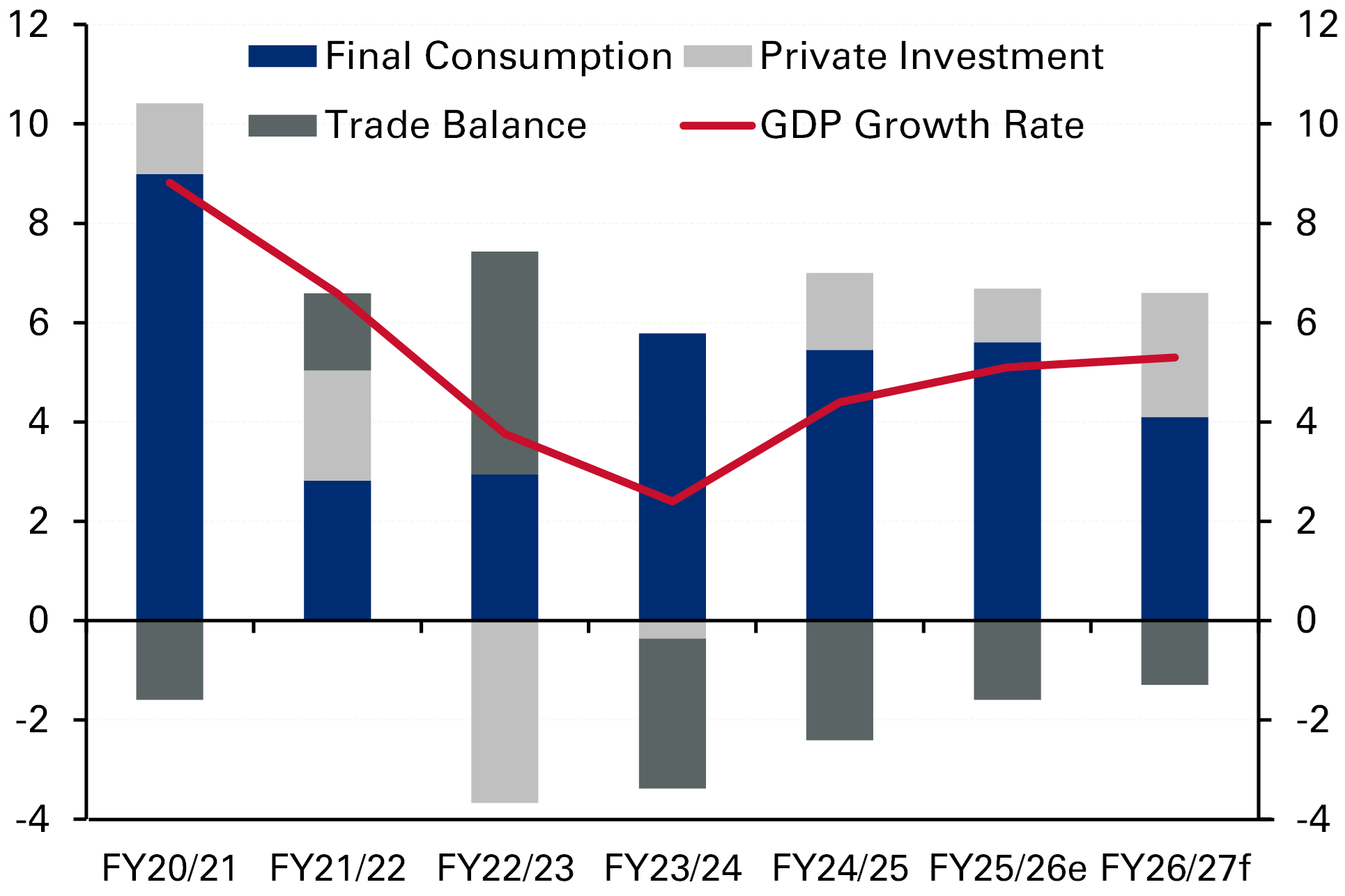
We expect real GDP growth to accelerate from an estimated 5.1% in FY25/26 to 5.3% in FY26/27, marking the strongest expansion since FY21/22 despite the US-Iran conflict in the Gulf continuing to cast a shadow at the beginning of the fiscal year in July. (Chart 6.) Private consumption is likely to remain the primary driver of growth in the economy, supported by moderating inflation, public sector wage increases and continued strength in workers’ remittances. Improving labor market conditions should provide additional support to household spending. Investment growth is also expected to strengthen as lower interest rates revive delayed private sector projects and improve financing conditions. FDI inflows should remain robust, particularly in manufacturing, industry and construction, while implementation of Gulf-backed tourism projects, including Ras El Hekma and Alam El Roum, is expected to accelerate. Tourism and Suez Canal receipts are also expected to improve gradually over the forecast horizon, providing additional support to growth and foreign exchange earnings.
Inflation to resume its downward path
Given the recent easing in inflation we now expect inflation to average around 14% in H2 2026 compared with our previous forecast of 16%, lowering our FY26/27 forecast to 11.6%. The expected moderation reflects a more favorable outlook for food and energy prices alongside a stronger-than-expected exchange rate. Food inflation has remained relatively contained in recent months, while lower oil prices would reduce the likelihood of additional fuel price increases in H2 2026 if the war in the Gulf de-escalates. However, risks remain tilted to the upside, particularly from planned food subsidy reforms and the possibility of additional fuel subsidy removal as the conflict continues in the region.
Monetary easing likely to resume in late 2026
We expect the CBE to keep policy rates unchanged through most of 2026 before resuming the easing cycle with a 100-bps cut in Q4 2026, followed by an additional 300-bps cut in 2027 that brings the lending rate down to 16%. However, a faster decline in inflation could allow the CBE to begin easing sooner, and a drop towards the 12-13% range by year-end would increase the likelihood of an earlier and potentially larger easing cycle.
Fiscal consolidation to continue despite risks
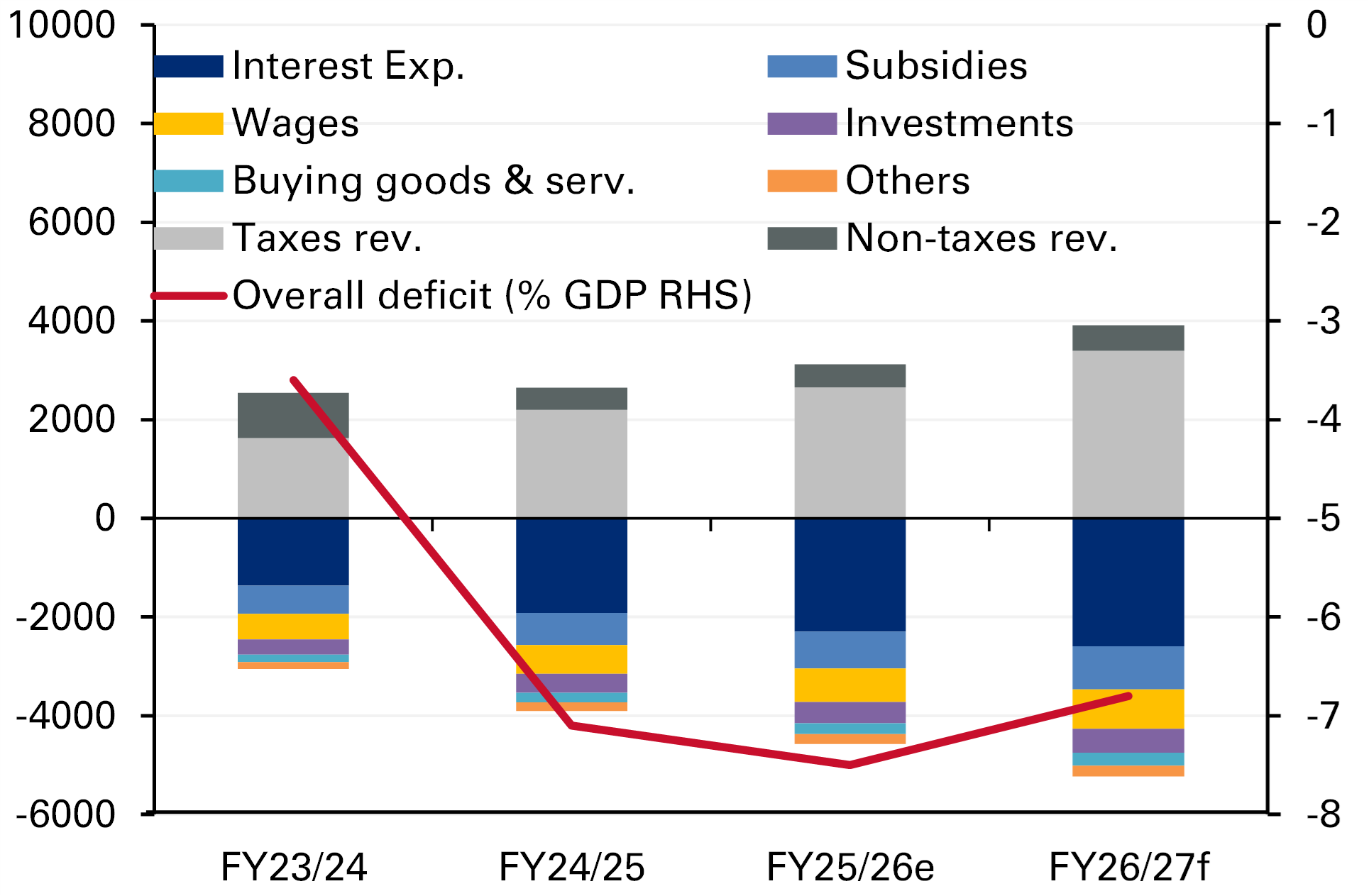
The renewed escalation between the US and Iran poses downside risks to the fiscal outlook, particularly as it coincides with the start of FY26/27. Nevertheless, we expect the fiscal deficit to narrow from an estimated 7.5% of GDP in FY25/26 to 6.8% in FY26/27. (Chart 7.) Lower debt servicing costs should provide increasing support to fiscal consolidation once geopolitical risks ease and monetary easing resumes. The expected decline in interest rates should be transmitted quickly to government borrowing costs given that around 75% of public debt is domestically held and nearly 40% of domestic debt matures within one year. Subsidy spending could also decline if average oil prices (Brent) come in below the government’s budget assumption of $75/bbl, notwithstanding recent price pressures stemming from the flare up of US-Iran hostilities. Planned food and fuel subsidy reforms should further contain expenditure growth by lowering subsidy costs.
On the revenue side, stronger economic activity and tax administration reforms should continue to support collections, although revenues are likely to remain below the government’s EGP4 trillion target and reach closer to EGP3.9 trillion. Public debt is forecast to decline from an estimated 87% of GDP in FY25/26 to 82.5% in FY26/27, extending the downward trend from the FY22/23 peak of 95.7% of GDP. Stronger nominal GDP growth, lower fiscal deficits and declining borrowing costs would continue to support debt dynamics, while efforts to lengthen debt maturity are expected to gradually reduce refinancing risks.
External balances to improve gradually
We expect the current account deficit to narrow from an estimated 4.4% of GDP in FY25/26 to 3.2% in FY26/27. Import growth should moderate as global commodity and energy prices normalize, while merchandise exports are expected to benefit from additional production capacity in chemicals, textiles, food processing and automotive manufacturing. However, weak domestic gas production is likely to continue constraining hydrocarbon exports in the near term. The services surplus should widen gradually as tourism activity strengthens and Suez Canal traffic recovers during 2027. In the meantime, higher transit fees and the partial rerouting of regional energy shipments could provide temporary support to canal receipts. Meanwhile, remittance growth is expected to normalize following exceptionally strong inflows as precautionary transfers ease and previous migration trends become fully reflected in transfer patterns. Moreover, FDI inflows are expected to remain above their historical average, supported by manufacturing investments, Gulf-backed tourism projects and continued progress on privatization and strategic asset sales.
External financing conditions should remain manageable, supported by multilateral funding and renewed access to international debt markets. Recent disbursements from the IMF ($1.6 billion) and World Bank ($1 billion), alongside successful international bond issuances ($1 billion in social bonds and $500 million in Samurai bonds) provide additional financing buffers. Looking ahead, Egypt could seek a successor IMF arrangement following the expiry of the current program in December.
Risks remain skewed to the downside
Amid a broadly positive outlook, risks are tilted to the downside. A prolonged regional conflict would increase Egypt’s import bill through higher oil prices, larger subsidy costs and a wider sovereign risk premium, while a weaker-than-expected exchange rate would stoke inflation and pressure the public finances. Similarly, weaker tourism flows and a slower recovery in Suez Canal traffic would weigh on growth and external balances. On the upside, faster progress on privatization and strategic state asset sales, combined with stronger investor sentiment and an improved regional environment, could support stronger capital inflows and better fiscal and external outcomes.