
 +965 2292 4888


Egypt Economic Brief
28.04.2026
Overview
The US-Iran conflict has introduced new headwinds for Egypt’s economy, but although we expect slightly slower growth over the next year than previously, the positive longer-term story remains intact. Growth had strengthened to 5.3% in H1 FY25/26, supported by a recovery in non-oil activity and improving private investment, before spillovers from the conflict began to weigh on sentiment and external inflows. The conflict shock is transmitted primarily through higher energy prices, weaker Suez Canal traffic, and rising volatility in portfolio flows, putting pressure on the exchange rate and inflation. Despite this, external buffers remain relatively solid, with elevated reserves and improved net foreign asset positions providing a cushion against renewed outflows. Inflation has resumed an upward trend, delaying the monetary easing cycle, while fiscal pressures are re-emerging through higher subsidy costs. Looking ahead, the reform agenda and continued international support remain critical anchors, helping contain vulnerabilities and position the economy for stronger growth once external conditions stabilize.
Latest developments
• Growth peaks at a three-year high ahead of the conflict. GDP growth held steady at 5.3% y/y in Q2 FY25/26 (October - December 2025), matching the pace recorded in Q1 and exceeding the level seen a year earlier by one percentage point. This marks the strongest FYH1 growth performance in three years, prior to the onset of the regional conflict. The expansion was broad-based across non-oil sectors, with the notable exception of construction, which contracted for the first time since Q2 2020 during the pandemic. Suez Canal activity, tourism, and communications led growth with double-digit expansions, followed by financial intermediation and insurance. In particular, Suez Canal activity returned to growth for the first time since Q4 2023, reflecting a temporary normalization in Red Sea shipping conditions before the latest disruptions. On the investment side, private sector investment increased by 5.4% and accounted for 58% of total investment, signaling a gradual recovery in confidence and capital formation. However, its contribution to overall growth remained limited at around 1 percentage point, highlighting that the private sector has yet to fully assume a leading role in driving economic activity.
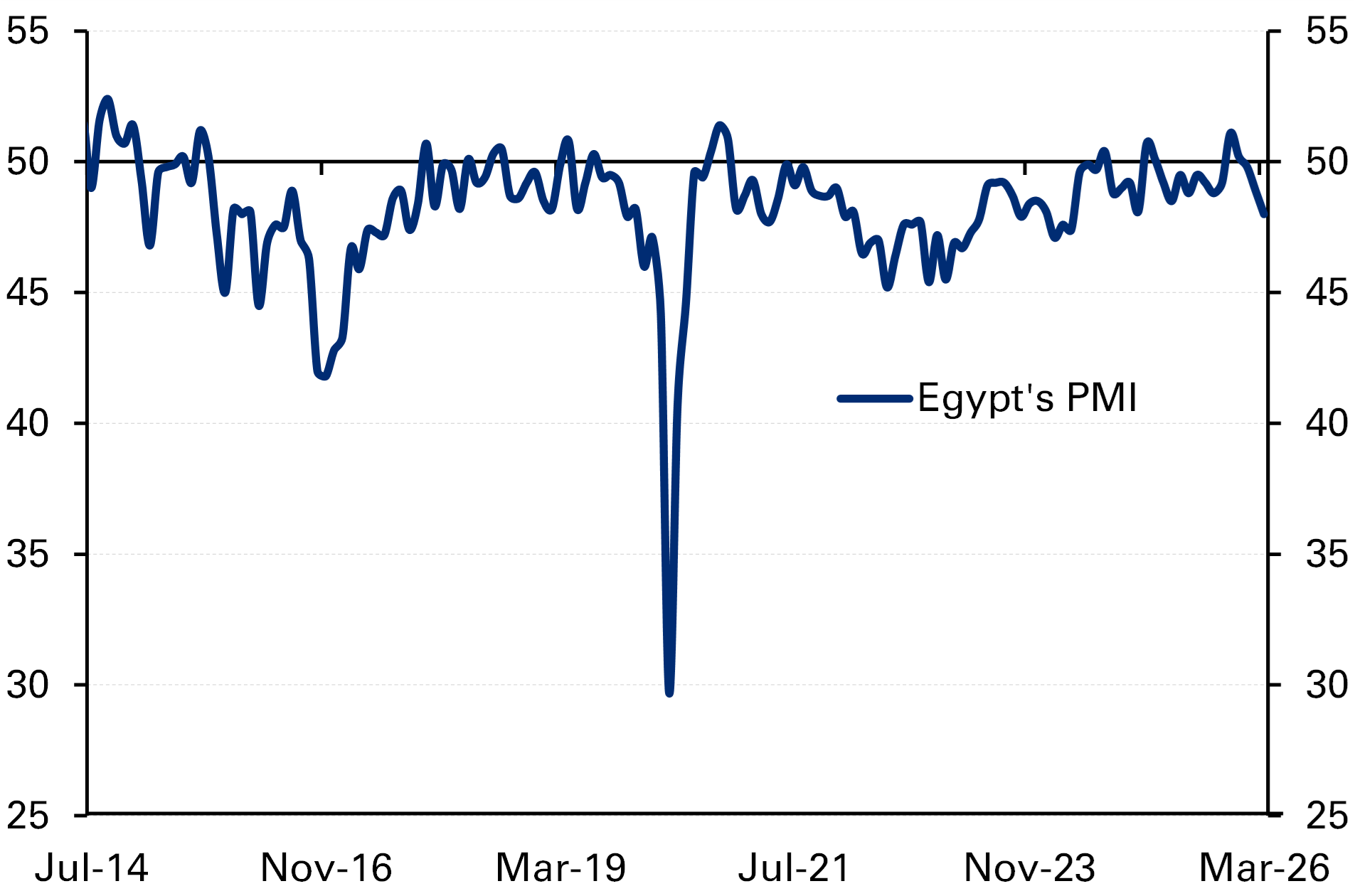
• PMI confirms activity under fresh pressure in March as war weighs on demand and costs. The PMI gauge of non-oil private sector activity declined for the fourth consecutive month in March to 48, down from 48.9 in February, signaling a deeper contraction in business activity and consistent with a slowdown in GDP growth from the 5%+ rate mentioned above. (Chart 1.) The slowdown was primarily driven by sharper declines in output and new orders, both of which fell to their lowest levels in nearly two years. Survey evidence pointed to the regional conflict as a key drag on demand, as heightened uncertainty and rising prices weighed on client spending decisions. On the cost side, businesses faced intensifying input price pressures, with purchase price inflation accelerating to its fastest pace in around one and a half years. Firms largely attributed this to higher fuel and raw material costs, compounded by the strength of the US dollar. In response, companies raised their selling prices at the fastest rate since May 2025, attempting to partially pass through the cost increases.
• Inflation accelerates in March on energy and supply-side pressures. Inflationary pressures intensified in March, marking the second consecutive monthly increase amid rising energy costs and spillovers from the regional conflict. Headline inflation rose to 15.2% y/y (3.2% m/m), up from 13.4% y/y (2.8% m/m) in February. (Chart 2.) Core inflation also accelerated to 14% y/y (2% m/m), compared to 12.7% y/y (3% m/m) in the previous month, according to the Central Bank of Egypt (CBE), pointing to increasingly broad-based price pressures. The monthly increase was primarily driven by the transport component, which surged to 9.8% m/m in March from just 0.2% in February, reflecting the pass-through of higher global oil prices and recent domestic fuel price adjustments. Food inflation also picked up, rising by 4.7% m/m, largely due to higher vegetable prices. In addition, housing and utilities costs increased by 3.3% m/m, further contributing to the overall rise in inflation.
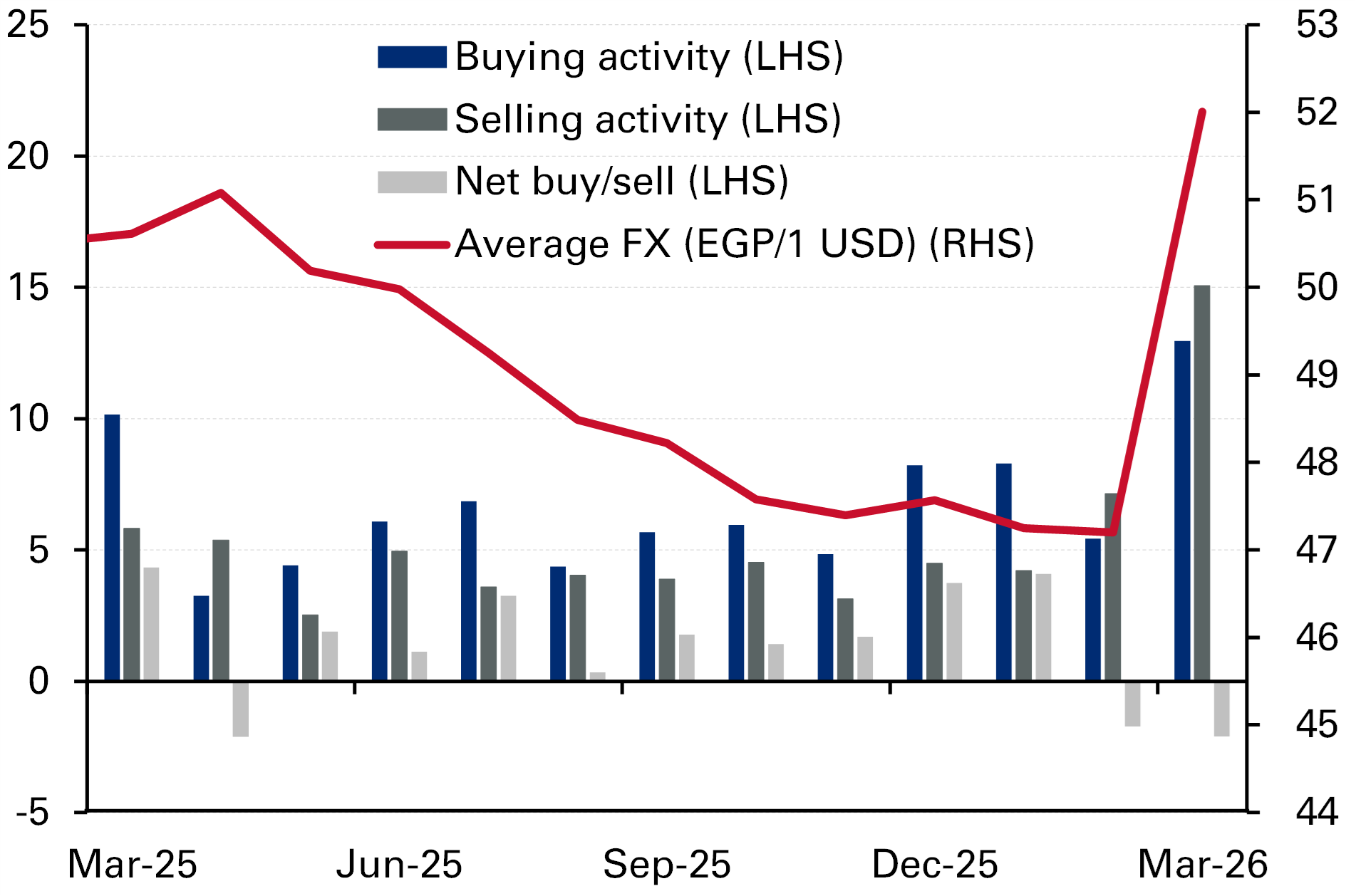
• Capital flow volatility drives sharp FX swings, reflecting greater exchange rate flexibility. Heightened volatility in capital flows has translated into notable fluctuations in the Egyptian pound. Foreign appetite for local government debt was strong ahead of the conflict but reversed amid rising uncertainty, with net outflows from the secondary market reaching $1.7 billion in February and a further $2.1 billion in March. Cumulative net inflows into the secondary market had stood at a solid $17.1 billion for 2025. (Chart 3.) More recently, improving sentiment around ongoing US-Iran negotiations has supported a partial return of carry trade inflows, with around $4.2 billion re-entering the market in recent weeks. The Egyptian pound depreciated by roughly 16% during the peak of the crisis, reaching its weakest level on April 7, before rebounding by around 5% as inflows resumed. This two-way movement underscores the increasing role of exchange rate flexibility in absorbing external shocks, in contrast to previous episodes, and is further supported by stronger external buffers within the banking sector.
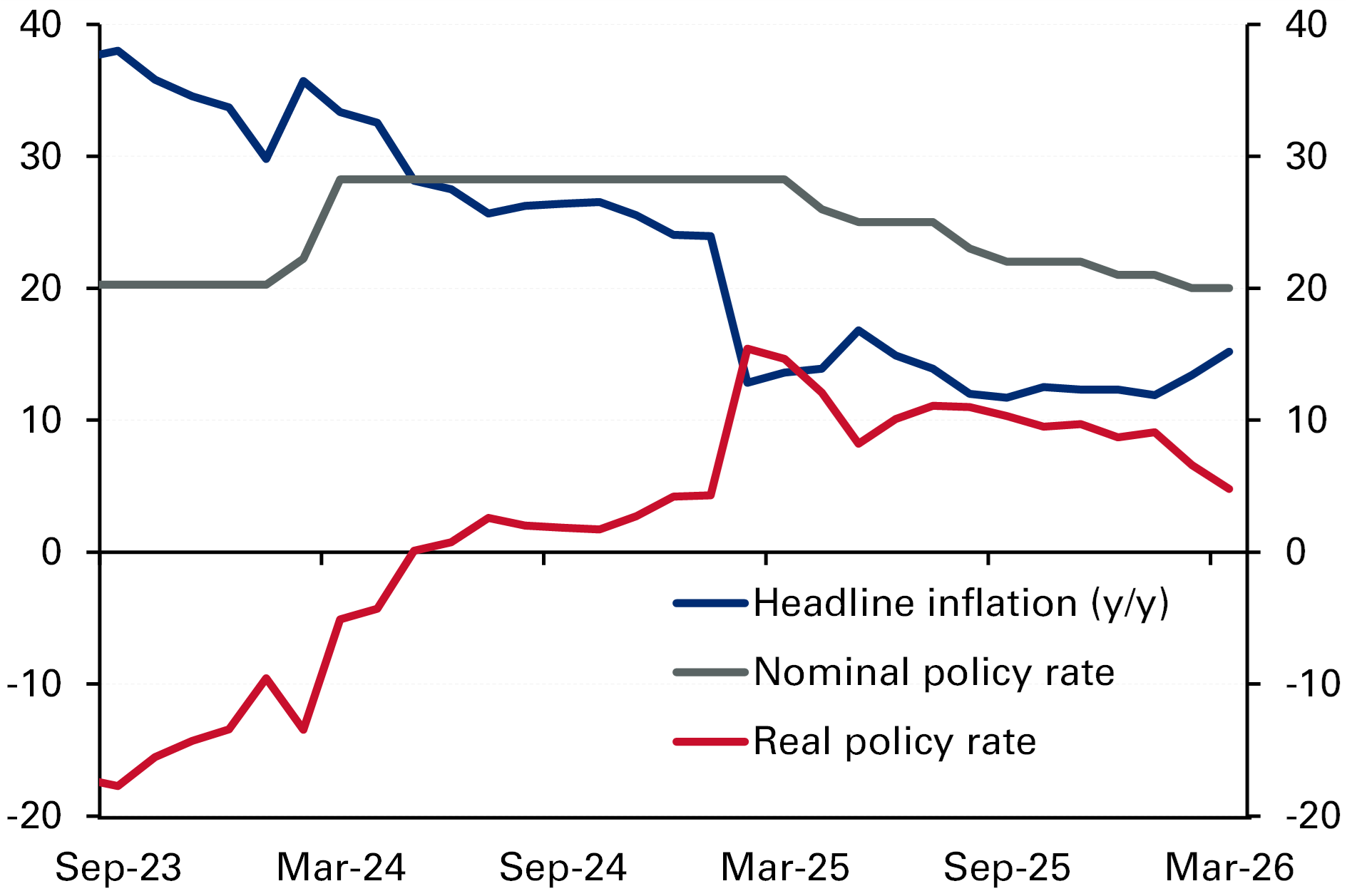
• CBE keeps interest rates on hold in April. The main lending rate was left at 20% (having been cut by 100 bps in February), with the CBE citing the global energy shock and upside risk to inflation. The April decision reinforces a higher-for-longer interest rate environment. While positive real rates (5% as of March) support external stability and help contain inflationary pressures, they continue to weigh on credit demand, investment, and private sector growth. Still, the CBE noted the depreciation in the exchange rate as helping to mitigate the impact of the shock on domestic economic activity.
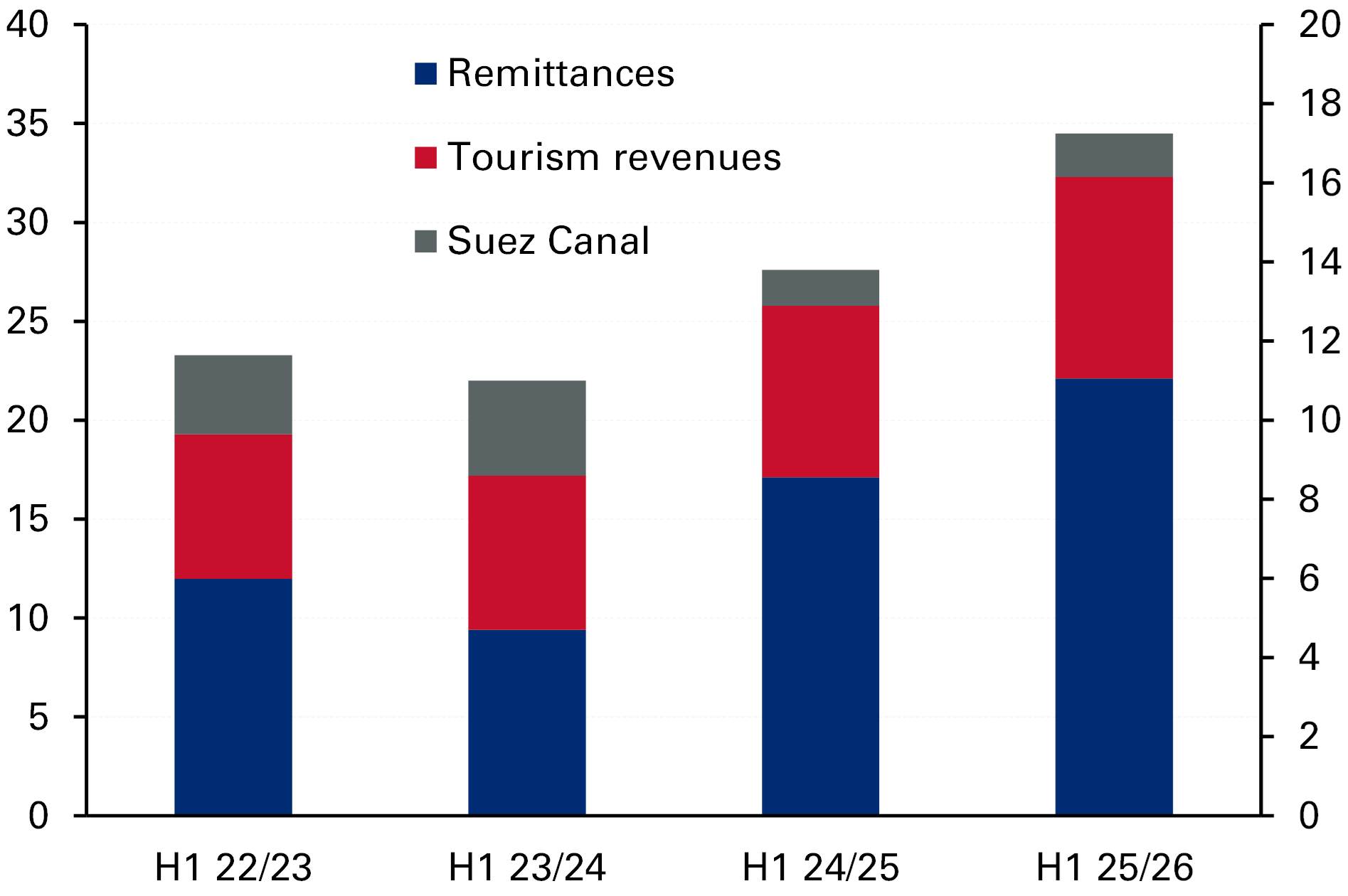
• Current account deficit narrows on stronger remittances and tourism, despite widening trade deficit. The current account deficit narrowed to $9.5 billion in H1 FY25/26 (July to December 2025), down from $11 billion in the same period a year earlier, supported by robust growth in key foreign currency inflows. Remittances from Egyptians abroad rose by 30% y/y to $22.1 billion, up from $17.1 billion, while tourism revenues increased by 17.3% to $10.2 billion, compared to $8.7 billion previously. Suez Canal receipts also improved, rising by 19% to $2.2 billion, driven by a 16% increase in net tonnage and a 5.8% rise in the number of transiting vessels. (Chart 4.) On the downside, the oil trade deficit widened to $8.9 billion from $6.7 billion, primarily reflecting a 20% y/y increase in oil imports. Meanwhile, net FDI inflows rose to $9.3 billion, up from $6 billion, largely supported by the implementation of Alam El-Roum deal with Qatar, which contributed $3.5 billion by the end of 2025.
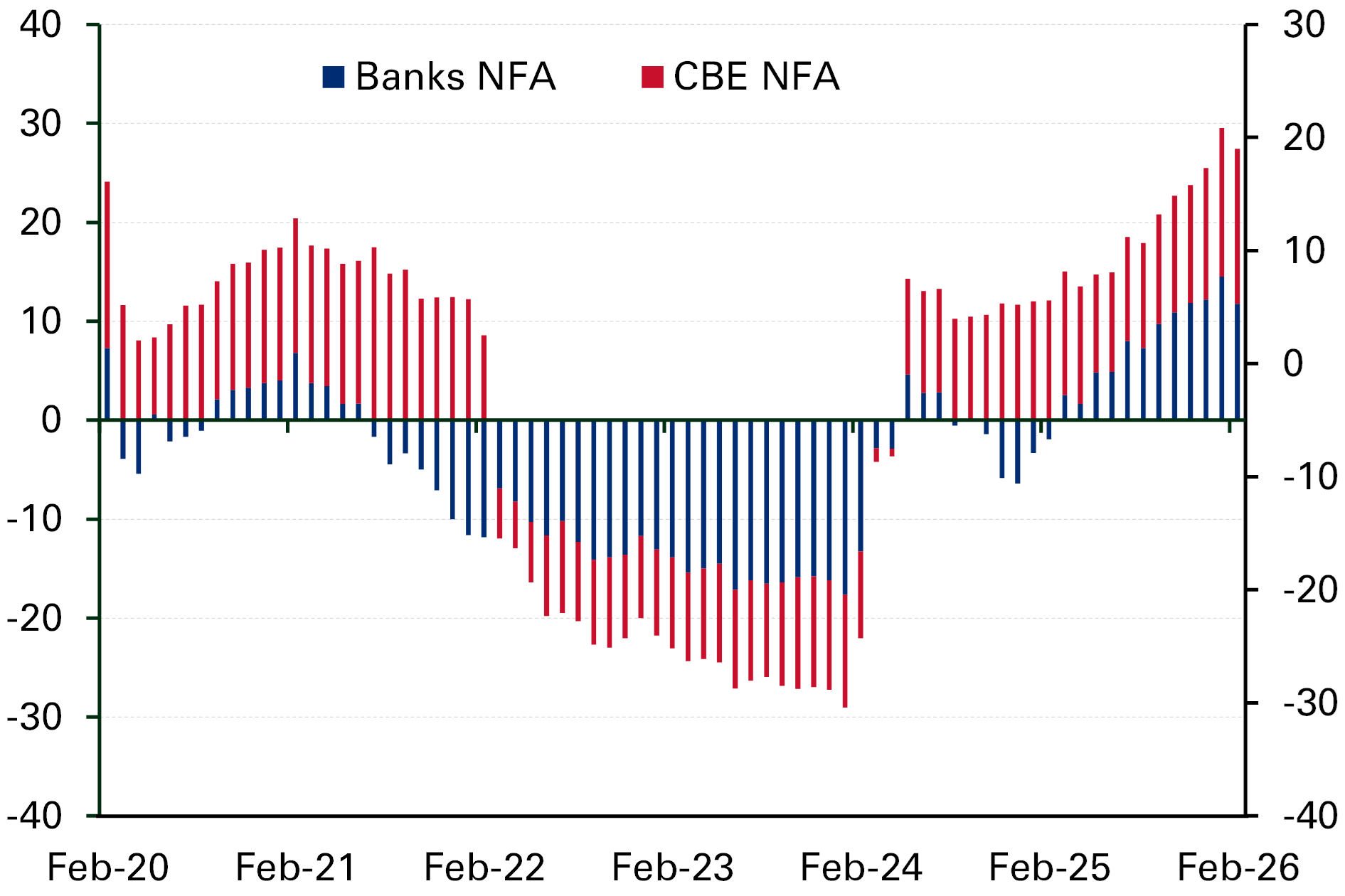
• Net foreign assets (NFAs) reached a 14-year high. NFAs in the banking system reached $27.4 billion at the end of February, down from a 14-year high of $29.5 billion in January. February’s NFAs divided between the CBE ($15.7 billion) and commercial banks ($11.8 billion), which gave the banking sector ample ammunition ahead of the current regional market turbulence. (Chart 5.) Moreover, official net international reserves at the CBE reached a record high of $52.8 billion at the end of March, which cover around 6 months of imports. In addition to that, the unofficial reserves that consist of securities and deposits not included in the official reserves reached $15 billion at the end of March as well, which gave an additional layer of support to the financial system.
• Fiscal pressures persist despite strong revenues. The fiscal deficit widened to 4.2% of GDP in H1 FY25/26. Expenditure rose 27% y/y, largely driven by interest payments, which increased 35% to EGP 1.3 trillion. Revenues grew 30%, with tax revenues reaching record levels, highlighting improved collection efficiency. While debt servicing remains the central fiscal challenge, strong revenue performance supports the consolidation path, especially as interest rates begin to moderate.
Forecast
Near-term growth outlook softens slightly, but positive long-term story remains intact
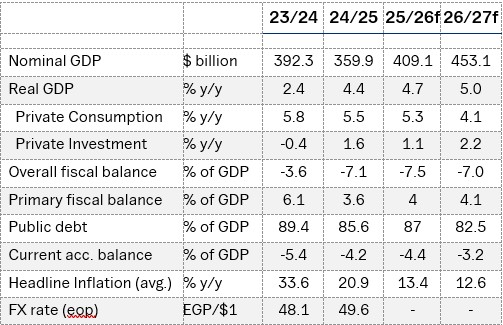
GDP growth is now projected at 4.7% in FY25/26, slightly below earlier expectations of 5.0%, but still up from 4.4% in FY24/25. The modest downgrade reflects spillovers from the regional conflict that weigh on consumer and business sentiment, foreign currency inflows, and raise energy costs. Elevated inflation is expected to dampen private consumption, while weaker tourism and Suez Canal activity will turn net exports into a modest drag on growth. Investment growth will also moderate, affected by higher input costs, a slowdown in public spending, and softer GCC inflows in H2 FY25/26. Growth is expected to regain momentum next year, reaching 5% supported by continued reforms and a gradual recovery in foreign investment. (Chart 6.) This projection assumes that the US-Iran conflict will end soon, and the authorities adhere to the IMF-backed reform path.
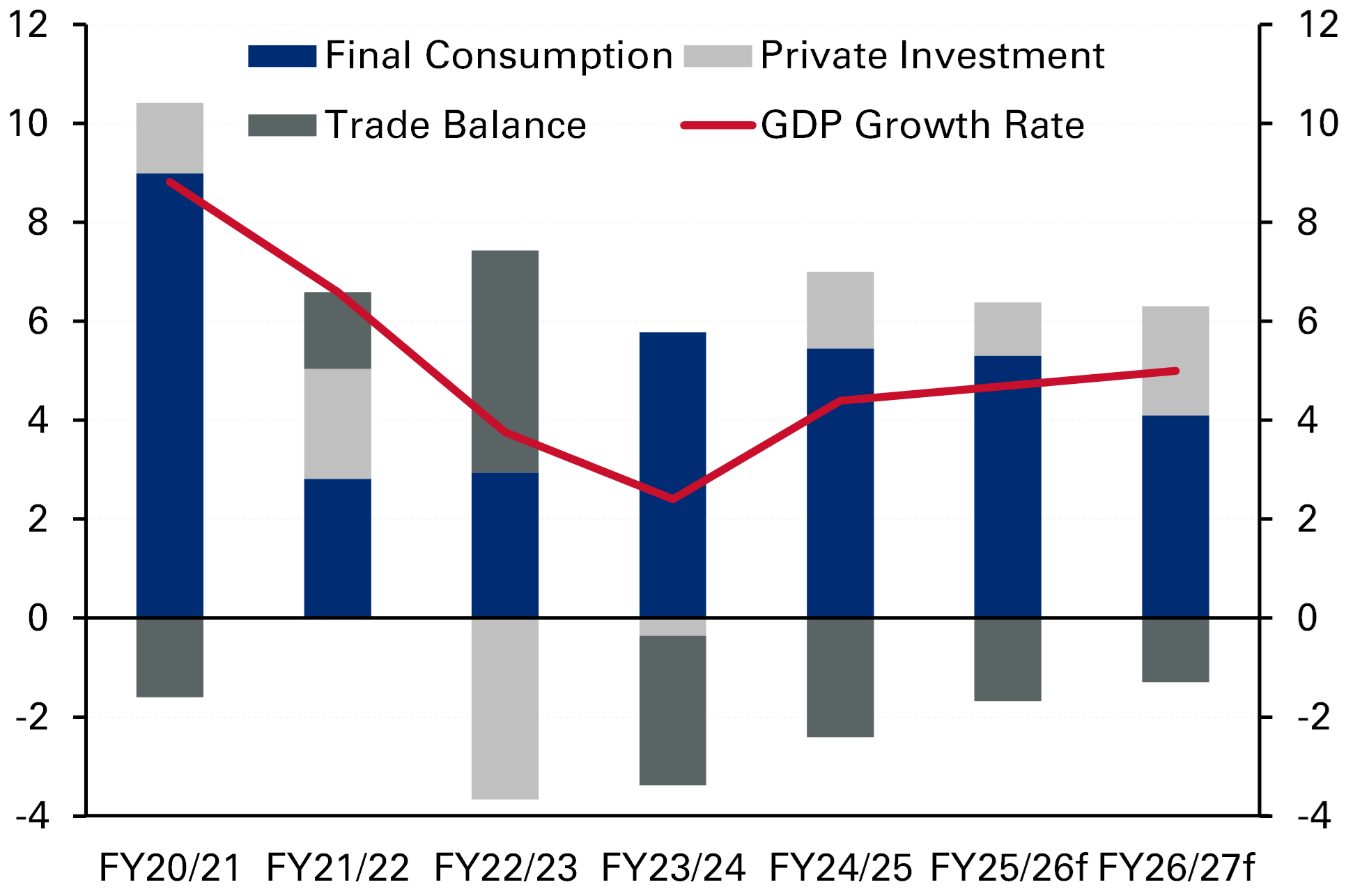
Household consumption is expected to remain the primary driver of growth over the forecast horizon, with purchasing power helped by the decline in inflation from 30%+ previously and the fading impact of the earlier currency depreciation. That said, a more balanced and sustainable growth trajectory will depend on a stronger recovery in investment, particularly new capex. In our view, private investment is likely to gain traction once there is clearer confirmation that the monetary easing cycle is firmly restarted. A policy lending rate closer to 13% would provide a more supportive benchmark for banks’ pricing and a more acceptable cost of financing for businesses, encouraging capacity expansion and enabling the private sector to play a more meaningful role in driving growth over the medium term. Moreover, large scale projects such as Ras El-Hekma and Alam El-Roum are expected to support construction, generate foreign inflows, and stimulate domestic supply chains. Additionally, infrastructure upgrades around the Suez Canal economic zone will continue to reinforce Egypt’s positioning as a regional logistics and manufacturing hub. Long-term structural reforms to streamline licensing procedures and improve competition levels are expected to enhance the business environment, lower barriers to entry and support a more dynamic, private sector-led growth model over time.
Inflation to rise before easing back, cautious monetary stance to persist
Inflation is expected to pick up in the near term, driven by higher energy prices and currency depreciation, before gradually moderating through late 2026 and into 2027 as reform momentum holds and external pressures ease. Domestic fuel price adjustments, implemented twice within six months, in October and March, are adding to cost-push pressures. Inflation is projected to average around 14.6% in 2026, above the inflation target range of 5-9%, easing to 9.1% in 2027. Against this backdrop, the CBE is likely to maintain a cautious policy stance. While policy rates were kept unchanged at April’s monetary policy committee meeting, the current real interest rate, at around 5%, provides a sufficient buffer to contain inflationary pressures and support external stability. Under our baseline scenario, we do not expect further rate hikes, particularly if the US–Iran conflict is resolved in the near term and external pressures begin to subside. However, risks remain tilted to the upside. In the event of a prolonged conflict, which would sustain inflationary pressures and compress real interest rates toward or below the 2% threshold, the CBE is likely to intervene proactively. In such a scenario, a measured and cautious tightening cycle could be deployed, with rate hikes of around 100 to 200 basis points, aimed at preserving macroeconomic stability while limiting the drag on domestic activity.
Fiscal consolidation faces fresh headwinds
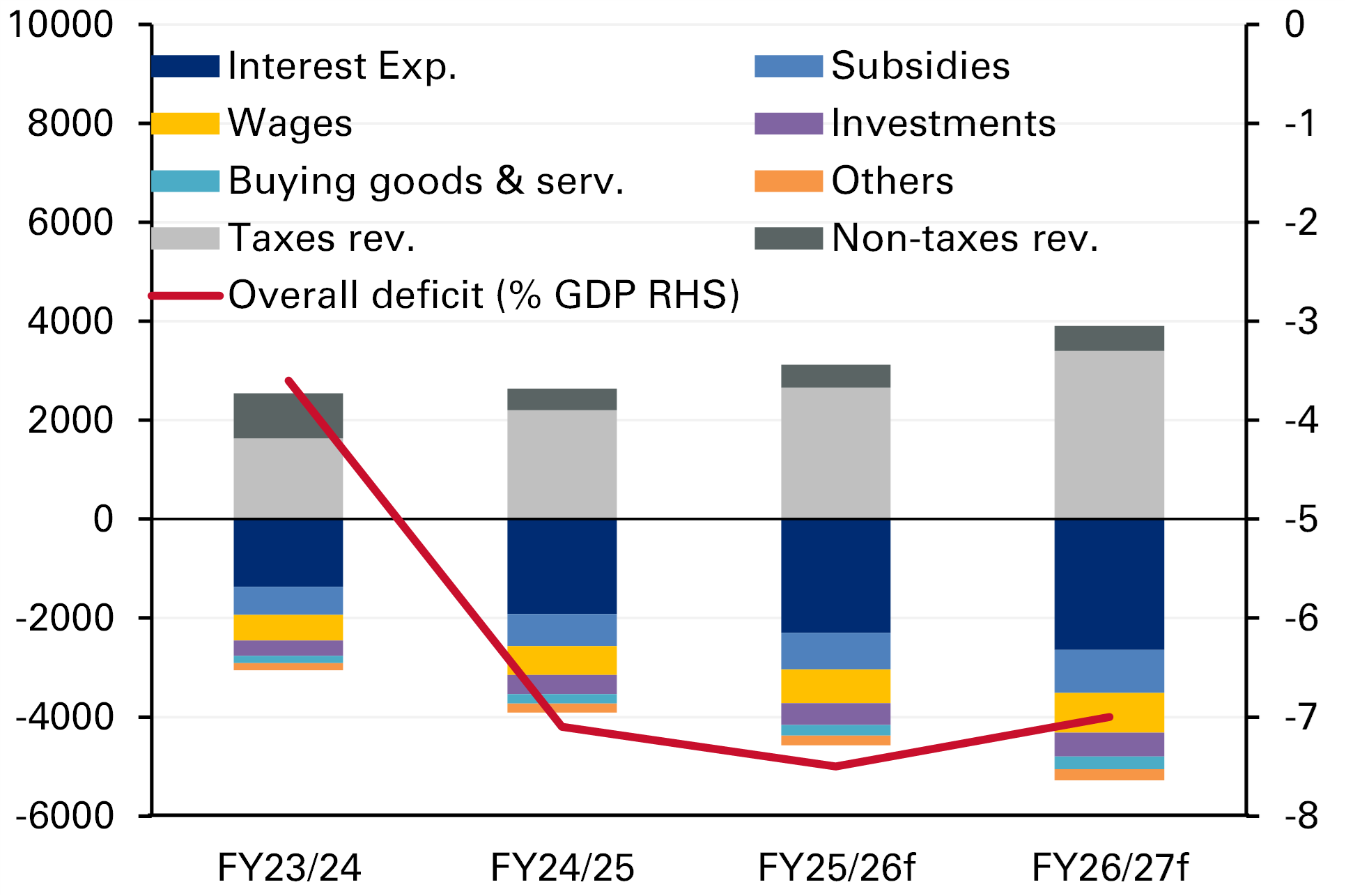
The fiscal outlook is facing renewed pressure amid higher borrowing costs and rising subsidy needs. The fiscal deficit is projected to widen to 7.5% of GDP in FY25/26, from 7.1% in the previous year, before narrowing back to around 7% in FY26/27. Elevated short-term yields are expected to keep debt servicing costs high, while increased energy subsidies will push current spending above pre-conflict targets. Nonetheless, ongoing IMF-supported reforms, coupled with continued international financial support and Egypt’s strategic regional position, provide an important buffer. While fiscal consolidation remains on track over the medium term, the pace of adjustment is likely to be slower in the near term given the more challenging external environment. (Chart 7.) Interest payments currently account for nearly 60% of total government spending and slightly exceed total revenues, underscoring the structural weight of debt servicing. Given the regional conflict, yields are now unlikely to fall as sharply as assumed in the official budget. Consequently, interest expenditures will remain elevated in the near term and represent the main risk to fiscal consolidation.
On the positive side, revenue performance continues to exceed expectations. Tax collection efficiency has improved significantly, reflecting ongoing digitalization efforts and stronger compliance. Combined with solid nominal GDP growth, this will help maintain a primary surplus around 4% of GDP over the forecast horizon. Strong nominal growth and sustained primary surpluses should place public debt on a declining trajectory to south of 80% by June 2027. This improvement is critical in anchoring investor confidence and reinforcing debt sustainability metrics. Nevertheless, debt dynamics remain sensitive to growth assumptions, interest rate trajectories, and exchange rate stability.
External pressures intensify, widening current account deficit
The US-Iran conflict is transmitting to Egypt primarily through higher commodity prices and disruptions to maritime trade routes. While Egypt is not directly involved in the war, the impact is visible across key external channels. Suez Canal receipts continue to come under pressure due to disruptions in the Red Sea and Bab al Mandab strait, weighing on foreign currency earnings. At the same time, rising energy costs are adding to the import bill. As a result, the current account deficit is expected to widen slightly to around 4.4% of GDP in FY25/26. The external position is further strained by softer exports to GCC markets, which account for a growing share of Egypt’s total exports, alongside potential declines in remittances, tourism, and investment inflows from the region if the conflict persists. Although Egypt entered this period with improved external buffers, sustained pressures could trigger additional portfolio outflows, increase reliance on exchange rate flexibility, and reinforce a higher-for-longer interest rate environment.