 +965 2292 4888


International Scene
08.09.2026
Despite the Middle East war-related headwinds of higher energy prices, supply chain disruptions, increased uncertainty, and elevated inflation, global economic growth has remained relatively resilient, helped by stable labor markets and solid AI/technology-related demand. Global PMI surveys continue to indicate elevated price pressures. The war-induced rise in inflation drove up expectations of tighter monetary policy by the major central banks, which along with challenging government fiscal positions is pushing up sovereign bond yields to multi-year highs. In the US, economic growth remains solid with this week’s August CPI key in determining the September FOMC decision as political pressure not to hike piles up. In the Eurozone, the ECB is set to raise rates again this week with growth remaining relatively resilient. In the UK, growth has been robust but the outlook is soft, and while the market expects a BoE hike this year, that it is not a done deal. In Japan, the BoJ is set to hike further as the yen remains volatile and with strong exports buoying growth. Finally in China, despite solid exports, economic growth has been slowing, raising the odds of policy support.
US: Solid growth; Fed September decision resting on upcoming CPI as political pressure not to hike piles up
Fed Chair Warsh, unlike his previous vague communication posture, sounded clearer at the recent Jackson Hole symposium, stating that more work needs to be done to bring down inflation. Long-dated bond yields have increased, reflecting concerns about large fiscal deficits (around 6% of GDP), solid economic growth, and elevated inflation. The Trump administration is under pressure to act before the November mid-term elections, in which the Republicans are expected to lose, at a minimum, their House majority. In an effort to drive yields lower, the Treasury is boosting buybacks of long-dated government bonds after conducting a rare and joint currency intervention to prop up the depreciating yen and pre-empt further UST bond selling by Japan—the largest foreign holder of UST bonds. Still, these moves do not address structural issues and will likely see very limited results beyond the short term.
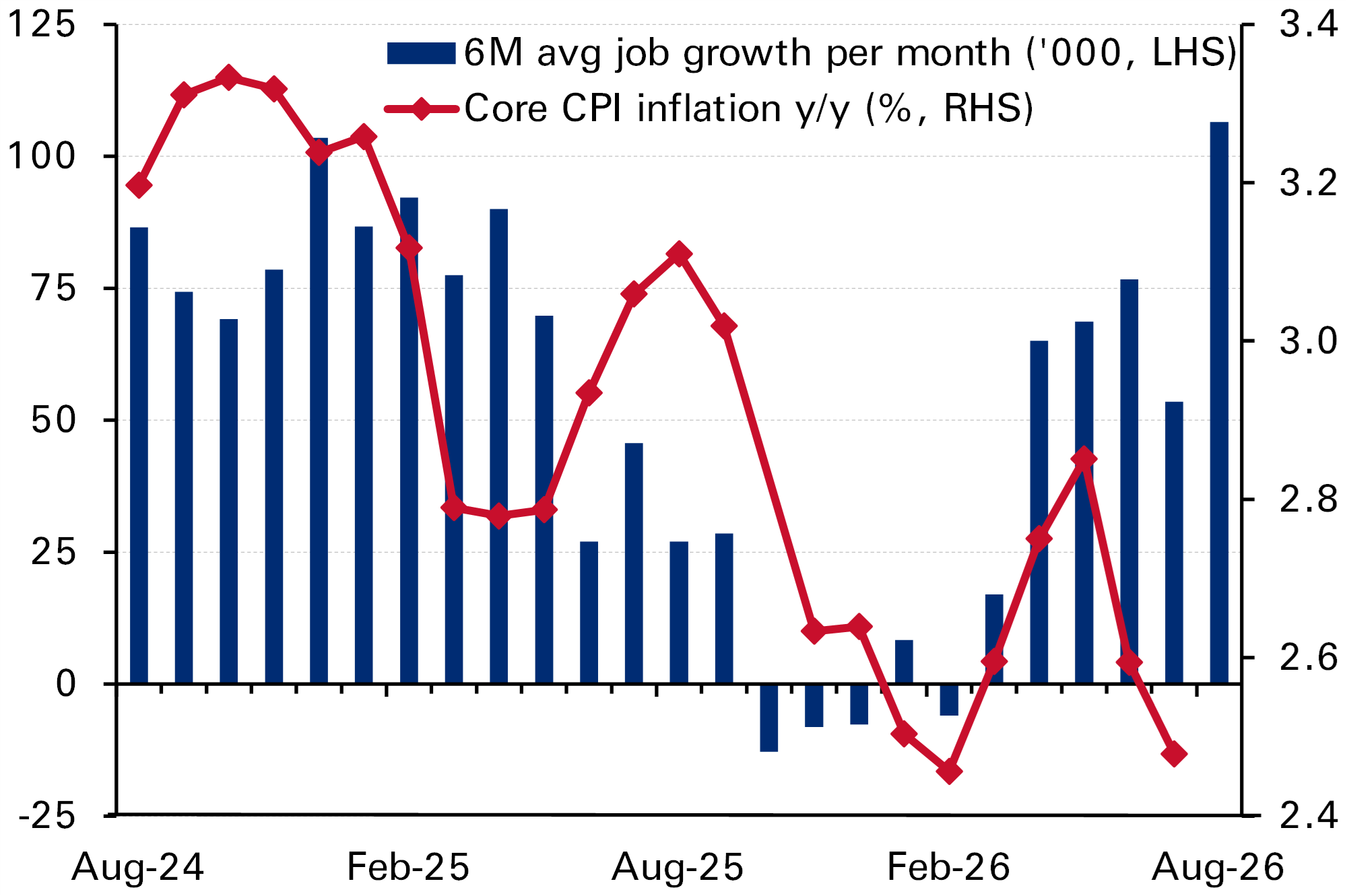
Meanwhile, underlying domestic demand remains solid, with final sales to private domestic purchasers expanding by an annualized 4.2% in Q2, the highest pace in over three years, and expected to stay north of 4% in Q3, driven by robust household consumption and solid AI-related investments. However, inflation (July’s CPI at 3.4% y/y and core at 2.5%) remains well above the Fed’s target, and for the sixth consecutive year. And while monthly job growth numbers are volatile, the trend has improved from last year with the 6M average at 107K per month through August, the highest in two years while the unemployment rate is a modest 4.1%. Sustained above-target inflation, steady job market conditions, and Warsh’s recent hawkish messaging have boosted the probability of a 25bps rate hike on September 16th to around 60%. However, the upcoming August CPI report will be pivotal in shaping the FOMC decision. If Warsh votes for a hike, it will be the first solid signal that he is willing to withstand political pressure from the Trump administration, which piled up recently, helping to safeguard the Fed’s independence.
Eurozone: ECB set to hike rates again this week given the inflation outlook as growth remains resilient
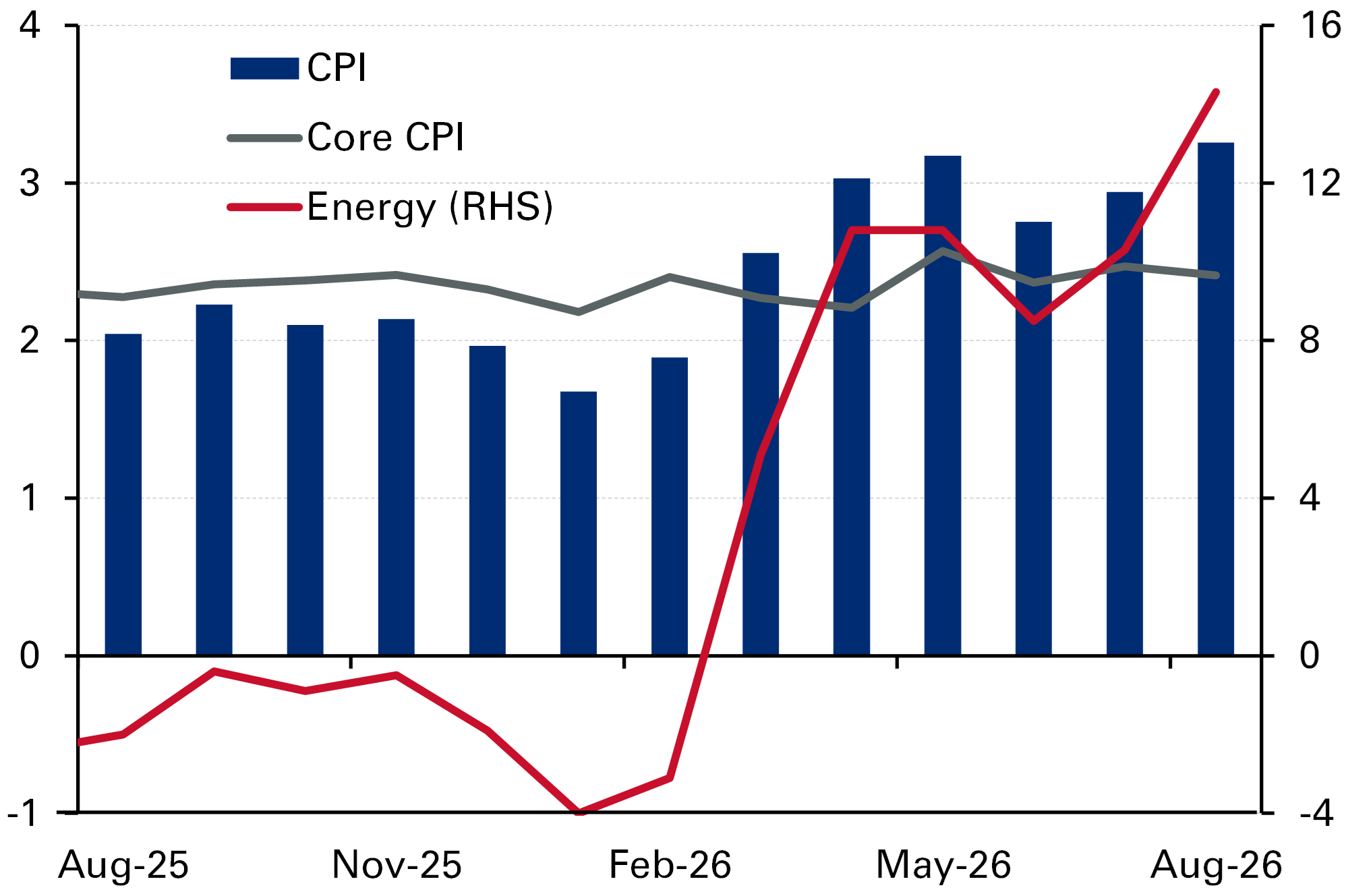
The Eurozone economy has remained relatively resilient with GDP expanding by a higher-than-expected 0.6% q/q in Q2 and unemployment holding close to historical lows (6.4%). Furthermore, PMI readings in July-August have improved with the composite measure hitting the highest level since November 2025, auguring well for Q3 growth. Inflation remains the key challenge for policymakers with headline CPI rising 3.3% y/y in August (from 1.9% in pre-war February), largely driven by higher energy costs (+14%), while core inflation remains tame at 2.4%, in line with February’s reading. Importantly, there is no evidence yet of second-round effects from the energy shock, a view shared by ECB President Lagarde. While the ECB left interest rates unchanged at its July meeting following June's 25bp hike, policymakers emphasized that uncertainty remains elevated. Despite the view on second-round inflation effects, the ECB is near certain to hike rates again on September 10th, given their judgment of upside risks to the inflation outlook and the bank’s sole mandate of maintaining price stability, possibly also encouraged by the decent growth trends. The recent rebound in oil prices and European gas prices, which easily exceed August averages, will undoubtedly keep the ECB wary of upside risks to the inflation outlook.
UK: Decent growth in H1 but the outlook is soft; market expects a BoE hike this year, but it is not a done deal
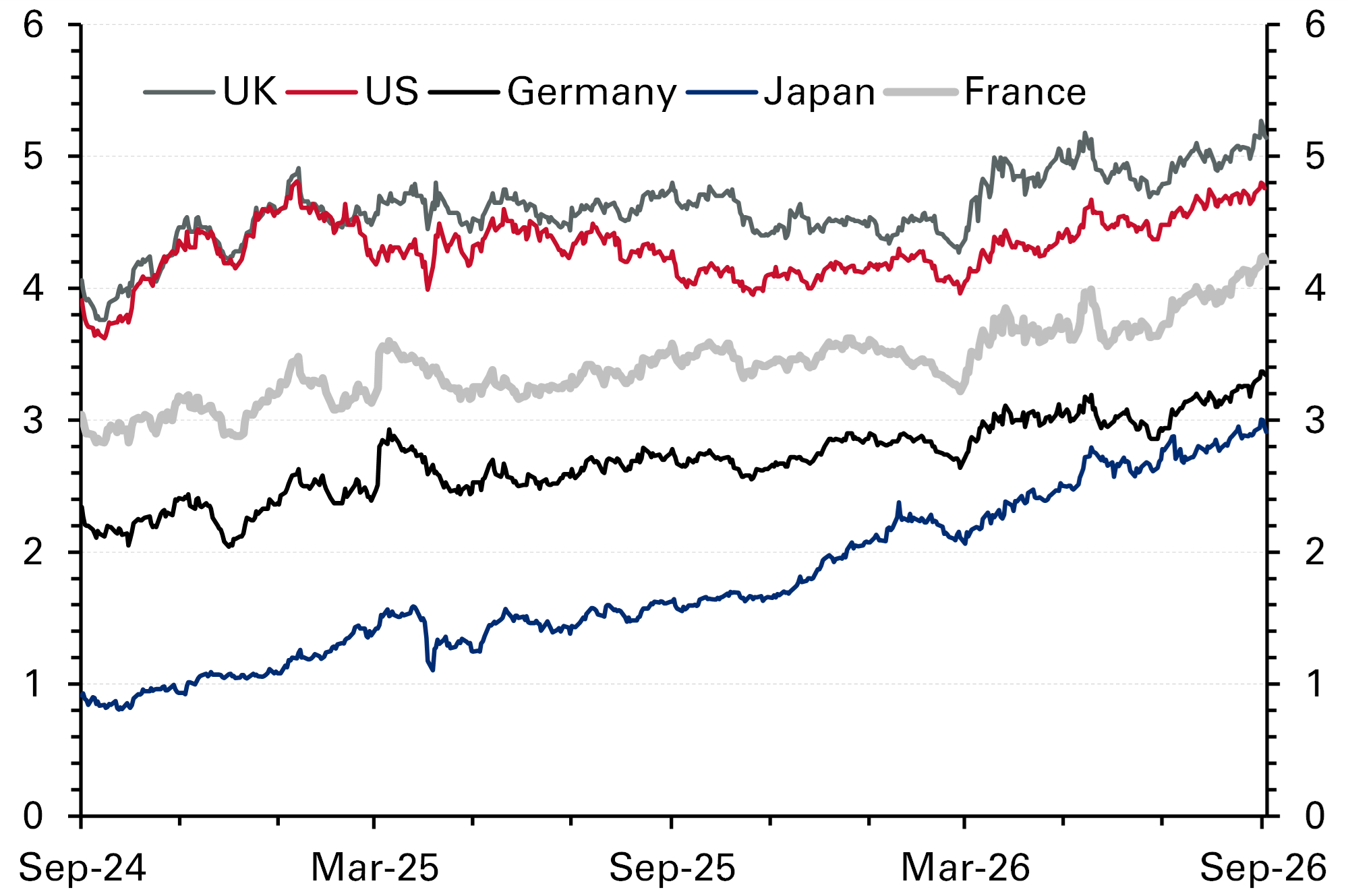
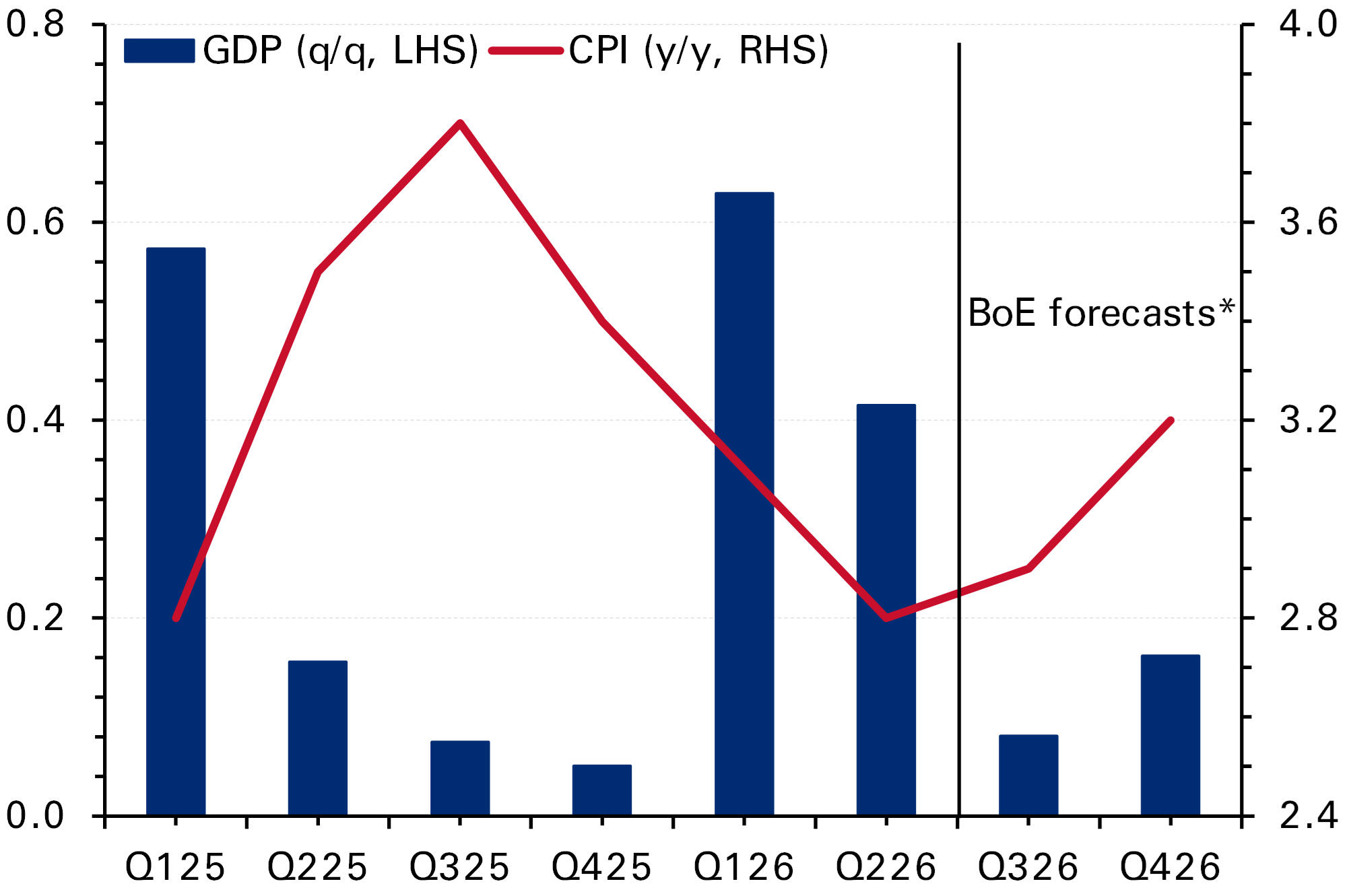
The UK’s new prime minister, Andy Burnham, intends to address the high cost of living issue and deliver on redistribution-inclined initiatives, but the path to a sustained economic revival faces familiar hurdles. The Chancellor will present the Autumn budget next month, but the scope for growth-boosting efforts are constrained by ongoing fiscal challenges. Moreover, long-term gilt yields have risen steeply (30Y-yield near the highest level since 1998), a fresh headwind for fiscal consolidation. However, GDP growth remained resilient in Q2 (0.4% q/q after 0.6% in Q1), helped by strong manufacturing and robust consumption. The latest data has been mixed with retail sales falling in July and employment declining further, but the August PMI was upbeat. Mostly due to the repricing of household energy caps, CPI inflation rebounded in July (2.9% y/y from June’s 15-month low of 2.6%), and the BoE sees a further rise to 3.2% in Q4. And while the futures market currently indicates around an 80% probability of at least one 25bps BoE rate hike by end-2026, this is not a done deal especially given the stance of BoE Governor Bailey, who is seeing muted second-round inflation effects. Given higher expected inflation, ongoing weak employment conditions, limited fiscal support, and the possibility of tighter monetary policy, the short-term growth outlook appears soft.
Japan: Yen remains very volatile and BoJ to hike rates further; exports buoying economic growth
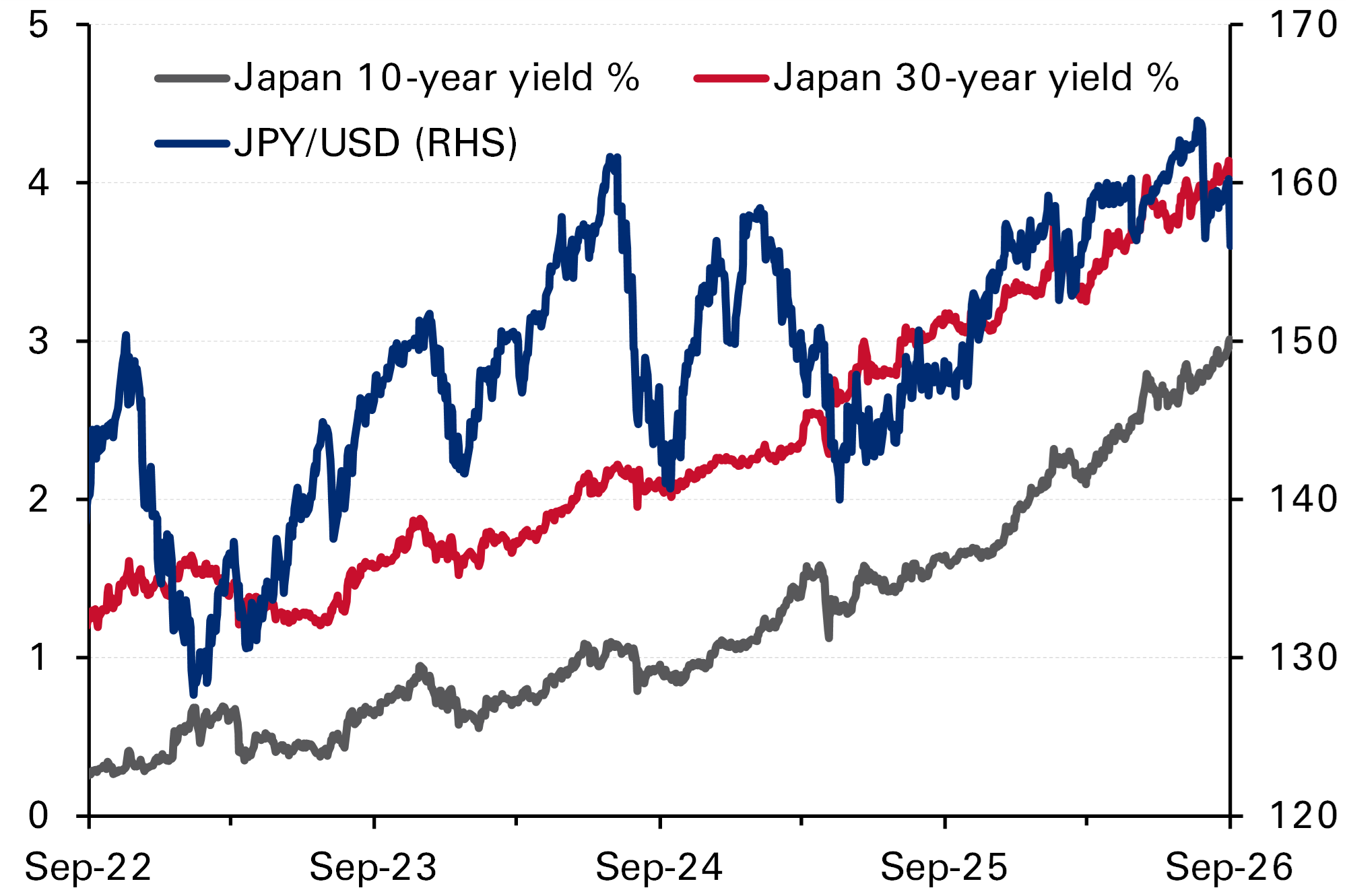
Japan's economic growth decelerated to 0.4% q/q in Q2 (0.5% in Q1) as private consumption was flat and business investment declined while net exports continued to buoy growth. Exports have been a bright spot, growing by a strong 14% y/y in H1 and accelerating to 23% in July (near a four-year high), supported by a weak yen and solid demand for AI-related semiconductors. Despite government subsidies, inflation has been trending higher (1.9% y/y in July versus 1.3% in pre-war February) with the BoJ warning that inflation risks remain tilted to the upside. After hiking rates to 1% in June, the bank left rates unchanged in July but struck a hawkish tone, signalling further hikes in the pipeline. The market expects one to two hikes before year-end with the next move likely materializing in the September meeting. Meanwhile, the yen has been on a roller coaster, resuming its depreciation against the USD in August following a rare Japan-US intervention at the end of July, but rallying strongly in the last few days possibly supported by a more hawkish BoJ outlook, among other reasons. Fiscal pressures, higher inflation, and further BoJ tightening continued to push government bond yields higher with the 10-year one touching 3%, a multi-decade high.
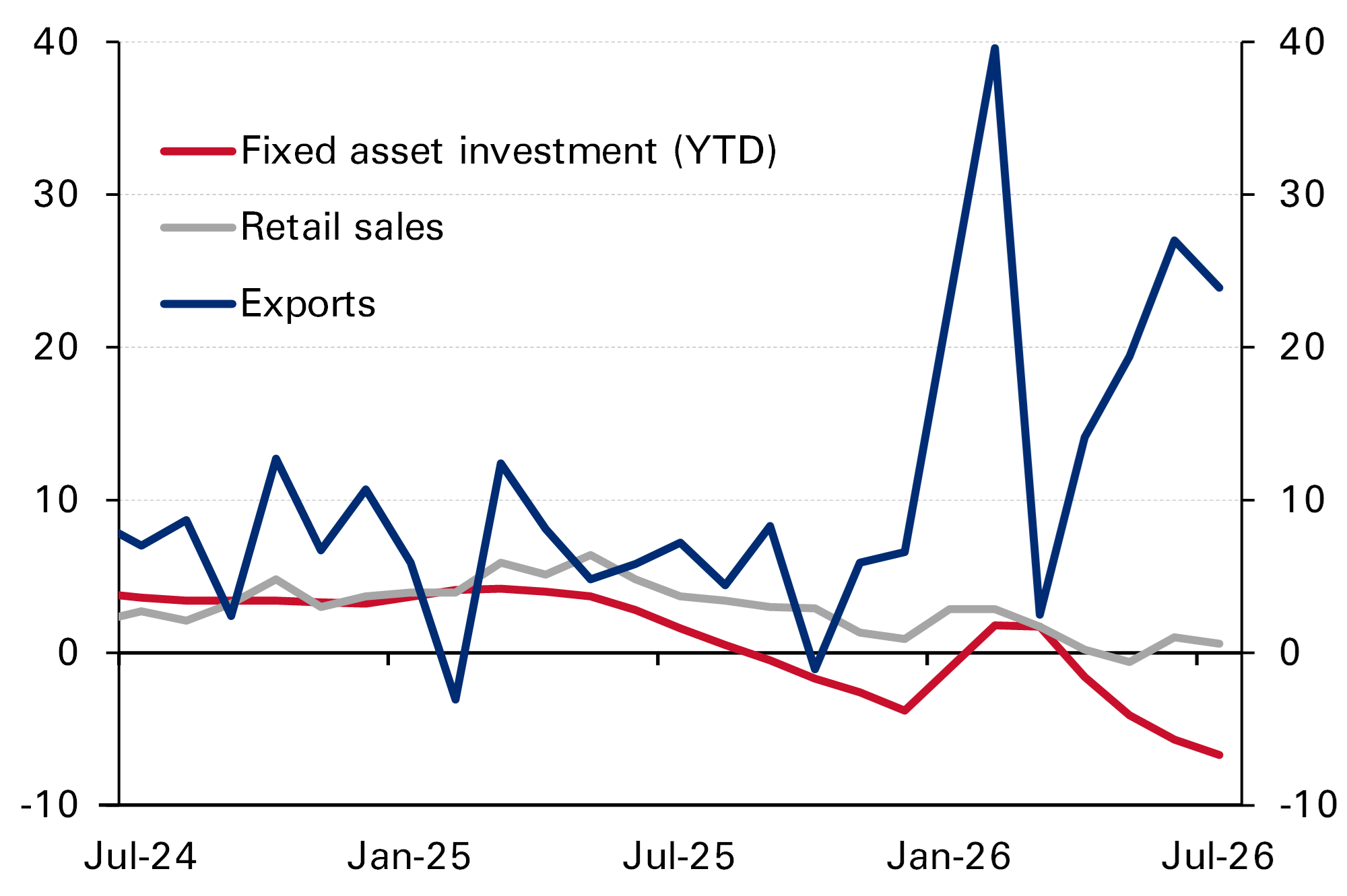
China: Despite strong exports, economic growth slowing, raising the odds of policy support
China’s economy lost momentum in Q2, with GDP growth slowing to 4.3% y/y (lowest since late 2022) driven by weak household spending, declining investment, and the ongoing property downturn. July data suggest these challenges persisted into Q3 with growth in retail sales easing to 0.6% y/y (1.0% in June) and in industrial production slowing to 4.5% y/y (5.3% in June), while the YTD decrease in fixed-asset investment widened to 6.7% y/y. Meanwhile, new house prices remained in decline, and for more than three years now, down 3.2% y/y in July. Moreover, official PMI readings remained below the 50-point threshold for the second consecutive month in August, underscoring the continued weakness in activity. Against this backdrop, policymakers continue to rely primarily on targeted measures to bolster demand, retaining scope for possible monetary easing should economic conditions soften further. Meanwhile, export growth has been solid, standing at close to 20% y/y in 8M2026 benefiting from strong global demand for technology and AI-related goods, but unlikely to fully offset the persistent weakness in domestic demand. Hence, the near-term outlook for the economy is increasingly dependent on whether policy measures can gain sufficient traction to support domestic demand, which will be critical to achieving the government’s 2026 growth target of 4.5% to 5%.