 +965 2292 4888


International Scene
10.03.2026
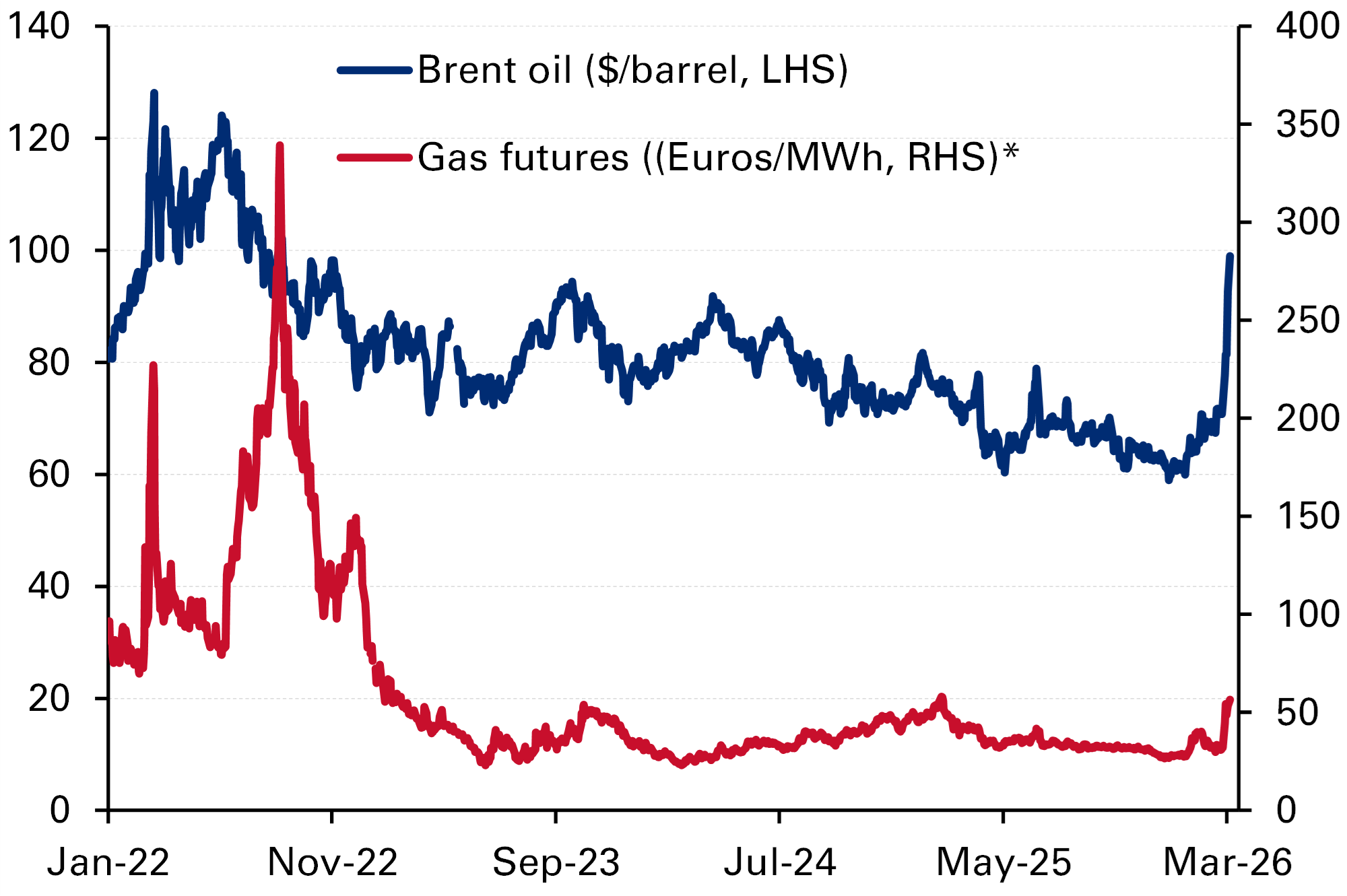
If the current energy price shock is sustained, the global economy is bound to face a stagflationary hit. Government bond yields are up sharply since the onset of the military conflict in the Middle East on 28 February, reflecting higher expected inflation. Obviously, this energy price shock greatly complicates monetary policy for all central banks. The key question is how long will this miliary conflict last. Of course, it is difficult to predict that with a high level of certainty. However, irrespective of the military developments and whether or not the goals of the war will be achieved, we believe the below points are important factors to keep an eye on. We think the higher oil prices go, and the longer they stay elevated, the greater the likelihood that President Trump will stop the war. This should be seen hand in hand with the fact that there are midterm elections in the US in November, which the Republicans, as per current expectations, are set to lose. The current affordability problem in the US is central to this thinking: higher inflation and especially higher gasoline prices (which have an outsized impact on inflation perceptions) will deliver a further hit to affordability. Also, and related to oil prices, a sharp drawdown in the stock market and spiking government bond yields will add to the economic pressures, not to mention the concurrent hit to economic growth. Finally, Trump has a key visit to China scheduled for the end of March, and we think that is another factor that has some weight in determining the war’s end.
US: Economy likely to stay resilient despite a weak jobs market; Middle East war refuels inflation worries
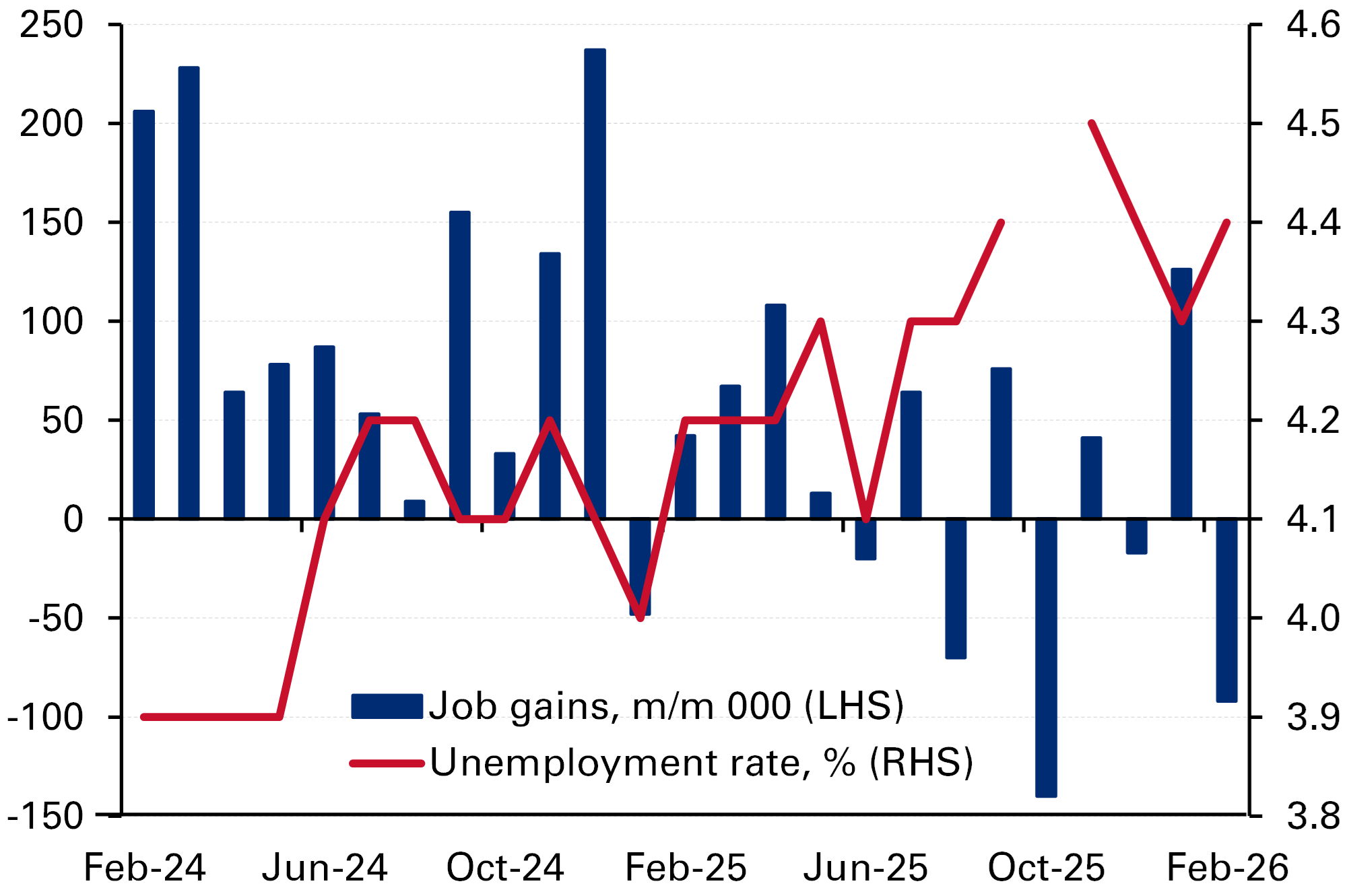
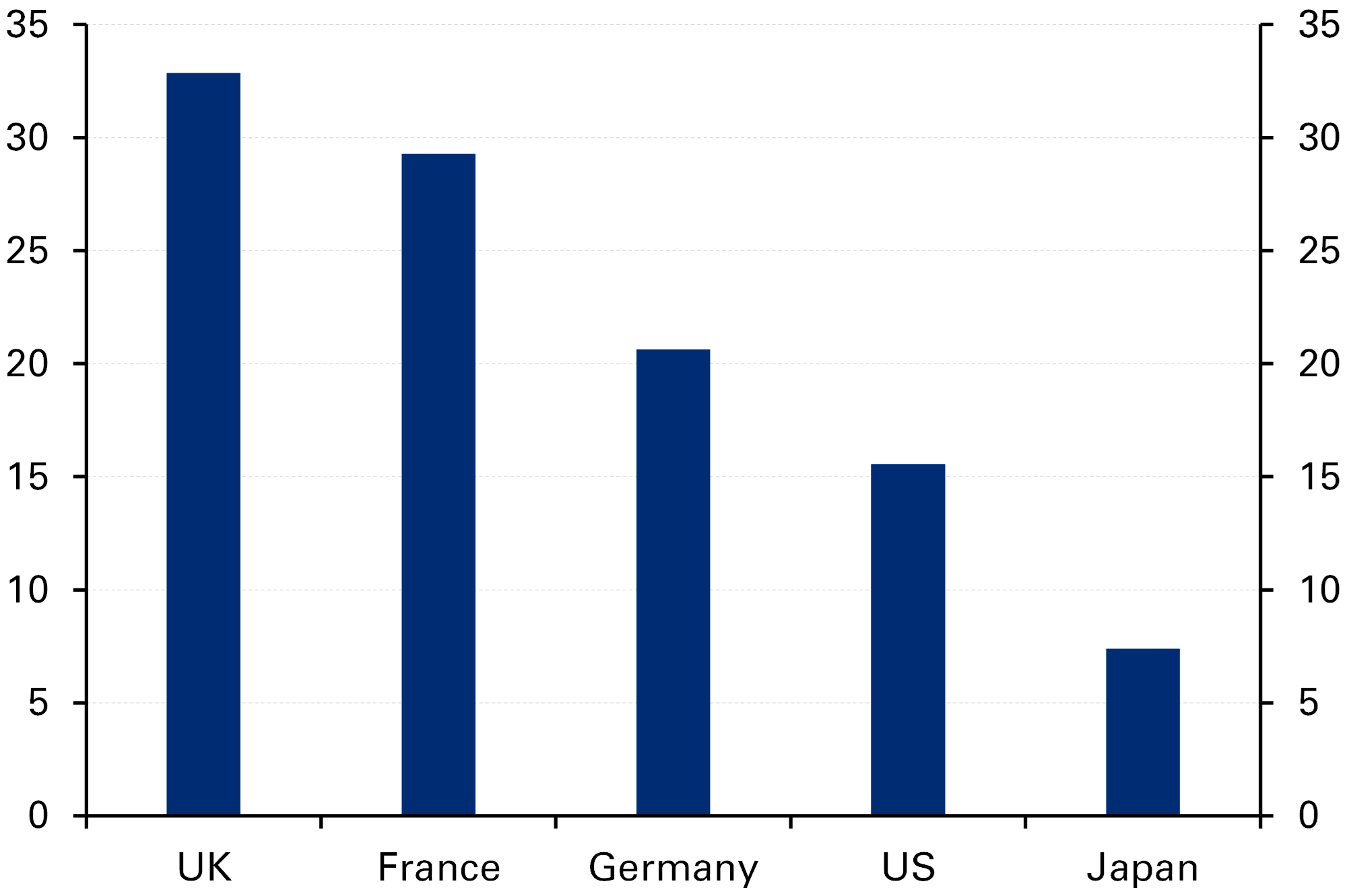
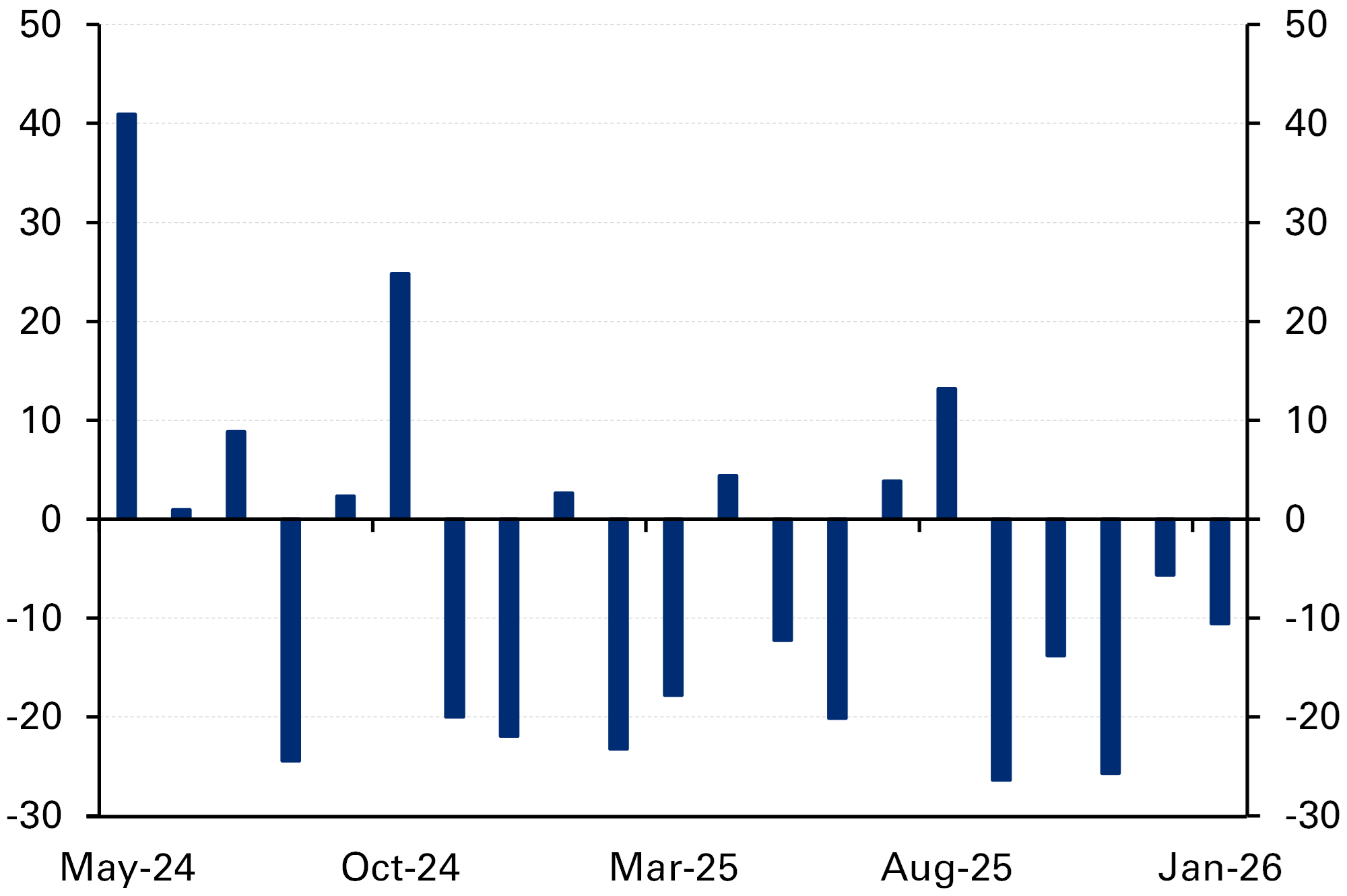
Continued robust household spending, the ongoing tech/AI investment boom, the fiscal policy boost, and the prior easing in monetary policy should keep the economy resilient. The job market continues to be weak with subdued hiring (an average monthly increase of only 6K jobs in the past three months), but also low firing keeping the unemployment rate (4.4%) relatively low. However, inflation concerns, which never really abated, have been re-ignited given the spike in global energy prices, risking inflation (latest core PCE inflation at 3%) remaining firmly above the Fed’s 2% target in 2026. The futures market now indicates just one 25-bps interest rate cut in 2026. The dependence on GCC oil is limited given imports are at near multi-decade lows while US oil production is close to record highs. Meanwhile, the US Supreme Court’s cancellation of IEEPA tariffs is unlikely to change the broader picture given President Trump’s resolve to recreate the tariff wall through other legal means. Hence, average tariff rates will likely end up being similar to the ones prevailing pre-court decision. However, rebuilding the tariff wall is a process that will be complex as well as lengthy and uncertainty is higher in the interim.
With the end of Chair Powell’s term in May, the Fed is set to face challenging times given the US administration’s repeated attempts to influence monetary policy. The nomination of Kevin Warsh as the next Fed Chair likely amplifies the challenges. We think that his prior scathing criticism of the Fed, the fact that he is coming with a pre-set mandate to steeply cut rates, his pledge for “regime change” at the Fed, and the fact that some of his monetary policy views are starkly different than those of other FOMC members are matters that will likely complicate Warsh’s job.
Eurozone: 2025 growth stronger than expected but energy shock hits confidence and may alter ECB policy
The Eurozone ended 2025 with GDP growth of 0.2% q/q in Q4, driving full-year growth to 1.4%, up from 0.9% in 2024, and much better than earlier expectations. Before the current energy price shock, economic activities had likely been steady with even improving manufacturing output (February’s PMI at 50.8, the highest since 2022). Inflation has continued to be at or near target since early 2025 (latest at 1.9%), but is bound to strengthen given much higher energy prices, a relatively high weight for energy (9%) in the CPI basket, and the indirect impact on non-energy goods and services. As a reminder, in 2022, the energy price shock contributed to inflation surpassing 10% during that year. In terms of energy dependence, EU imports of GCC oil are limited but LNG imports (from Qatar and the UAE) account for around 12%-14% of total LNG imports. For the ECB, the higher expected inflation may drive a shift in policy after expectations had been for no-change in policy in the remainder of 2026. On the trade deal with the US, the EU has paused its ratification given the Supreme Court ruling. While the expectation remains that the US-EU trading status quo can still be endured, the uncertainty has definitely increased.
UK: Signs of recovery in growth but the energy price shock renews the caution
Before the Middle East conflict commenced and the subsequent spike in global energy prices, the UK’s economy signaled a recovery in growth supported by the unwinding of budget-related anxiety, with business activity expanding robustly (February’s PMI at 53.7, near the highest since April 2024) and January’s retail sales growth at a 20-month high. However, the job market remains weak, with a five-year high unemployment rate (5.2%) in October-December and sustained job losses (cumulative 173K since November 2024), resulting in a lower-than-expected 0.1% q/q GDP growth in Q4, matching Q3’s. While the UK has insignificant dependence on GCC’s oil and gas flows (<1% of total energy needs), the economy’s vulnerability through higher energy prices has raised uncertainty about 2026. The BoE had previously projected inflation falling to around its 2% target from April helped by budgetary measures. However, if elevated energy prices persist, inflation will re-accelerate over the coming period, putting the bank in a difficult situation. The futures market, before the start of the Middle East conflict, had indicated two bank rate cuts in 2026, but now the rate outlook is dependent on the duration of the energy price shock. Finally, PM Starmer seems to be struggling to maintain his premiership amid the Mandelson-Epstein links fallout, Labor’s recent poor by-election performance, and some opposition within his party.
Japan: PM Takaichi’s policies to lift growth; Japan significantly exposed to GCC oil
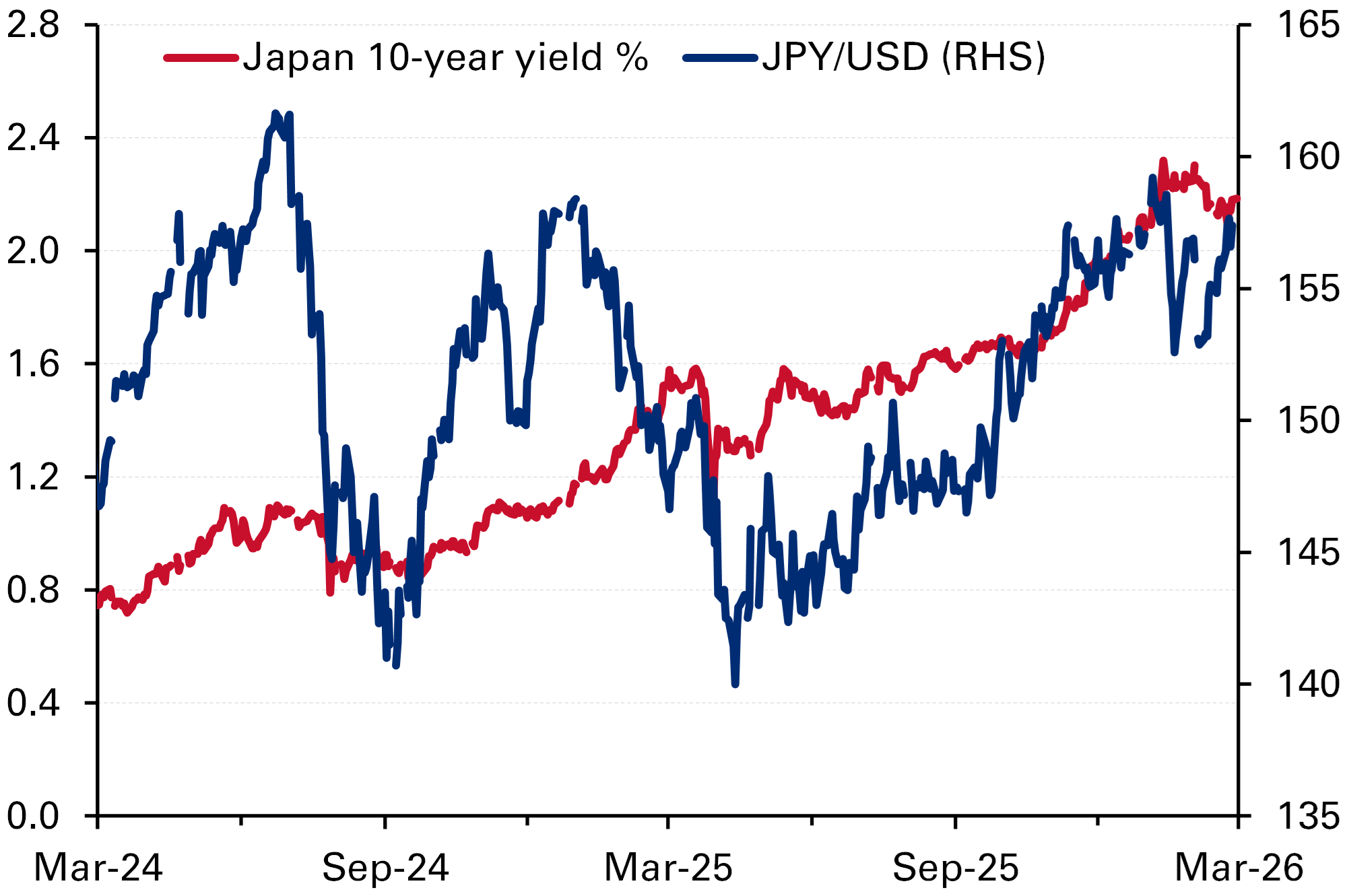
The Japanese economy ended the year on a relatively weak note, with GDP increasing a lower-than-expected 0.3% q/q in Q4, putting full-year 2025 growth at 1.2%. The BoJ, in January, upgraded FY2026 (ending March 2027) growth to 1% from 0.7%. The growth outlook could get a further uplift given PM Takaichi’s ambitious fiscal agenda, which includes a suspension of the consumption tax and increases to government spending. Optimism has been on the rise following the LDP’s historic win in February’s snap parliamentary elections with the composite PMI hitting a 33-month high of 53.9 in February. Despite that, Takaichi’s policies could still face roadblocks if fiscal pressures intensify and government bond yields continue to rise. Meanwhile, inflation continued to moderate, with the headline rate in January below the BoJ’s 2% target for the first time in nearly four years although a measure of core inflation (excluding fresh food and energy) remains at 2.6%. With the majority of Japan’s oil imports coming from the GCC, the country will be sharply impacted by the current crisis, although its ample stockpiles will lessen the blow.
China: 2026 growth target set at 4.5% to 5%; all eyes on President Trump’s end-March visit to China
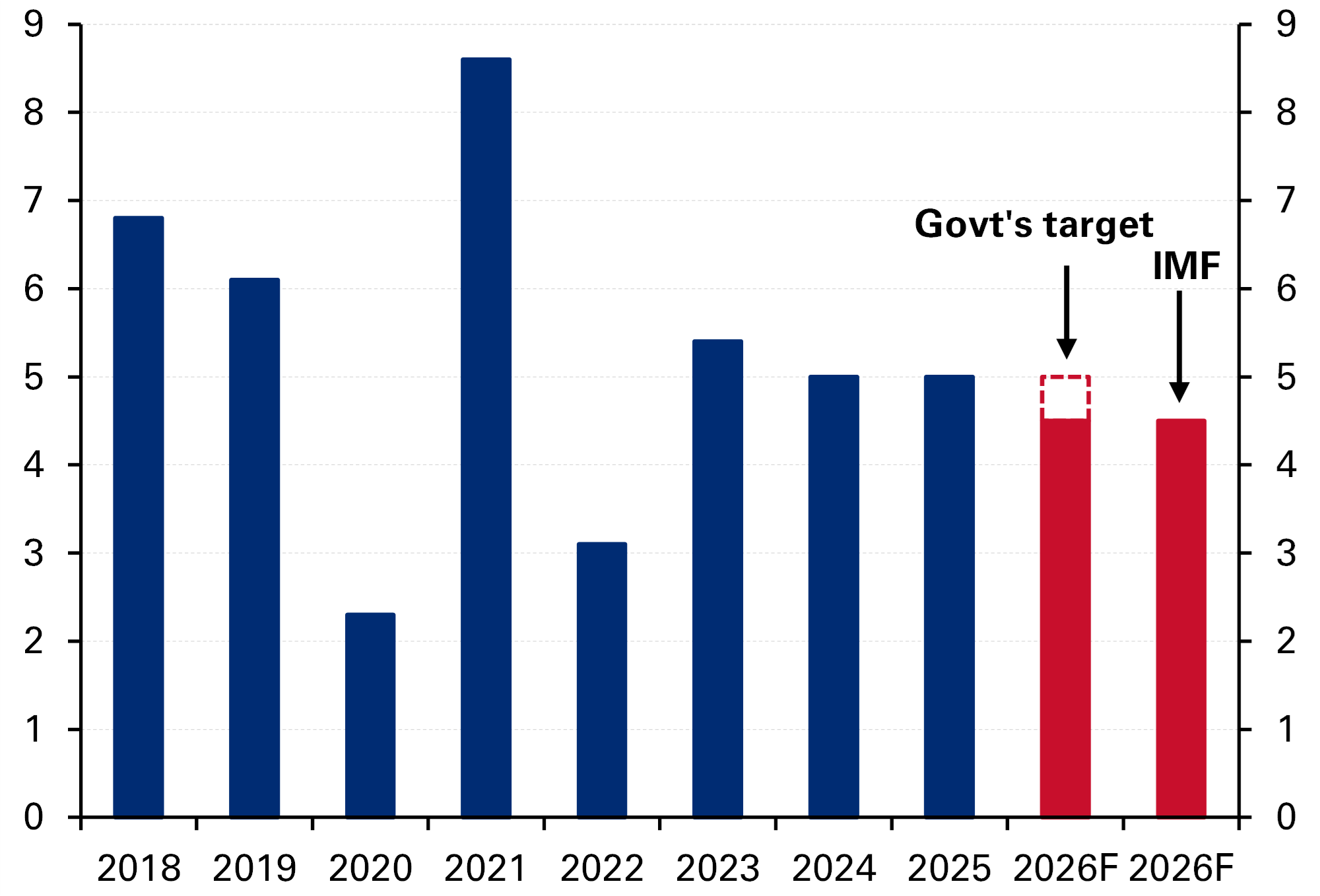
The Chinese economy grew by 4.5% y/y in Q4, the slowest pace in three years, but full-year 2025 growth was 5%, hitting the government’s target. Investment activity continued to deteriorate with fixed asset investment falling 3.8% in 2025, a first annual decline since the pandemic. Housing prices extended their downturn, with the drop in new home prices widening to 3.1% y/y in January, reflecting Beijing’s difficulty in stabilizing the sector. The PBoC left the LPR rates steady in February, keeping them unchanged since May 2025. Authorities set a growth target of 4.5% to 5% for 2026, the lowest since 1991. However, given the challenges and the steadily decreasing population, achieving such growth is still considered very positive in our view. China is highly reliant on GCC energy imports and will be significantly impacted if the conflict drags. However, China’s ample oil inventories and its strong leverage over Iran should soften the blow. All eyes will be on President Trump’s visit to China which is scheduled for 31 March - 02 April, and which, at a bare minimum, will cement and extend the truce currently on hold between the two countries.