
 +965 2292 4888


Kuwait Economic Brief
30.09.2026
Overview
Despite the ongoing conflict and continued disruptions to regional trade and shipping routes, Kuwait’s economy has shown clear signs of resilience. Several key economic indicators have rebounded from the lows reached earlier in the conflict, suggesting that the economy has largely absorbed the initial shock even though conditions have not yet fully normalized. Non-oil activity has improved despite lingering headwinds from trade disruptions, project delays and general uncertainty stemming from the conflict, supported by government measures, stable household incomes, and easing inflation. Meanwhile, oil production has risen to three-quarters of its pre-conflict level and with more shipments passing through the Strait, Kuwait is better positioned to benefit from higher oil prices than earlier in the conflict. The improved economic data reinforces our earlier view that the non-oil economy will avoid a steep downturn. While we have downgraded the growth outlook relative to June to reflect revised assumptions about the conflict, the recent rebound across most economic metrics provides greater confidence that growth will continue to recover as regional conditions stabilize, supply chain pressures ease, and investment and project execution gather pace.
Latest developments
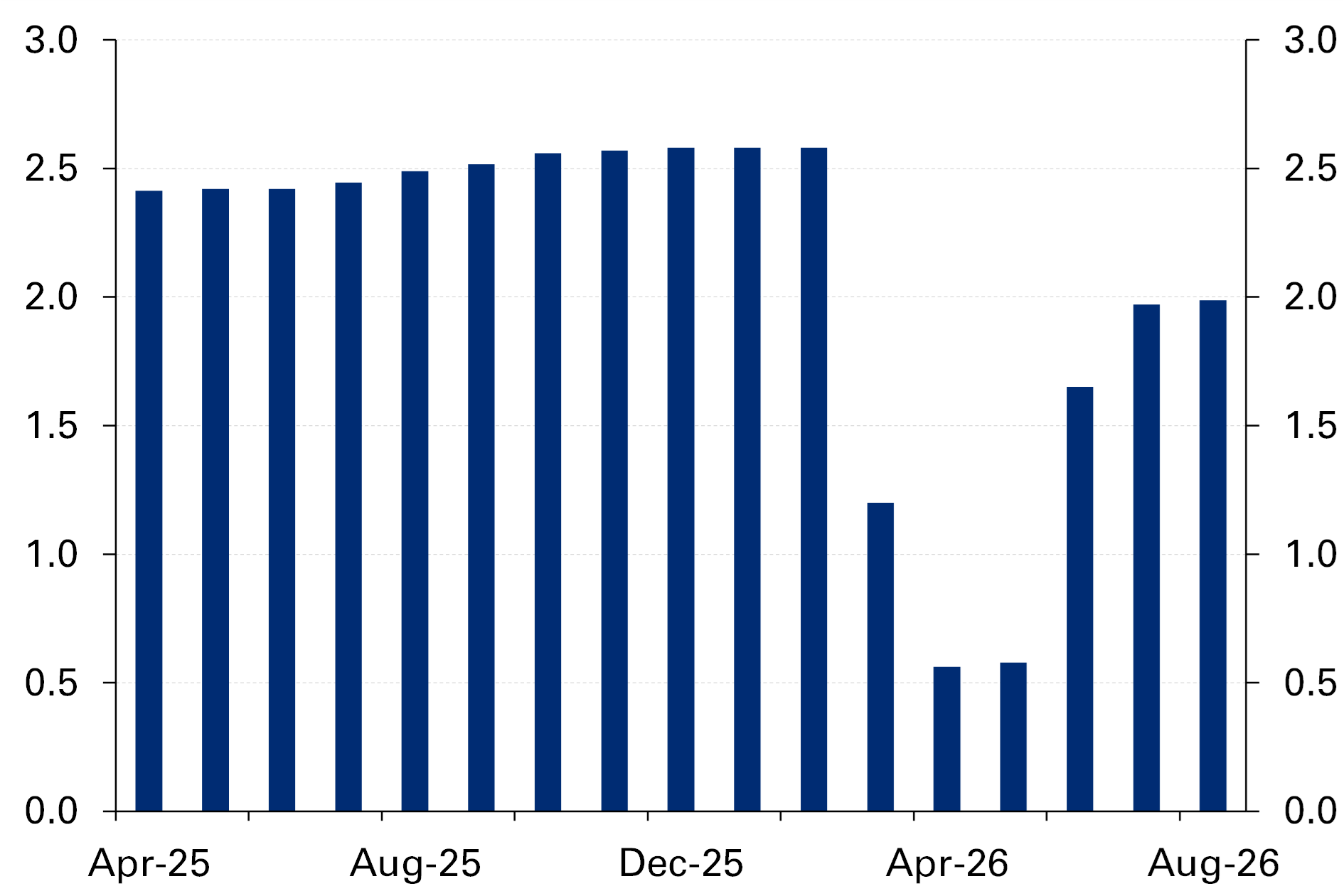
• Oil prices push above $100/bbl as regional conflict widens, oil flow disruptions persist. Following the breakdown of the US-Iran MoU in July, continued severe disruption to oil flows through the Strait of Hormuz and more recently attacks on Saudi energy infrastructure by the Houthis and Iran backed militias that have jeopardized crucial oil exports through the Red Sea helped push Brent futures above the symbolic $100/bbl level to a high of $108/bbl on the 15th September. Local crude marker KEC rose even more, topping $126/bbl recently, widening its premium to Brent to reflect the shortage of medium-sour barrels in high demand by Asian refineries. However, regional oil production had continued to recover as of August (before the latest attacks on Saudi energy). OPEC's oil market report revealed that Kuwait (along with Iraq and non-OPEC UAE) had managed to recover the most output since March’s post-conflict low (+1.4 mb/d to 2.0 mb/d), with production roughly topping 3/4 of pre-conflict levels, an impressive feat that should enable Kuwait to reach its higher OPEC+ production ceiling of 2.68 mb/d quickly once the Strait is fully open. On a related note, KPC signed a record $16bn lease-and-leaseback deal for its crude oil export pipeline network, generating $7.9bn in upfront proceeds. A new JV will be formed with KOC retaining a 51% stake, while KPC keeps full ownership and operational control of the 13 pipelines. (Report here).
• New law allows government borrowing from Future Generations Fund. New legislation permits the government to borrow from Kuwait’s $1 trillion-plus wealth fund to bolster liquidity buffers, though under strict safeguards. According to the law, borrowing in any fiscal year is capped at 100% of the FGF’s average investment returns over the previous five years, while the total outstanding loan balance cannot exceed 10% of the reserve’s net asset value – implying a loan balance cap in excess of KD30 billion. The law also requires that the state prioritizes the repayment of the loan from future budget surpluses. Following the approval of the liquidity and financing law in 2025, short-term financing needs mounted rapidly amid the significant decline in Kuwait’s oil receipts due to the regional conflict. While borrowing from the FGF has unlocked a new avenue to raise funds, the government continued to tap domestic and international debt markets in Q3, raising KD600 million and KD1.8 billion equivalent from each, respectively. In total, KD4.3 billion was raised from debt capital markets so far in the current fiscal year (FY26/27). (See forecast section below for more.)
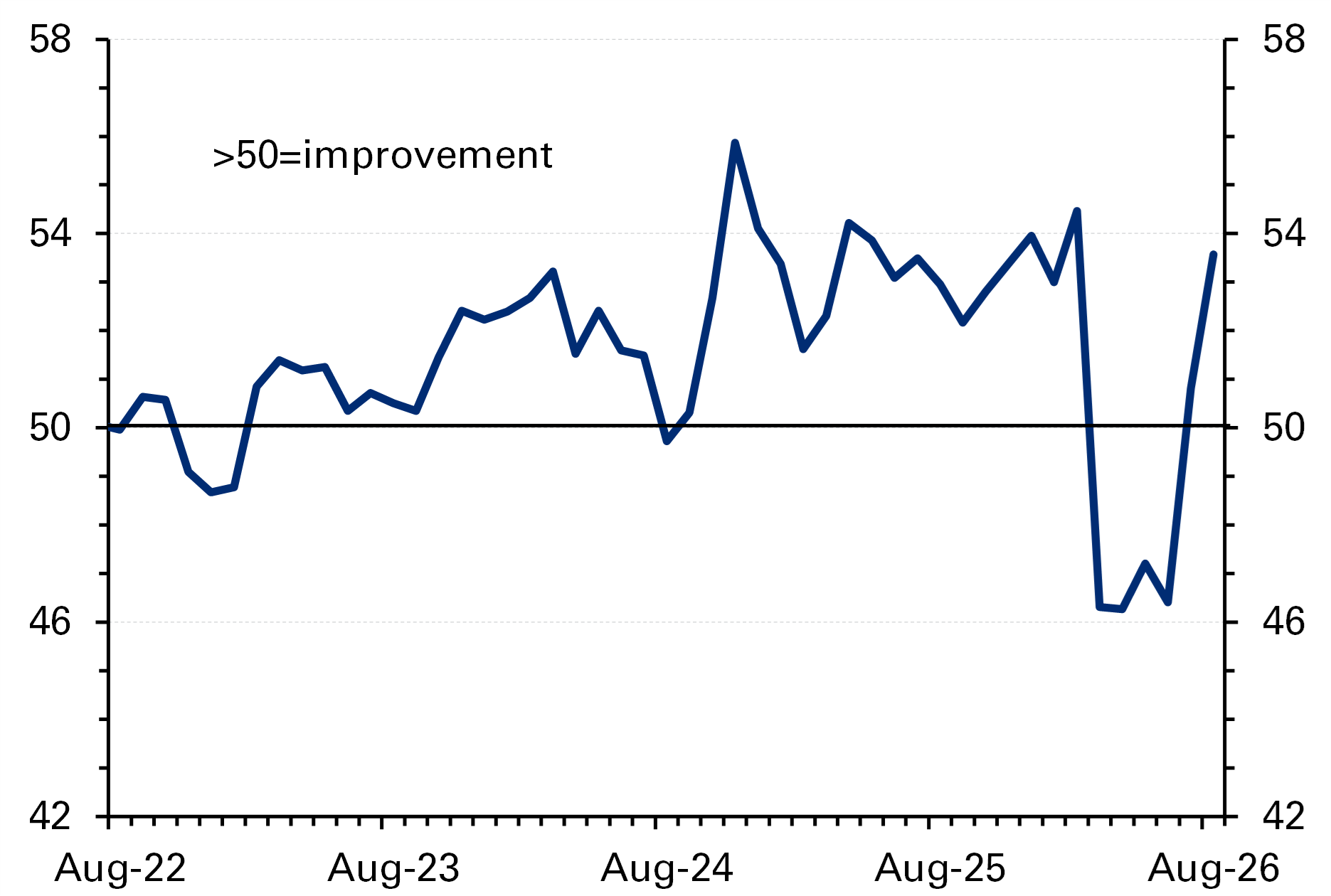
• The non‑oil private‑sector PMI expanded again in August, rising to 53.6 from 50.8 in July. (Report here.) (Chart 2.) The rebound was supported by a robust recovery in demand, with both output and new orders surging to their highest levels since February, thanks to competitive pricing and effective marketing. The improvement in business activity saw companies hire extra staff, with the employment subindex returning to growth last month. However, supply side pressures have continued to mount. Input costs rose to a six-month high due to higher wages and increased expenses for maintenance, marketing, and raw materials, prompting firms to pass some of these costs onto consumers. Looking ahead, optimism regarding the year-ahead outlook was the most since February.
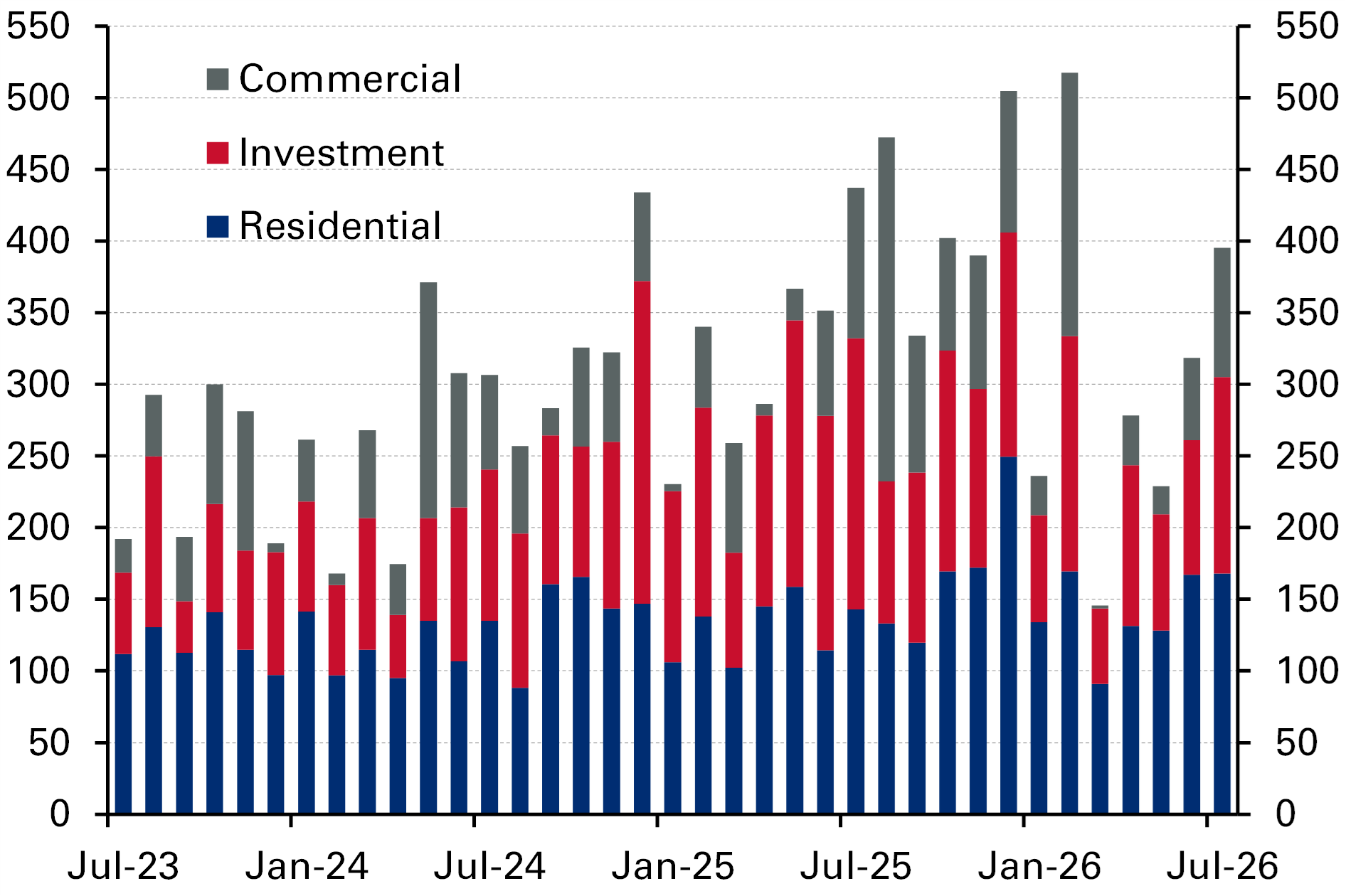
• Real estate activity continued to improve in July, with property sales rising to KD395 million, the highest level since February 2026 (-9.6% y/y). (Chart 3). Sales increased (m/m) across all sectors, led by the investment sector (still -28% y/y), followed by the commercial sector (-14.1% y/y). The uptick in residential sales was modest, though the y/y gain was a solid 17.6%, likely supported by lower house prices that eased affordability constraints for homebuyers. Overall real estate sales activity remained below year-ago levels, marking a fifth consecutive month of annual declines. (Report here.)
• CPI inflation eased to a three-month low of 2.2% y/y in June from 2.5% in May, reflecting softer price pressures across most major categories. Food inflation remained elevated at 5.6% y/y but continued to moderate, while housing inflation slowed to 0.2% y/y, its lowest level since August 2021, amid weaker rental pressures. Core inflation also edged down to 2.1% y/y, although transport inflation accelerated on higher airfares linked to regional tensions. Overall, the data suggests a broad-based easing in inflationary pressures as conflict-related supply disruptions continue to fade. (Report here.)
• Kuwait’s population continued to grow in mid-2026, surpassing 5.3 million residents, though at a slower 4.2% y/y than December 2025’s reading (+5% y/y). (Report here.) Growth remained driven by expatriates, while the Kuwaiti population recorded a modest increase. Labor market trends were similar, with employment growth easing (+5.1% y/y from 6.1%) as expatriate hiring slowed, while Kuwaiti employment returned to growth on higher public sector recruitment (+1.1%). Private sector employment among Kuwaitis continued to decline (-1.2% y/y), though, pushing the unemployment rate higher to 6.4%, while the number of retirees rose sharply, reflecting recent pension reforms.
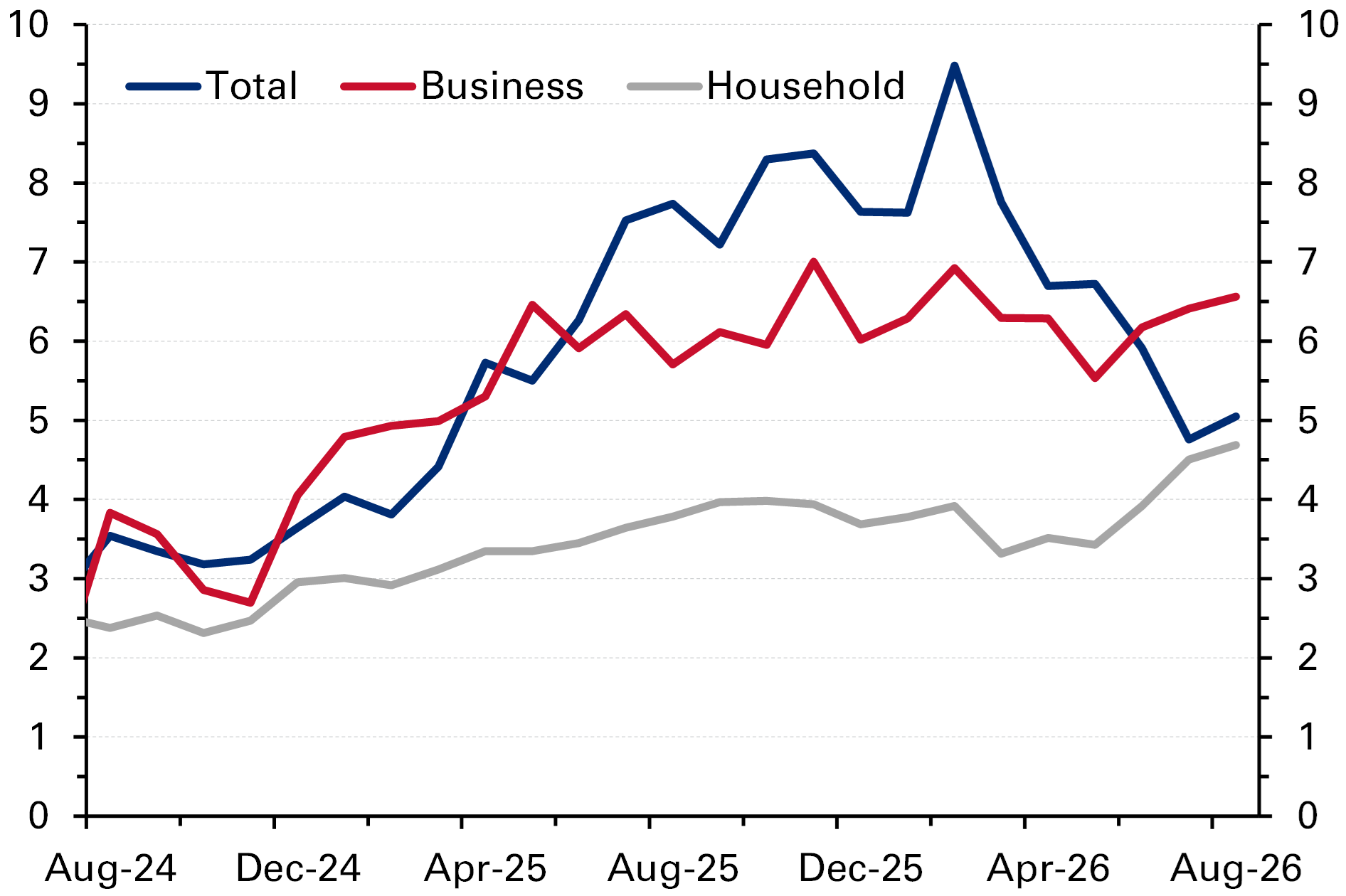
• Domestic credit growth rebounded in August, rising by 0.9% m/m (5.1% y/y) after contracting by 0.2% m/m in July, driven mainly by a recovery in lending to banks and financial institutions and stronger credit for securities purchases. However, underlying lending activity remained decent, with business credit expanding by 0.4% m/m and household credit rising by a solid 0.7% m/m, remaining above its average monthly pace over the past four years. On an annual basis, overall credit growth strengthened, with business and household credit growth edging up to 6.6% and 4.7% y/y, respectively. On the liabilities side, resident deposit growth slowed to 8.4% y/y, its weakest pace since April, reflecting softer private sector deposit growth despite continued strength in government deposits. Looking ahead, the August rise suggests that lending may be picking up after an earlier slowdown, although this is just one month and much depends on the conflict. (Report here.)
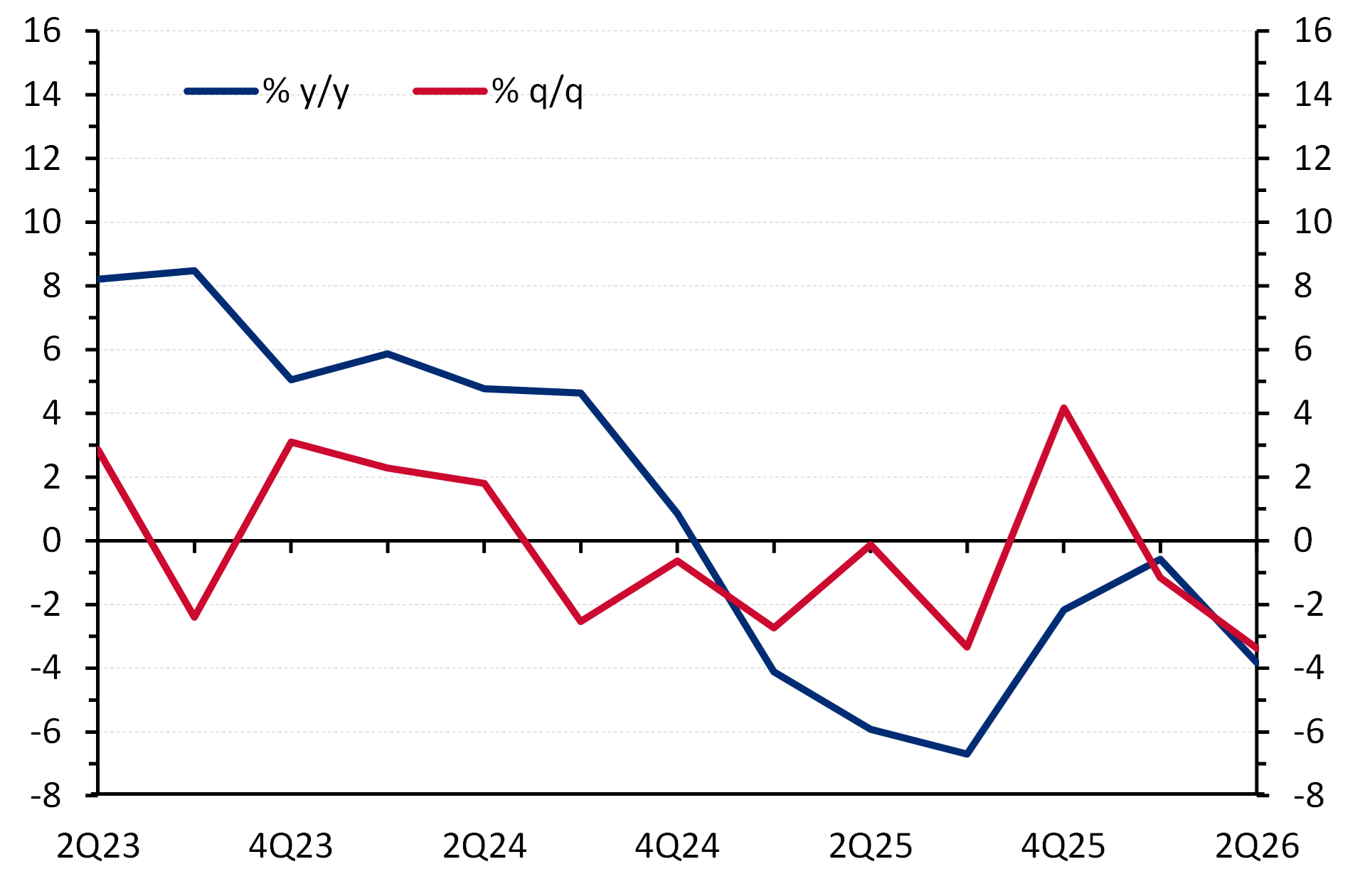
• Central bank data showed local electronic payment transactions declining further in Q2 (-3.8% y/y), indicating softer consumer spending. The weakness was driven mainly by lower ATM withdrawals, alongside declines in electronic gateway and point-of-sale transactions. In contrast, WAMD transfers continued to grow strongly (+44% y/y), reflecting the ongoing shift toward digital payment methods. Overall, the data suggests that the regional conflict has slightly but not dramatically disturbed the modestly improving card spending trend that was observed beforehand. (Report here.)
Forecast
Prolonged conflict dampens outlook
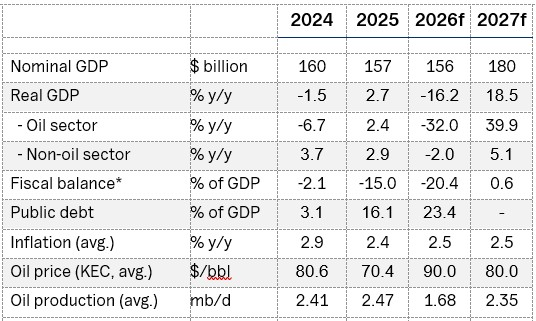
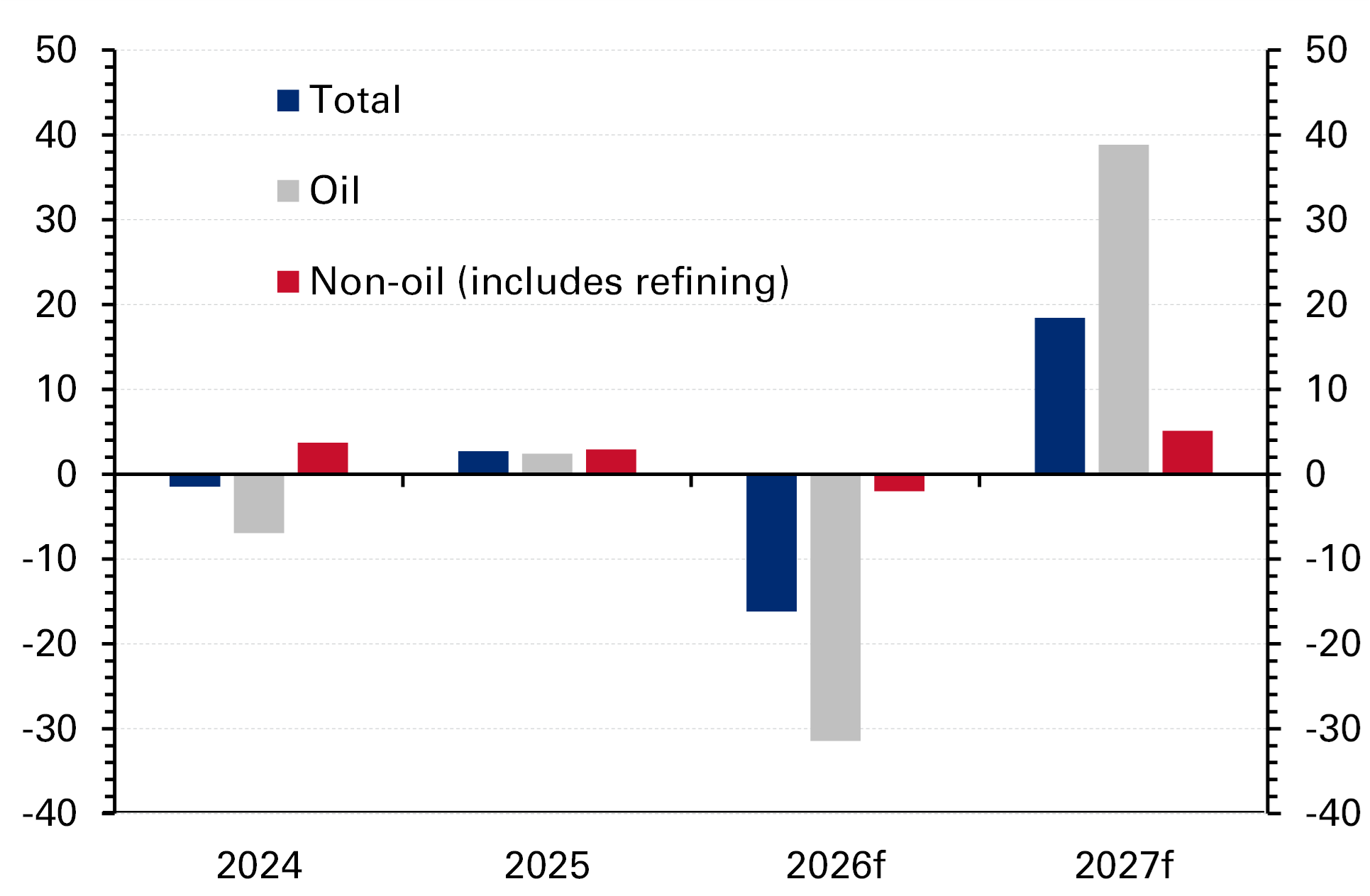
The conflict has lasted longer than initially anticipated, and prospects for a near-term diplomatic resolution have faded amid the absence of meaningful dialogue and renewed tensions in both the Gulf and the Red Sea. We have revised our baseline outlook (versus June) to reflect this, anticipating a deeper contraction and a more gradual recovery in oil output than previously. Oil GDP is now forecast to contract by 32% in 2026, with a full recovery in oil output to pre-conflict levels delayed to H2 2027 due to ongoing export constraints at the Strait of Hormuz. (Chart 6.)
Assuming shipping routes are fully normalized by mid-2027, oil output is projected to surpass pre-conflict levels by the end of next year, supported by a likely higher OPEC quota. Meanwhile, global oil prices are expected to remain elevated but relatively range-bound under the baseline scenario, avoiding the sharp spikes associated with a more severe regional escalation. We maintain our oil price forecast from April of Brent averaging $90 in 2026 and $80/bbl 2027, with the balance of risks skewed to the upside following the recent disruptions at the Bab-al-Mandab strait and damage to Saudi infrastructure, which have compounded supply shortages and global inventory drawdowns. The low global inventories imply a period of stock rebuilding once flows normalize, which should provide support to crude prices even as GCC supply returns to the market.
The conflict and ongoing supply chain disruptions have weighed on business confidence, trade, and project implementation. Nevertheless, monthly economic indicators, including the PMI and bank lending, have improved since their lows in Q2, suggesting that the economy has mostly absorbed the initial shock of the conflict, helped by alternative trade routes, restored air travel, and policy support. Steady public sector employment has helped protect household incomes, while government subsidies and price controls have cushioned consumers from higher food and commodity prices. Policy measures have helped to support liquidity and maintain confidence in the banking sector. Following a weak 2026, conditions for businesses should improve as disruptions to trade and supply chains begin to ease.
In addition, increased refined products output, a pick-up in project implementation and stronger investment should support a rebound in non-oil growth to 5.1% in 2027 from -2.0% in 2026. Consumer spending and household credit growth are also expected to pick up next year but remain relatively subdued due to limiting factors including slow employment and wage growth. Lending support to the medium-term credit growth outlook is the recent approval of the long-awaited mortgage law which will unlock additional subsidized home financing, payable over a period of 25 years. This will also expectedly support residential construction activity and the growth of related sectors, although the supply of public housing and land remains the primary constraint and the new borrowing may not materialize for some time.
Inflation seen steady despite war pressures
Inflation is forecast to average just 2.5% in 2026 (2.4% in 2025) as conflict-induced inflationary pressures are countered by government food price controls and subsidies, low housing inflation and disinflationary trends in other consumer items. The CBK held the policy rate steady at 3.50% in September despite the US Fed’s move to raise benchmark interest rates for the first time in three years. The futures market sees a good chance of a second 25-bps rate hike by the US Fed this year, though monetary tightening by the CBK will continue to depend partly on domestic economic and financial conditions.
New financing options ease pressure from deficits
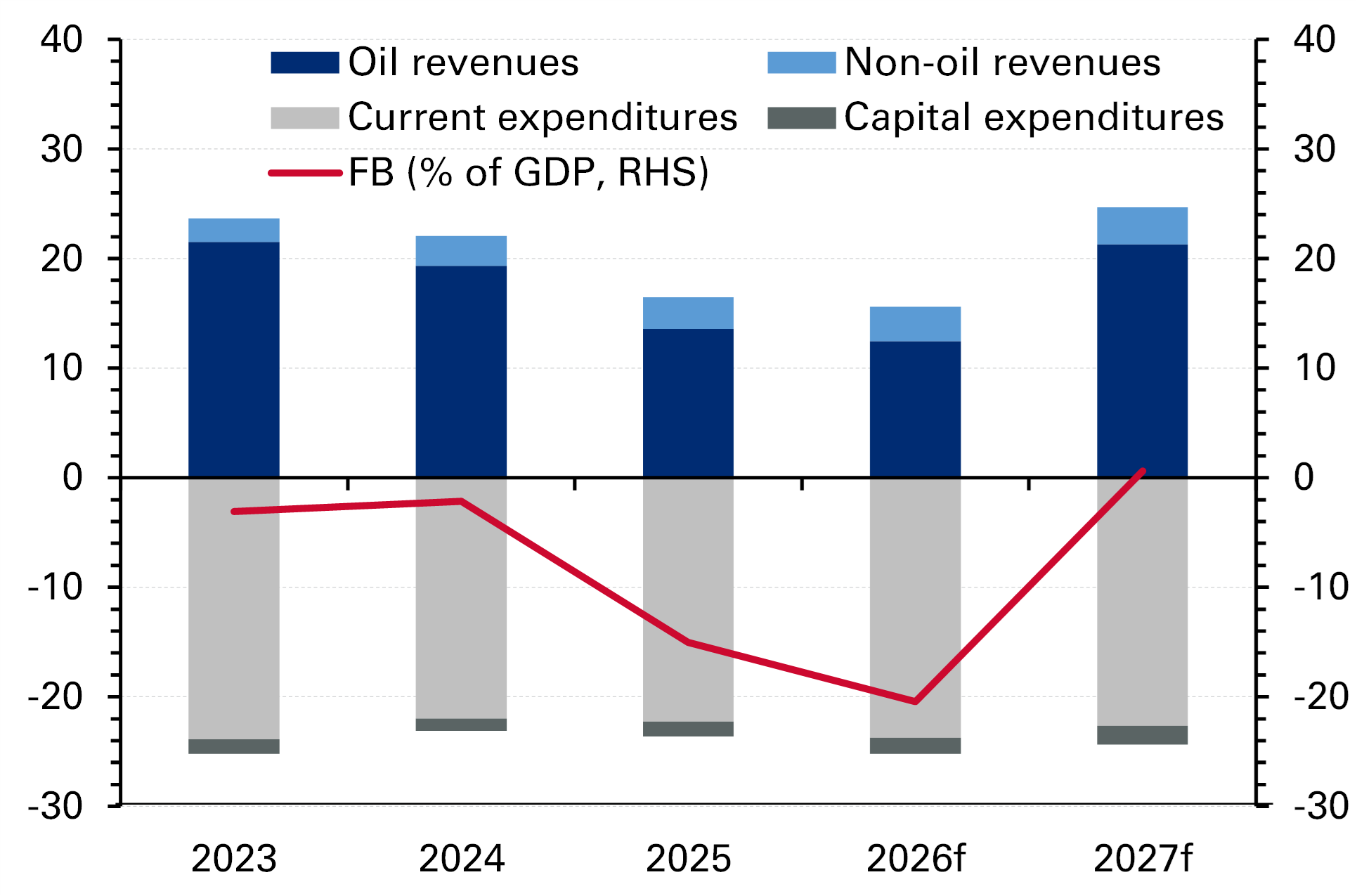
A severe drop in oil revenues coupled with spending on conflict-related costs including subsidies and reconstruction capex, will result in a fiscal deficit of about 20% of GDP (KD9.6bn) in this fiscal year FY26/27, wider than the 15% of GDP posted in FY25/26. (Chart 7.) This would mark the 11th deficit in the past 12 years and the widest since the 32% of GDP recorded during Covid. The fiscal position is however expected to improve substantially in FY27/28, potentially to around balance assuming a recovery in oil production and exports alongside a reduction in conflict-related reconstruction and emergency spending. The government is also expected to refocus on its fiscal consolidation agenda after a period of heightened spending pressures. This includes continued efforts to mobilize non-oil revenues, mainly from the ongoing review of government service fees and introduction of new tax measures beginning with the excise tax potentially in 2027 before moving on to the VAT. On the expenditure side, measures under review include subsidy reforms and further targeted reductions in discretionary spending.
Public debt rose sharply since March 2025 with the passing of the liquidity and financing law, but the pace of borrowing should moderate over the coming year given reduced funding needs (assuming an improved fiscal position) and the new law allowing borrowing from the FGF. A new Sukuk law further diversifies borrowing options. We forecast public debt to reach around 23% of GDP in FY26/27, with the pace of issuance likely to soften given access to FGF funding. Rating agency Fitch views this type of borrowing as government-to-government and will not be included in Kuwait’s public debt figure. Overall fiscal space remains comfortable, with the debt burden still low by global standards and ample room for additional borrowing in excess of KD30 billion from the FGF, effectively raising the combined (public debt plus FGF loans) government debt ceiling to KD60 bn plus, versus KD11bn on issue now. The liquidity boost will enable a further ramp-up in diversification projects, driving progress towards long-term development goals and unlocking non-oil sector growth.
Extended or more severe conflict key downside risk
Risks to the outlook remain tied to geopolitics. Our baseline assumes Hormuz reopens and oil exports normalize by mid-2027, but further deterioration in regional security conditions could extend shipping disruptions and delay the recovery in oil production and growth. On the upside, a quicker resolution would likely trigger a faster rebound in exports, investment and private sector confidence. Beyond the conflict itself, the pace of capital spending and progress on key economic reforms will be critical in determining how quickly growth returns to a sustainably stronger footing. Kuwait has recently focused on modernizing its judicial system through digital courts and litigation reforms, while simultaneously reviewing key economic laws to strengthen governance, improve the business environment, and attract investment.