
 +965 2292 4888


Kuwait Economic Brief
29.06.2026
Overview
Four months since the onset of hostilities in late February and the conflict appears to be winding down with the US and Iran signing a tentative MoU in mid-June, albeit with a final resolution on various diplomatic and economic matters still pending. Data continue to reveal the disruption to Kuwait’s economic activity from the war and especially from shipping in the Strait of Hormuz – including low oil output, decelerating credit growth, weaker bank card spending, declining business inventories and slower real estate activity. The reopening of the Strait from June together with a reduction in conflict-related uncertainty promises to alleviate a lot of the economic pressure going forward, and we expect oil production (alongside other activity metrics) to rise steadily through Q3. However, the projected gradual return to normal traffic flows over the coming months has led us to revise down our expectations for oil production and GDP growth this year compared to our previous forecast in April – followed by a stronger rebound in 2027. A sharper drop in oil revenues will also result in a wider fiscal deficit this year than before, but liquidity will remain adequate aided by further successful local currency debt issuances in April and May at below pre-conflict yields.
Latest developments
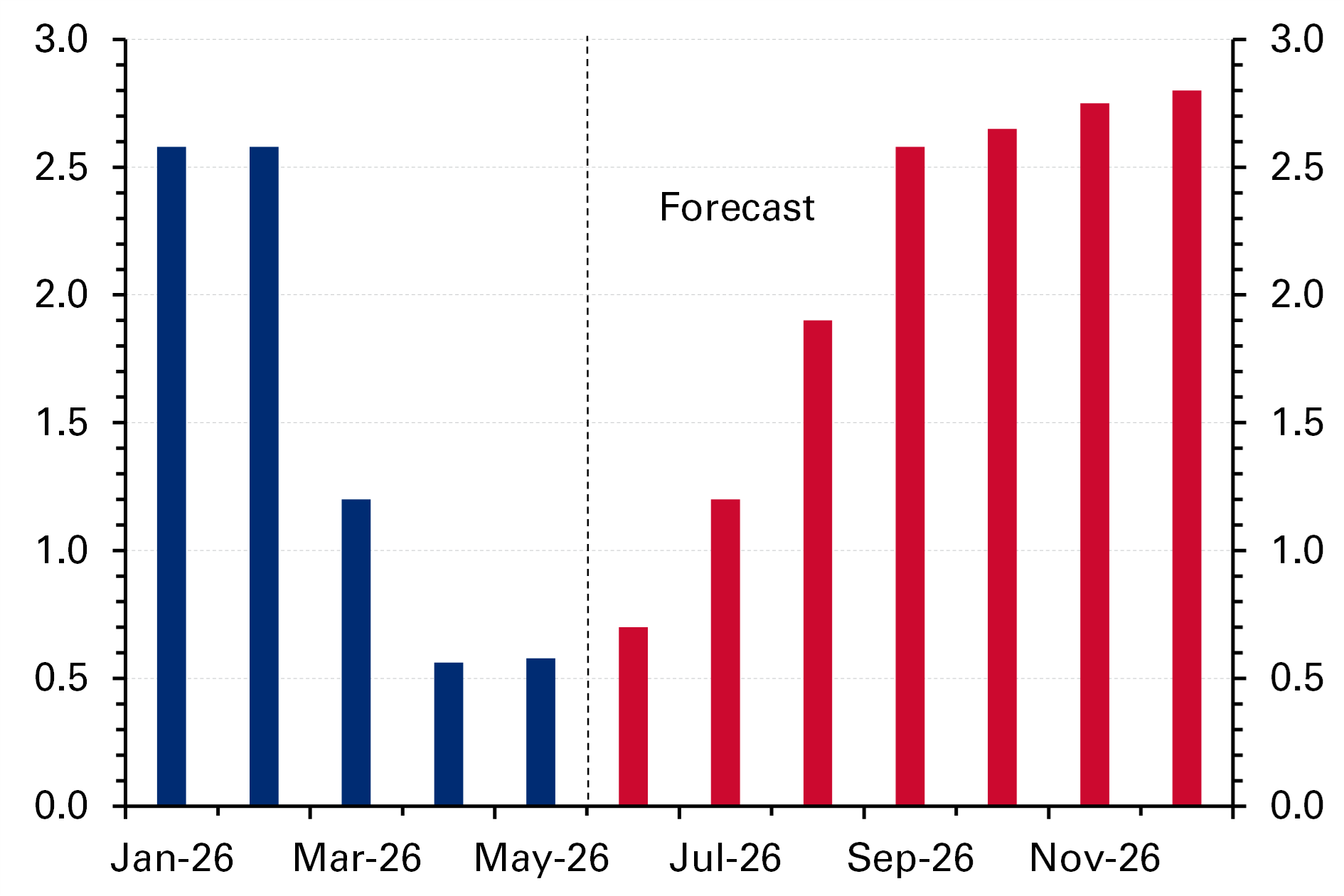
• US and Iran agree to stop hostilities, weighing on oil prices. The recent peace agreement between the US and Iran, and imminent (though uncertain) signing of an MOU prompted a further selloff in oil markets. Despite an estimated 14–15 mb/d of disrupted supply, Brent futures fell by 16% over four trading sessions in mid-June and, at the time of writing, had dropped even further to $72/bbl, reversing all conflict-linked price gains. This reflects the perception of a lower geopolitical risk premium, and optimism that crude supplies would recover soon, even though tankers have sporadically been targeted and hostilities in the Gulf between Iran and the US continue to flare up. The decline was driven by a combination of aggressive oil inventory drawdowns and signs of demand destruction due to elevated price levels. Kuwait’s crude output in May, increased slightly on April’s low of 562 kb/d to 578 kb/d, according to OPEC’s June Oil Market report. (Chart 1.) The monthly increase is typical for this time of year, with production rising to supply oil refineries gearing up to produce fuel oil for power stations amid higher summer electricity consumption. Despite the increase, 78% of Kuwait’s pre-war production of 2.58 mb/d remained shut-in. OPEC-7 approved a 188 kb/d increase in its aggregate output for July, with Kuwait permitted to raise output by 16 kb/d to 2.64 mb/d. However, given ongoing logistical constraints, the rise is largely notional in the near term, though it provides a higher production ceiling that should support a faster rebound once shipping flows normalize through the Strait. On that note, KPC CEO Sheikh Nawaf Al-Sabah announced recently the lifting of all force majeure notices and indicated that Kuwait’s oil production could rise to 2 mb/d within a week of the Strait reopening, provided international shipping normalizes.
• Kuwait’s Petroleum Corporation (KPC) completes downstream merger. The government has approved the merger of KPC’s downstream subsidiaries, KNPC and KIPIC, with KNPC assuming control of KIPIC’s 615 kb/d Al‑Zour refinery and LNG import terminal, in a move aimed at enhancing operational efficiency, streamlining activities, and rationalizing costs. The decision follows through on restructuring plans announced by the Supreme Petroleum Council in 2020. Post‑merger, KPC will retain seven subsidiaries, though the broader strategic direction points toward further consolidation, with activity increasingly centered around three core segments: upstream production, exploration, and downstream refining. In line with this strategy, media reports indicate that the next phase of restructuring could involve the integration of KGOC into KOC, further simplifying the organizational structure and supporting operational efficiencies across the sector.
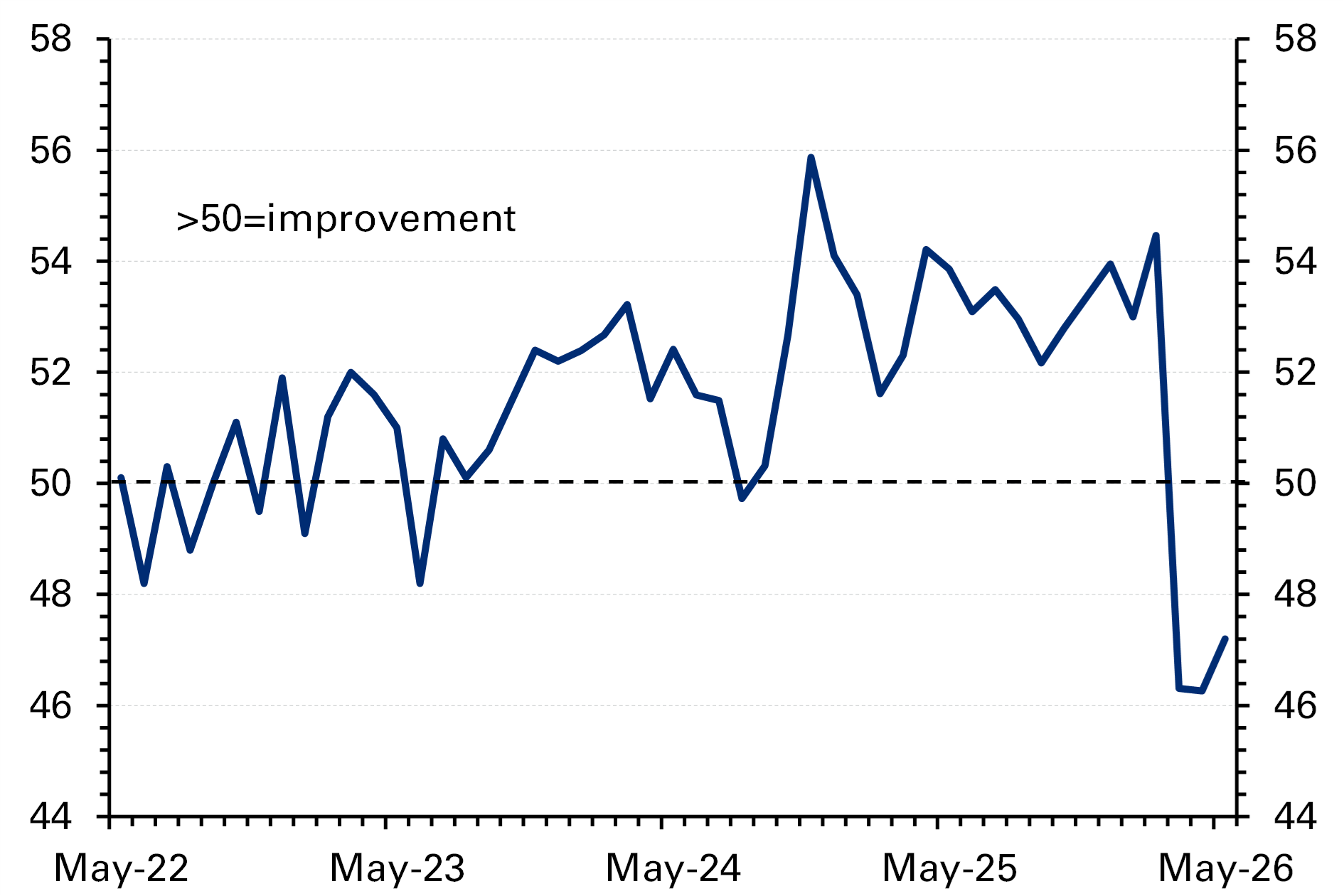
• Non‑oil private‑sector activity remained in contraction in May, though the pace of decline continued to ease, with the PMI edging up to 47.2 from 46.3 in April, marking a third consecutive sub‑50 reading. (Report here). (Chart 2.) The output and new orders components showed notable improvement, with both approaching the no-change threshold, pointing to a gradual stabilization in demand conditions, albeit without a clear rebound taking hold. Supply‑side pressures persisted, with input costs rising on higher purchase prices, only partly offset by a decrease in staffing costs. These dynamics continued to pass through to selling prices, with firms raising output prices albeit at a still modest overall pace. Supply chain disruptions and higher costs weighed on procurement, with inventory purchasing contracting at its fastest pace since April 2020. Looking ahead, business sentiment remains subdued but has shifted closer to neutral, suggesting that firms are increasingly anticipating a gradual normalization in operating conditions, even as near‑term challenges persist.
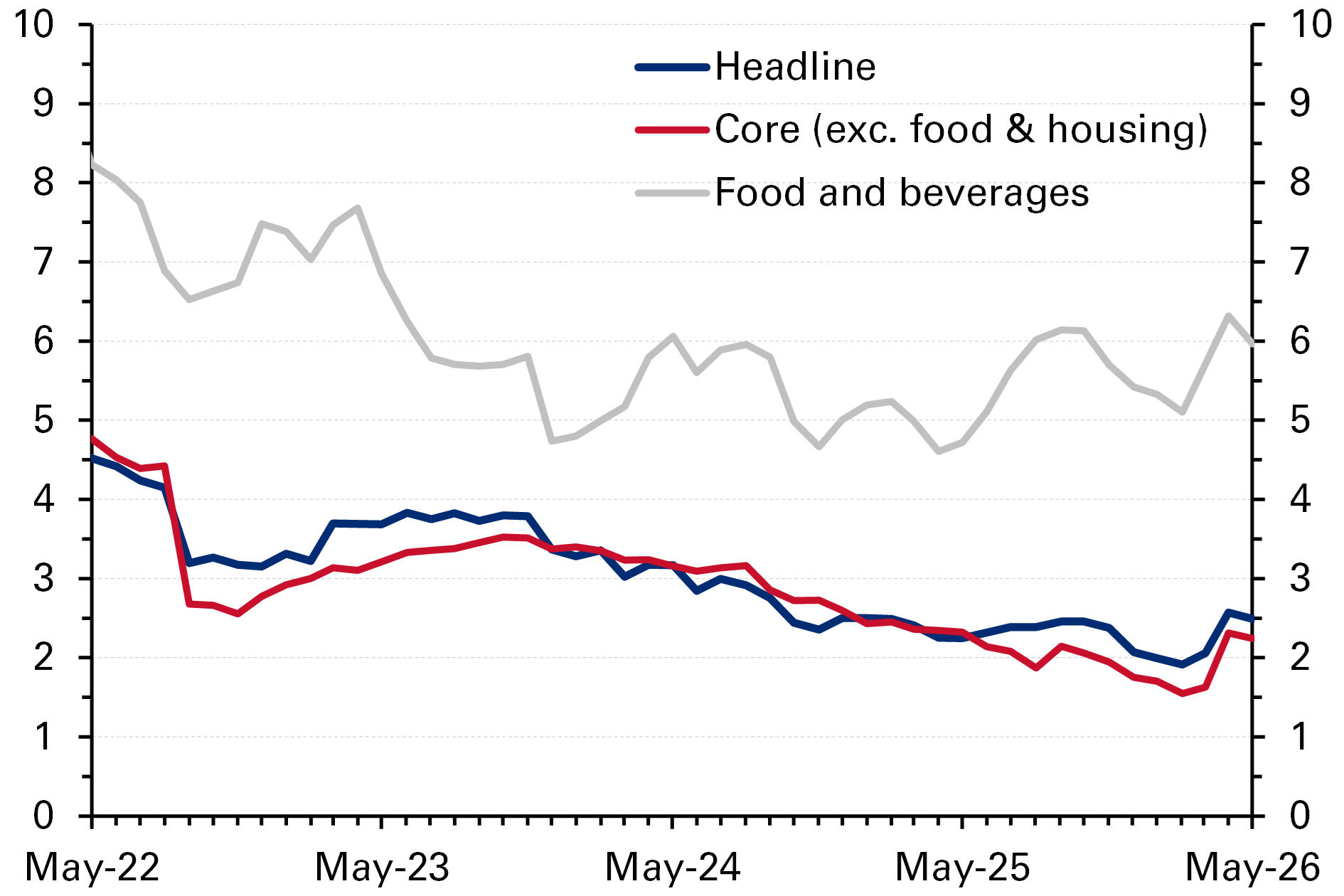
• Consumer price inflation eased to 2.5% y/y in May from 2.6% in April, helped by softer food price dynamics. (Report here). (Chart 3.) Food and beverage inflation moderated to 6% y/y (from 6.3%), supported by slower increases in meat & poultry and fish & seafood prices. Meanwhile, housing services inflation – the largest component in the CPI basket and mainly reflecting rents – was unchanged was unchanged at 0.5% y/y. Excluding food and housing, core inflation edged down to 2.2% y/y from an 11-month high of 2.3% in April, with health services the only major segment to record stronger growth (+1.2%). The softer headline reading suggests that the conflict-linked pass-through from supply chain disruptions has so far been limited, with the most visible price increase coming from the transport component (now 4.5% y/y), reflecting higher airfares.
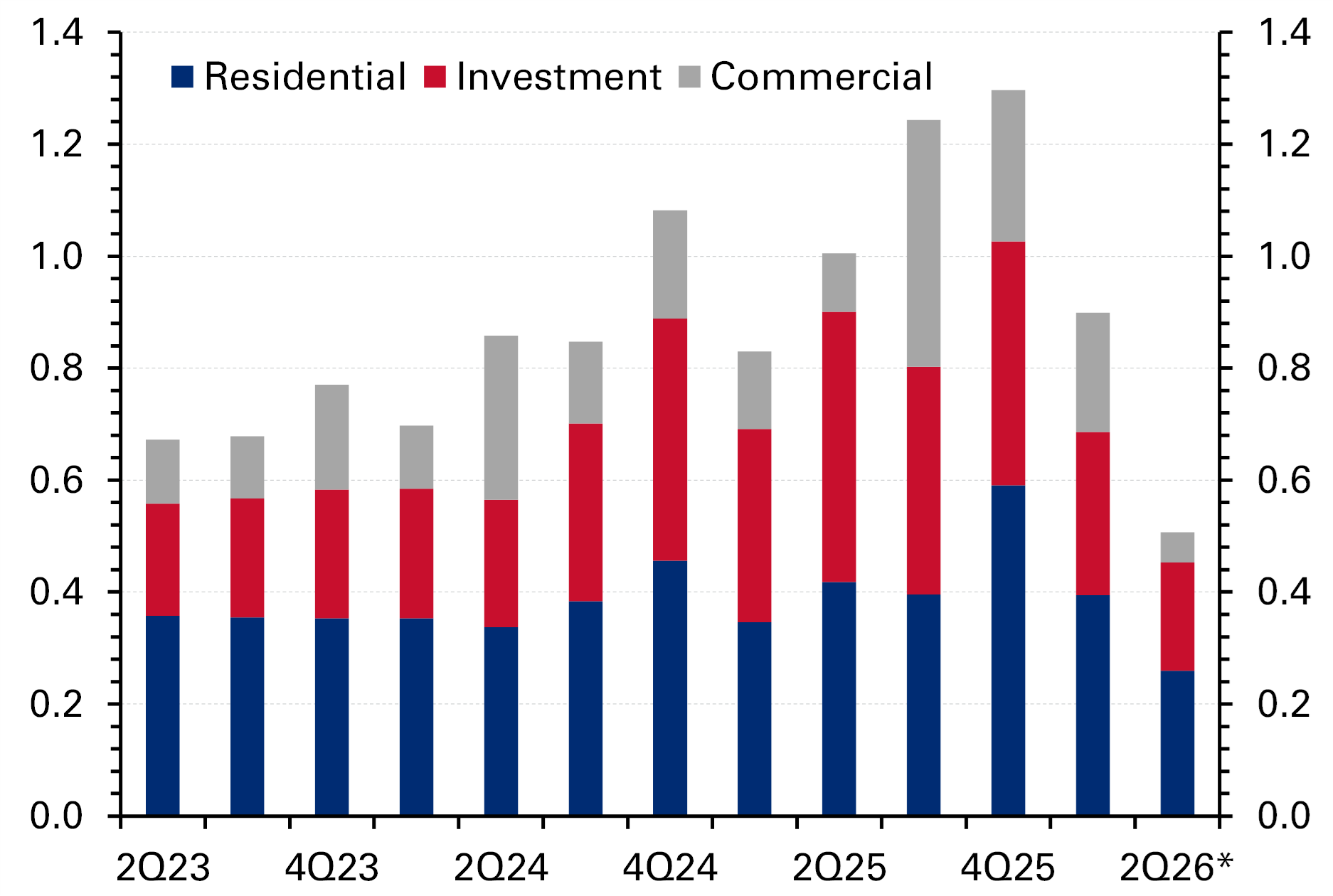
• Real estate activity declined in May after partially rebounding in April. (Report here.) Property sales fell in May after rebounding in April, with total sales down 18% m/m (-37.6% y/y) to KD229 million. (Chart 4.) This was the second lowest reading in over two years with investors downbeat amid lingering war-related uncertainty. Sales were down across all sectors, with the sharpest fall seen in the commercial sector (-43.8% m/m; -11.3% y/y) followed by the investment sector (-27.7% m/m; -56.4% y/y). Residential sales declined by a less acute 2.3% m/m (-19.2 % y/y).
• Debt issuance continues apace with state finances disrupted by Strait’s closure. Kuwait resumed local currency public debt issuance in April-June, following a pause in March. The government, through the Central Bank, raised KD1.25 billion across 2, 3, 5, and 7‑year maturities. Despite the conflict, investor appetite remained strong, with issuances at least 3x oversubscribed, underscoring continued confidence in Kuwait’s sovereign credit profile and liquidity buffers. Pricing also improved at the margin, with yields declining across the curve. Notably, the 5‑year tranche was issued at 3.25%, down from 3.625% in February, suggesting a degree of easing in funding conditions despite the challenging macro environment.
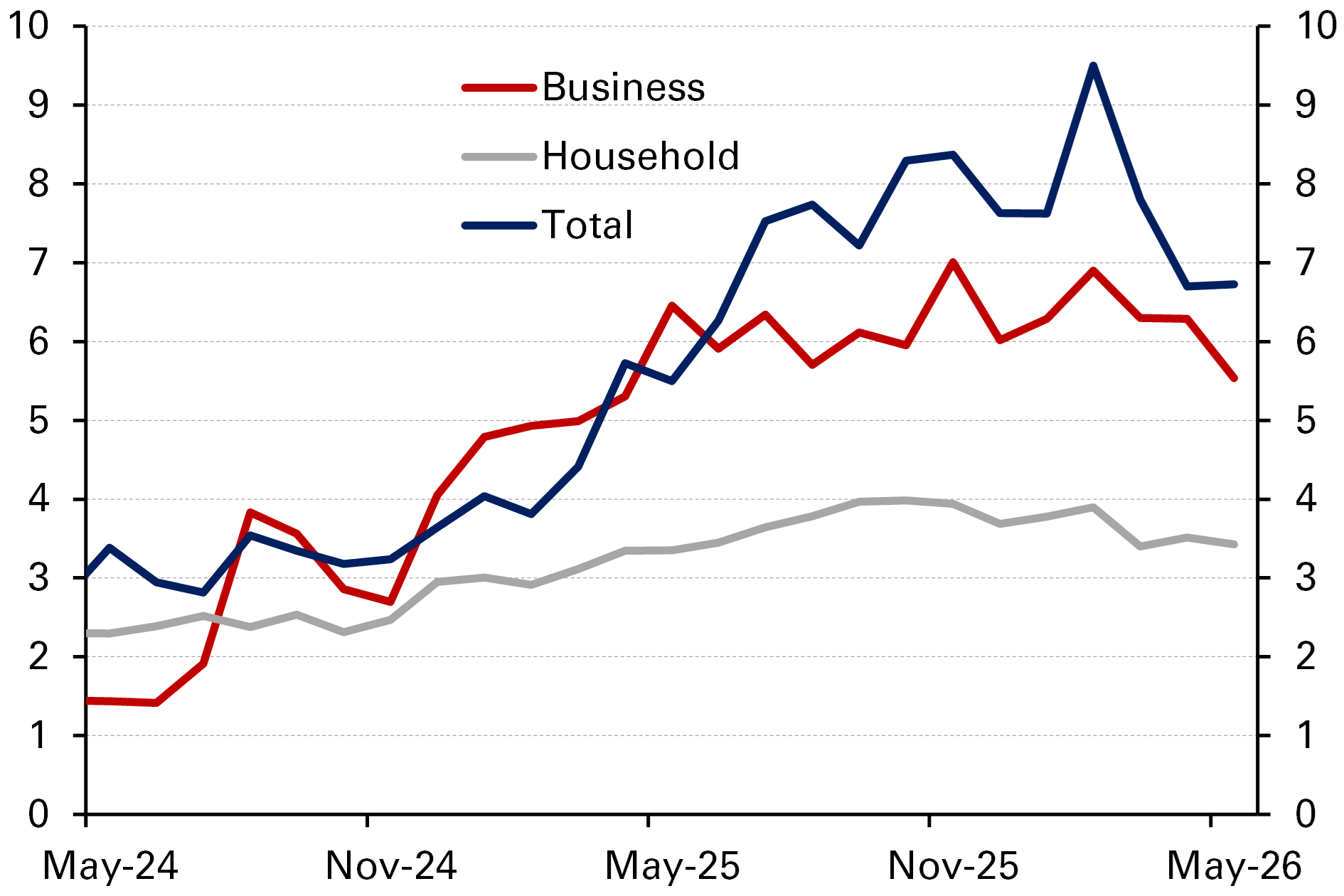
• Domestic credit growth picked up in May, rising 0.5% m/m (6.7% y/y), supported mainly by stronger business lending, though overall momentum remains below earlier levels. (Report here.) Business credit grew 0.6% m/m, lifting YTD growth to 3.6%, with gains across services, trade, and real estate, while household lending eased slightly to 0.4% m/m (+1% YTD). Credit for securities rebounded, whereas lending to financial institutions and non-residents declined, the latter falling for a second consecutive month. On the funding side, deposit growth moderated (+0.3% m/m), reflecting weaker private sector deposits and declines in public sector balances, while non-resident deposits continued to contract. As a result, the loan-to-deposit ratio remained stable at 97.7%. Looking ahead, credit growth is expected to strengthen, supported by improving sentiment and regional developments, provided deposit growth keeps pace to maintain liquidity.
Forecast
Conflict expected to hit growth in 2026
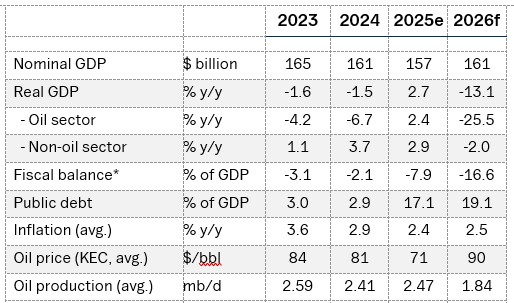
After expanding by 2.7% in 2025, GDP will contract in 2026, weighed down by nearly four months of war-induced oil production losses and trade disruptions. We highlighted in the previous edition that the economic impact would be sensitive to the duration and intensity of the conflict. Although Iran and the US have reached an interim peace agreement, the longer expected disruption to the Strait of Hormuz and associated negative spillovers have led us to revise down our forecast from our April projection. Assuming a July reopening of the Strait and normalization of shipping over many weeks, the projected drop in GDP could deepen to 13% in 2026 from 4% in our previous estimate.
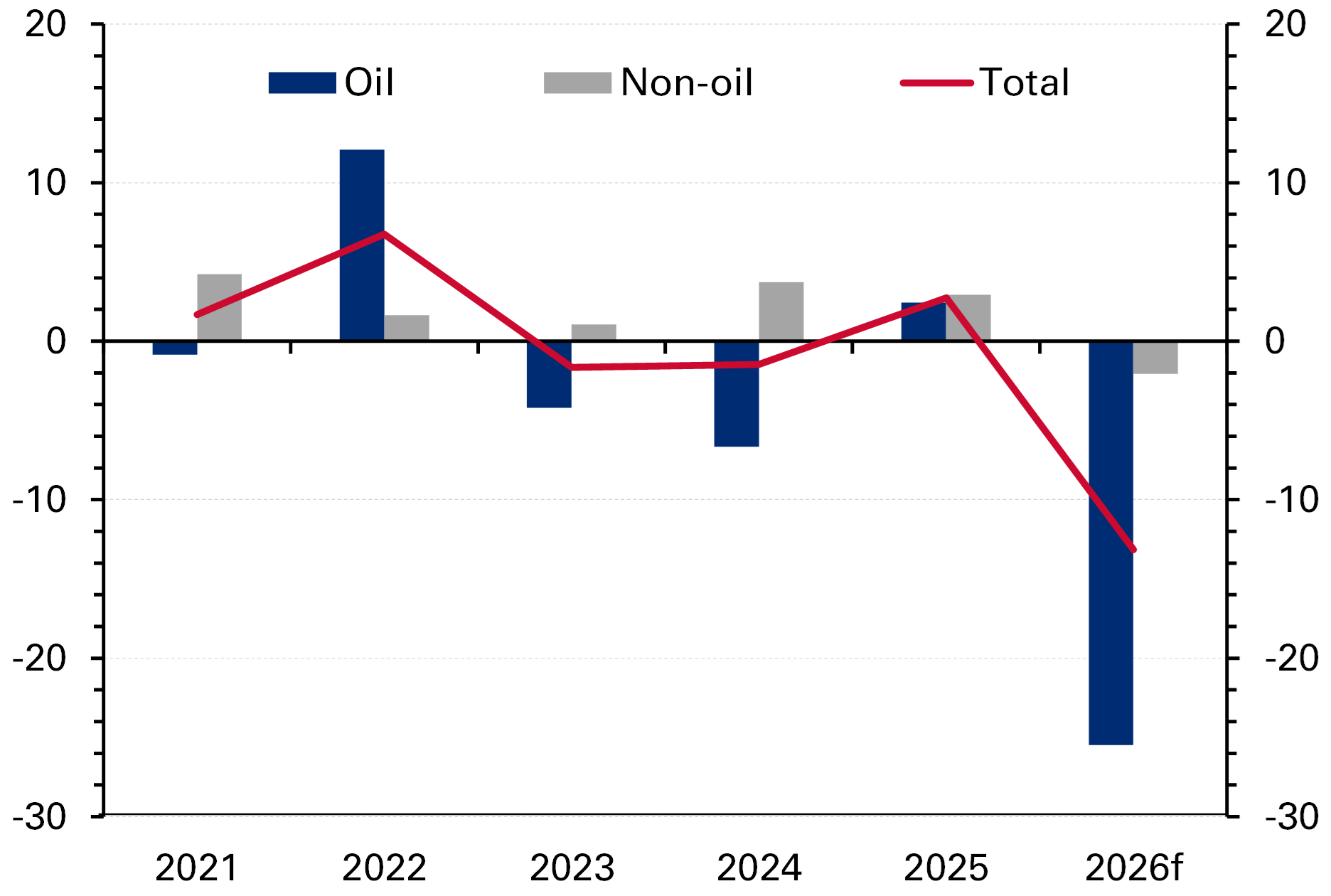
The main contributor to the revision is oil GDP, which is now projected to decline by 26% in 2026 due to the more prolonged closure of the Strait which halted oil exports and forced production to be drastically reduced to levels sufficient to cover only refinery demand. We see average crude oil output in 2026 dropping to just 1.84 mb/d (with April representing the monthly low) from 2.47 mb/d in 2025. This incorporates a relatively gradual post-Strait reopening production recovery profile, with output topping 80% of pre-conflict levels within 8 weeks, which is within the range of KPC’s statements.
We maintain our oil price forecast from April of Brent averaging $90/bbl in 2026, with the balance of risks skewed to the downside at this juncture, given how quickly prices sold-off on the US-Iran deal announcement and in anticipation of a wall of unleashed GCC oil supply. On the upside, though, geopolitical risk is elevated while adherence to the MoU remains uncertain amid a tentative ceasefire; Iran has and could close the Strait at any time, imperiling shipping again. Also, positive for prices is the prospect of a lift in oil demand during the peak summer driving season allied to the continued dwindling of global oil stocks due to the lagged effect of the Strait closure, and the need for potentially aggressive global stock rebuilding.
Meanwhile, non-oil GDP growth (excluding refining) in 2026 is forecast to be flat, weakening slightly from our April estimate of 1% growth. Sectors such as trade and travel have been heavily affected, supply chains for businesses under extended strain, project implementation has slowed, and heightened uncertainty has dampened spending in recent months. Still, our base case remains that the non-oil economy can avoid a recession – a respectable outcome given the huge shock of the conflict – helped by steady public sector employment that has protected incomes, and government price controls and subsidies that have cushioned the inflationary impact of higher food and commodity prices on consumers, and strong actions by the authorities to support the banking system including government deposit injections and regulatory changes by the central bank such as cuts to liquidity and capital adequacy ratios.
We see a strong post-conflict rebound in economic activity led by a recovery in oil sector output, but also a return to a broadly pre-conflict pace of project awards, a continuation of the pre-February trend of improving consumer spending and as pressures on business supply chains unwind. GDP is projected up 27% in 2027, with a jump of 56% in oil GDP. We also see oil prices remaining higher than pre-conflict levels, averaging $75/bbl in 2027.
Inflation seen steady despite war pressures
Inflation is forecast to average just 2.5% in 2026 (2.4% in 2025) as conflict-induced inflationary pressures are countered by government food price controls and subsidies, low housing inflation and disinflationary trends in other consumer items. The policy discount rate stands at 3.50% and the futures market sees a broadly even chance of one to two 25-bps rate hikes by the US Fed this year.
Fiscal deficit to widen sharply in FY26/27
Prolonged disruption to oil exports—almost four months at the time of writing—together with higher spending on subsidies and post-conflict reconstruction and a decline in non-oil revenues will trigger a sharp widening of the fiscal deficit this year. We forecast a deficit of 17% of GDP in FY26/27 (KD8.1bn) from an estimated 7.9% in FY25/26. This would be much smaller than the gap of 32% of GDP recorded during Covid, though still the 11th deficit in the past 12 years.
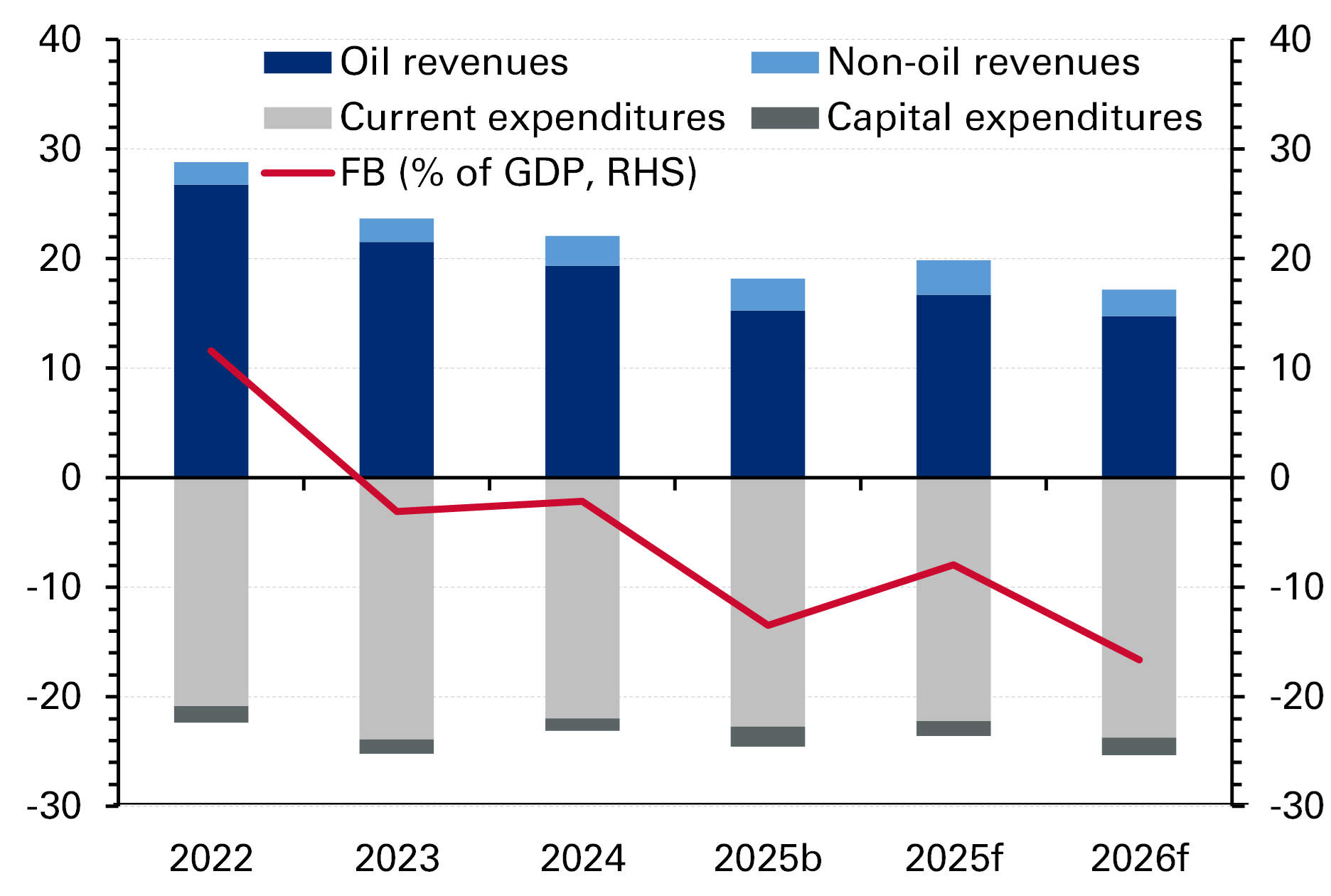
Long-standing fiscal reform objectives are assumed to be temporarily superseded by conflict-linked reconstruction and spending imperatives. The official (pre-conflict) budget had projected a 6% rise in spending that included a surge in capex and KD700 million in non-recurring allocations to support the pension fund. We expect similar-sized growth in spending overall, while incorporating higher subsidy spending and a smaller rise in capex. The budget had also projected a 20% increase in non-oil revenues to a record KD3.5 billion (22% of all revenues), incorporating measures such as higher service fees and expatriate health insurance charges, a vacant land tax as well as the corporate income tax (CIT) on multinational firms. While some of these initiatives have been implemented, weaker non-oil growth and delays in revenue collection are likely to postpone the full realization of these gains.
Looking to FY27/28, we forecast the deficit narrowing sharply to 3% of GDP on a recovery in oil production and a decline in war-related spending. Underlying fiscal consolidation progress should also resume, with the expected implementation of an excise tax, as per the recent statement from the MoF. Together with the CIT, this is expected to generate up to KD450 million (0.8% of GDP) in additional revenue. Other, near-term prospective measures include further subsidy rationalization, service fee repricing and discretionary spending item cuts. The government’s huge reserve assets (estimated unofficially in excess of $1 trillion) and still very low debt levels of 17% of GDP despite recent issuance, provide ample room to finance the expected deficits. Both S&P and Moody’s have left Kuwait’s sovereign credit rating unchanged with a stable outlook since the conflict began, citing the scale of the government’s financial buffers.
Conflict underscores need for diversification
The war has exposed underlying vulnerabilities in the economy, particularly its reliance on oil revenues, rigid public sector structures, and limited private sector. This underscores the imperative of advancing critical Vision 2035 reforms to stimulate the private sector, diversify revenues, rationalize spending, and boost investment – and we expect the government to pursue such with increased vigor going forward. Downside risks to the outlook center on a longer-than-expected recovery in oil output and lower oil prices; upside risks include faster growth in consumer spending allied to a renewed projects, business reforms and investment drive.