
 +965 2292 4888


Kuwait Economic Brief
21.12.2025Overview
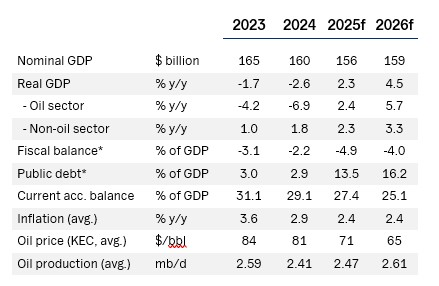
The economic environment continues to improve, reflected in strong credit growth, rising real estate activity, higher project awards, and above-trend PMI readings. This momentum should push non-oil GDP growth to a five-year high in 2026 of 3.3%. Overall GDP is forecast at an upwardly-revised 4.5% in 2026, boosted by rising oil output in line with OPEC+ policy moves despite a now confirmed pause in output hikes in Q1 26. The fiscal deficit is expected to widen to 4.9% of GDP this year on lower oil prices, before narrowing slightly in FY26/27 as oil production rises, non-oil revenues expand and the government keeps firm control of spending. Public debt issues have slowed through Q4, but bumper issuance in June-October raised KD5.5 billion, enough to finance more than two years of deficits based upon our projections. Expanded financing options as well as progress on broader fiscal reforms and faster economic growth helped trigger a credit rating upgrade by S&P in November, moving Kuwait back up to the ‘high investment grade’ tier and a further sign that confidence in the economic outlook is improving.
Latest developments
• Oil prices have trended lower, slipping below $60/bbl recently. The price of Kuwait Export Crude dropped to $59.3/bbl in December, its lowest level since 2021, on ongoing market oversupply worries in the context of softening oil demand and a fading geopolitical risk premium linked to efforts by the US administration to broker a ceasefire in the Russia-Ukraine conflict. (See here.) OPEC-8, having fully unwound the first tranche of voluntary cuts of 2.2 mb/d in just six months, commenced unwinding the second tranche of cuts worth 1.6 mb/d in Q4, albeit at a slower pace (+137 kb/d per month). In November, however, OPEC announced that output hikes would be paused during Q1 2026 due to “seasonality”. For Kuwait, crude production stood at 2.55 mb/d in October (+37 kb/d m/m) and is on track to increase to 2.58 mb/d in December. (Oil report here.)
• The economy expanded at a faster pace in Q2 2025, with GDP growth accelerating to 1.7% y/y from 1% in Q1, according to preliminary official estimates. Driving growth was increased activity in the non-oil sector, which reached 3.1% from 2% in Q1 2025, helped by robust gains in the construction (12.6%), telecommunications (8%) and real estate sectors (7.2%), though this was slightly offset by contractions in wholesale & retail trade (-5.1%) and electricity & water (-1.9%). (Chart 1.) (Full GDP report here.) Meanwhile, oil sector GDP finally expanded after 8 consecutive quarters of contraction, after OPEC-8 including Kuwait unwound their output cuts more rapidly.

• Non-oil private sector activity strengthened in November, with the PMI rising to a four-month high of 53.4. (Report here.) Growth in both output and new orders improved for the second month in a row, ranging in the mid-50s. Employment improved, but not substantially. Both output and input price inflation picked up, with the former at its highest since mid-2024.
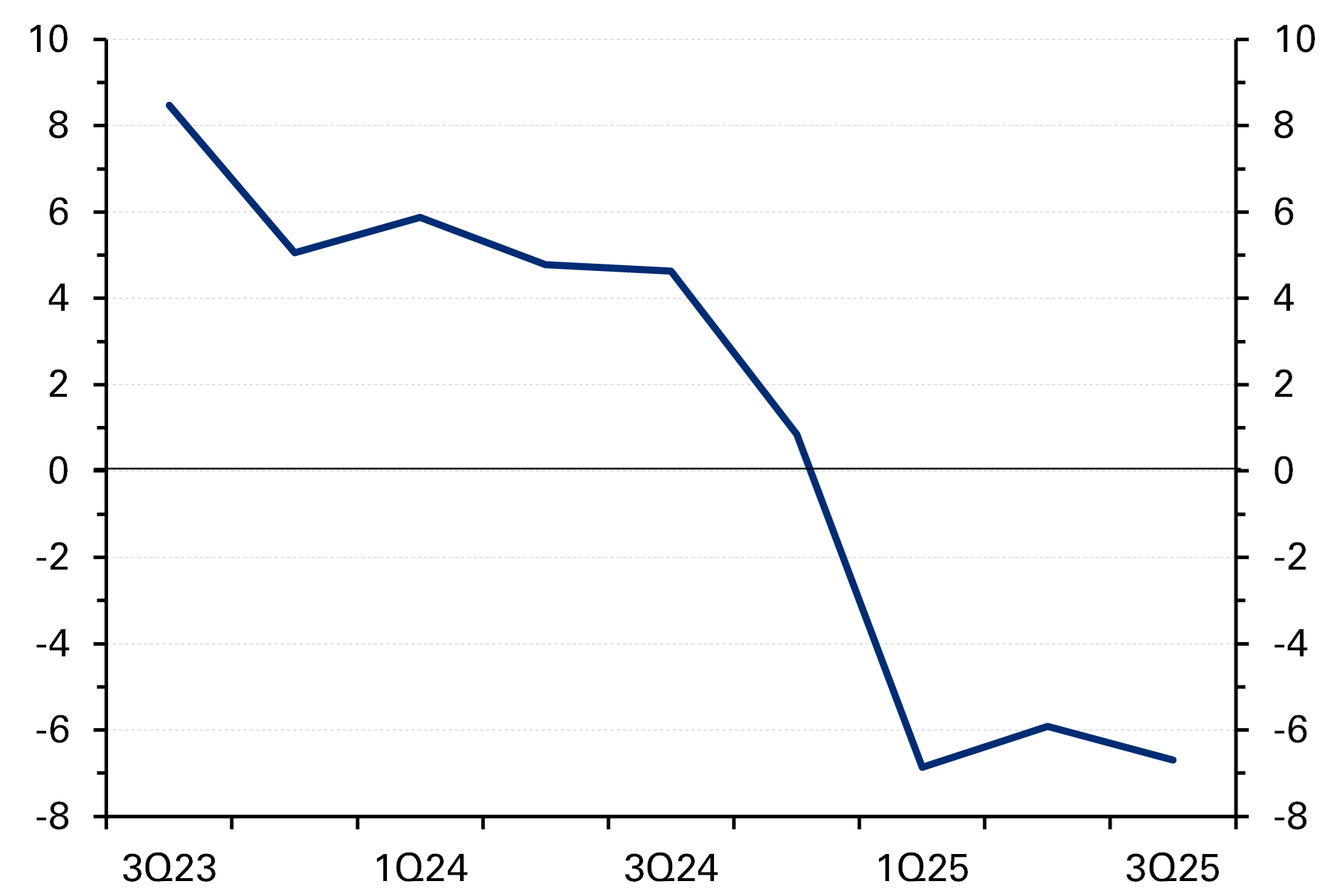
• Consumer spending trends remained weak in Q3, according to the proxy gauge represented by local bank card transaction figures. (Chart 2.) According to the data published by the Central Bank of Kuwait (CBK), negative annual growth in the value of card transactions persisted for a third consecutive quarter (-6.7% y/y). Q3’s reading was also more negative than Q2’s, bucking the moderation (q/q) seen in that quarter, and likely reflects cautiousness on the part of consumers over income, employment, and general macroeconomic prospects. Firm control of public spending by the government, including through ongoing wage growth restraint, may have also been a factor.
• CPI inflation ticked up to 2.5% y/y in September from 2.4% in August amid faster increases in the prices of food & beverages, transport, and services & miscellaneous goods. (Chart 3.) While price growth in most core CPI components eased, the core inflation rate edged up to 2.1% y/y, driven by the return of the transport sector to inflation territory and higher precious metals prices pushing up jewelry costs. (Report here.).
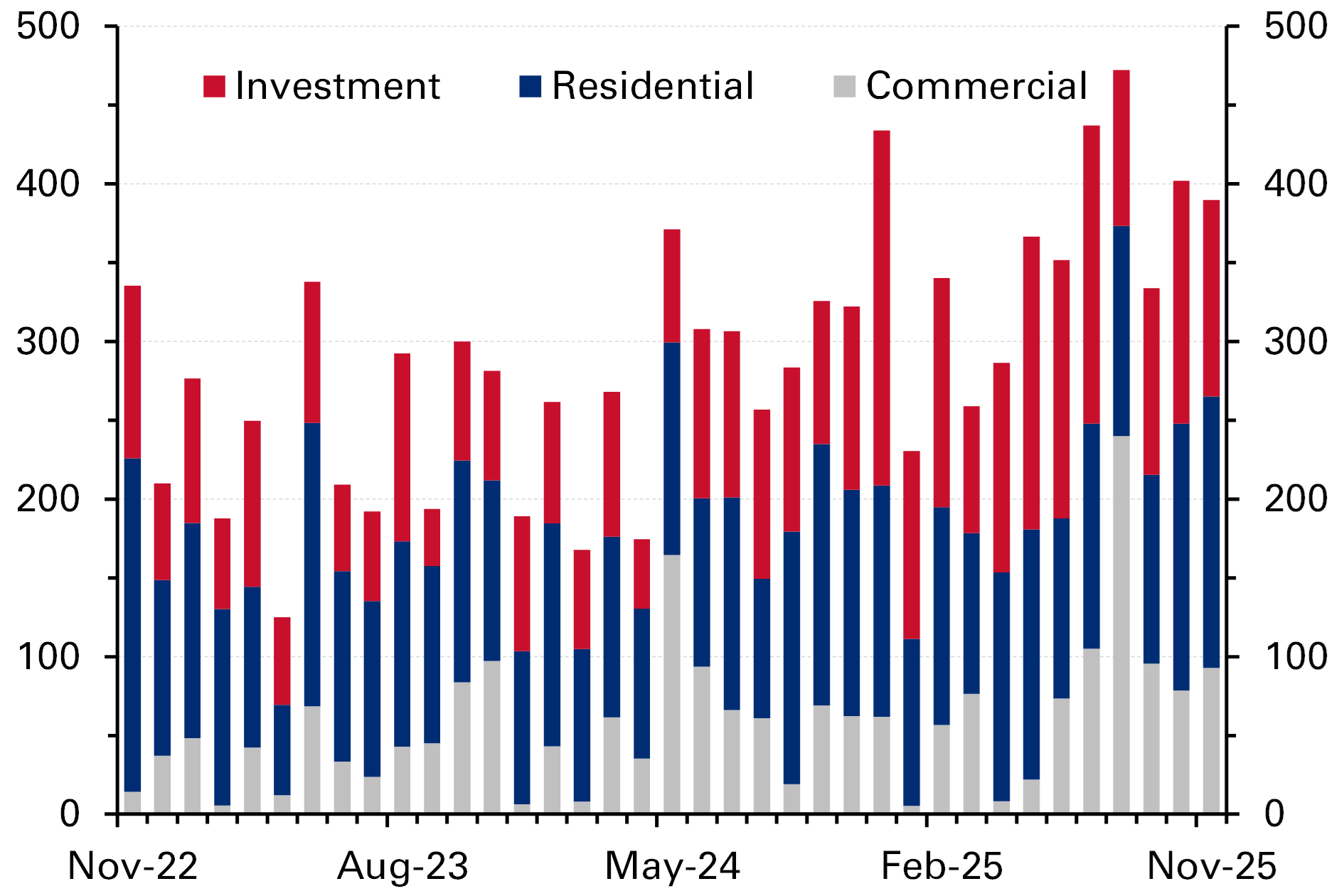
• Real estate sales recorded a sixth straight month of double-digit annual growth in November. Sales in November stood at KD390 million, up 21% y/y, although slightly down on October (-3% m/m). Annual gains in November were led primarily by the residential sector, which logged sales of KD172 million (+20% y/y), a 30-month high, and the commercial sector (+49% y/y to KD93m). The investment sector posted a smaller gain of 7.1% y/y to KD125 million. (See here.).
• Project awards in 2025 year-to-date have surpassed 2024’s full-year figure, according to MEED Projects figures. The total value of awards so far in 2025 has reached KD2.9 billion, exceeding last year’s multi-year high figure of KD2.7 billion. It could even top KD4 billion if the Mubarak Al-Kabeer contract is signed before year-end. The power & water and the oil & gas sectors have accounted for the bulk of the awards.

• The government successfully issued a large Eurobond in September. This marked its return to the international debt markets after an 8-year hiatus, with three dollar-denominated bond sales (tenors of 3, 5 and 10 years) totaling $11.25 billion. The issue has pushed total borrowing this year from both domestic and international markets to KD5.7 billion (the latest being KD0.2 billion in December), an amount sufficient to cover at least two years’ worth of deficits by our projections. The capital will help boost liquidity to implement Vision 2035-related projects, including the latest CAPT-approved Mubarak Al-Kabeer port. This will take outstanding public debt to nearly 14% of GDP in the current fiscal year (FY2025/26), a still-low level by international standards.
• Rating agency S&P Global raised Kuwait’s credit rating to “AA-” with a stable outlook, the first upgrade since 2011 and a partial reversal of Covid-linked downgrades in 2020-21. The move comes on the back of an increase in fiscal reform momentum, particularly the approval of the financing & liquidity law, which has significantly eased liquidity constraints while the government presses ahead with its medium-term fiscal consolidation and non-oil revenue augmentation plans. S&P also noted the state’s sizable financial assets – the liquid components of which are projected to average over 500% of GDP over 2025-28 – that provide a significant buffer given their expectation of widening fiscal deficits (to 7% of GDP) and increasing debt levels (to 24% of GDP) over this period. A further catalyst was faster economic growth linked to both an unwinding of OPEC+ related cuts and large investment spending by both the government and the private sector. (Report here.)
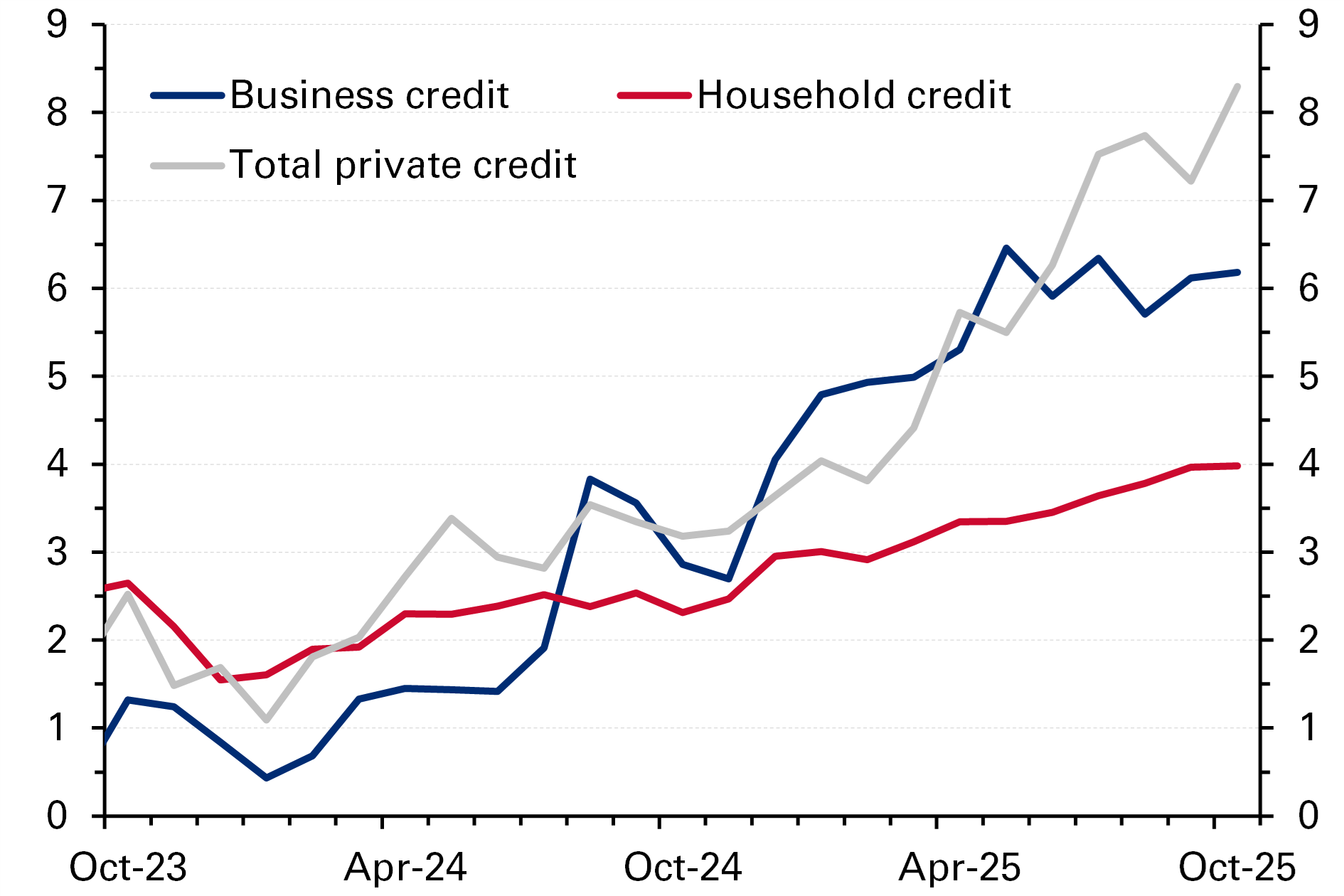
• Domestic credit continues to grow at a solid pace, rising by 1.4% m/m in October amid soaring lending to banks and financial institutions (+26% m/m; +46% YTD). (Chart 5.) On a YTD basis, domestic credit increased by 7.5% (+8.3% y/y). The recovery in household credit continued while lending to businesses remained firm in October. Meanwhile, resident deposits rose 3.5% y/y as strong growth in both private and public sector deposits countered a 14% drop in government deposits. (Report here.)
• The Central Bank of Kuwait followed the US Fed in cutting interest rates in December. The CBK reduced its key discount rate by 25 bps to 3.5% after the Fed cut its benchmark rate by the same amount. This was the third local rate reduction in the current easing cycle and brings the cumulative cut to 75 bps since September 2024 when the Fed started the process. Over the same period, the Fed and some other central banks in the GCC have lowered rates by a total of 175 bps.
Forecast
Growth to accelerate to above 4% in 2026
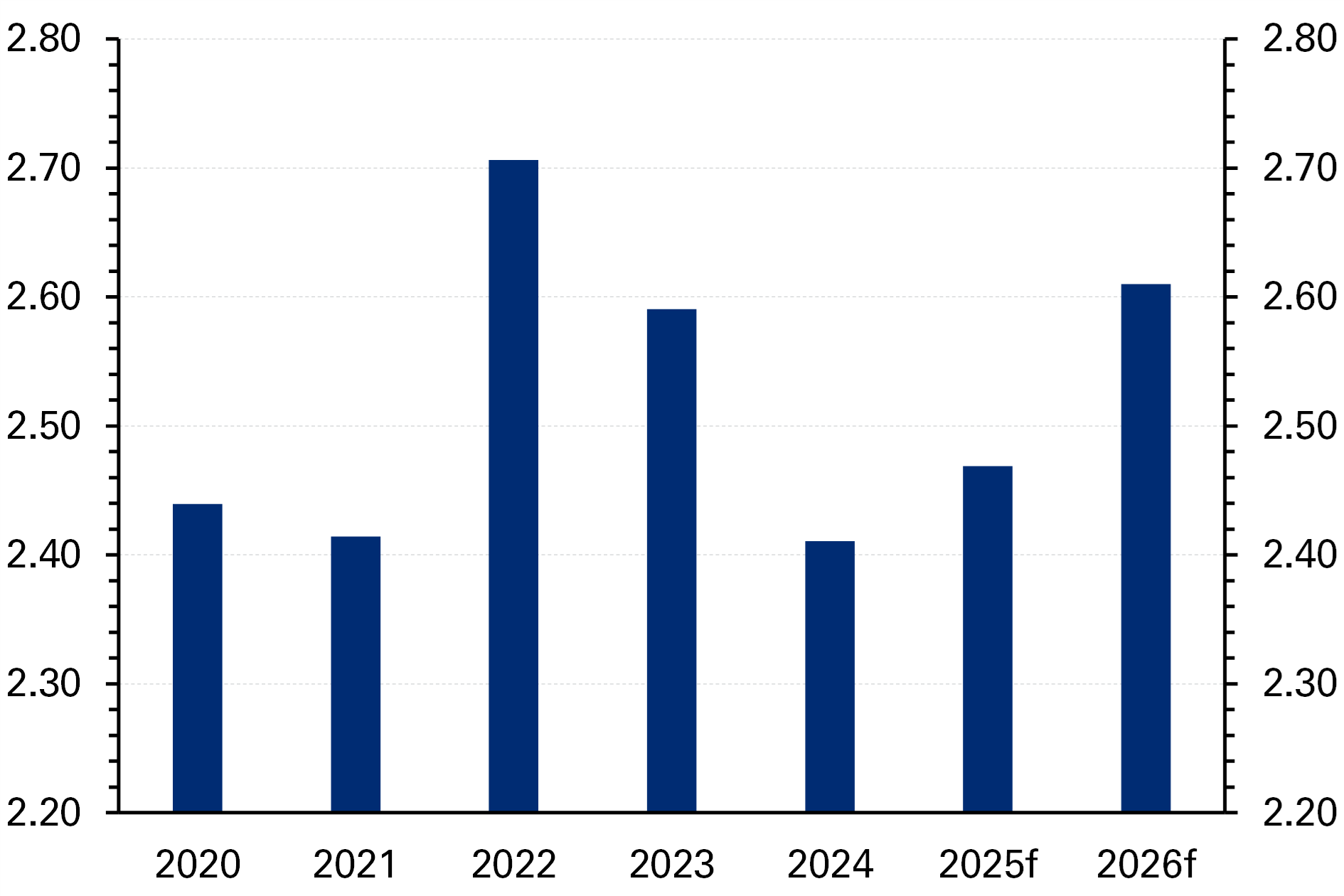
GDP will return to positive growth this year (+2.3%) after two consecutive years of oil-led declines and accelerate further in 2026 on higher output in both the oil and the non-oil sectors. We have revised up our 2026 growth forecast to 4.5% from our previous estimate of 4.1%, nearly double 2025’s expected outcome of 2.3%. This is due primarily to higher crude output in line with OPEC-8’s confirmation that it will unwind a second tranche of members’ voluntary production cuts, from 2024. Factoring in a pause in OPEC’s resupply schedule for Q1 2026 amid seasonally weaker oil demand, this will lift Kuwait’s crude production by an average of 141 kb/d next year (on top of a 59 kb/d hike this year) and take average output to its highest level since 2022 at 2.61 mb/d. (Chart 6.)
For oil prices, we have maintained our forecast of $65/bbl on average for 2026, down from an expected $69/bbl in 2025 amid expectations of excess global supply. However, our 2026 forecast is towards the higher end of the consensus reflecting our belief that (i) global oil supply growth will be less robust than the market is anticipating and (ii) global oil consumption will be more resilient than expected amid lower oil prices and more accommodative monetary policies.
Meanwhile, non-oil sector growth is forecast at 3.3% in 2026 from a projected 2.3% in 2025, slightly higher than our previous estimate to account for the better readings we have observed so far in 2025 among the non-oil indicators we track, such as the PMIs, bank credit, real estate and projects activity. (See Latest Developments section above.) We think these trends reflect both cyclical forces – growth recovering from a period of underperformance in previous years – and higher investment amid a push by the government to speed up execution of key development projects such as the Al-Zour North IWPP and Mubarak Al-Kabeer Port. We expect this stronger investment trend to persist not just into next year but also over the medium term, helping to address the infrastructure gap versus some GCC peers. Next year’s non-oil growth should also get a boost from a pick-up in oil refining output after relative underperformance in 9M 2025.
On the other side, government efforts to rein in the fiscal deficit and the ongoing softness in consumer spending, will continue to affect the outlook. The decline in card spending through 2025 (see above) – partly payback from a period of super-strong growth post-pandemic and partly a reflection of tighter control of government wage spending – should fade next year, but we do not expect a sharp improvement once this adjustment is over.
One upside risk to non-oil growth is the expected passage of the housing finance (‘mortgage’) law over coming months (it was submitted to the cabinet for approval in September), which would trigger higher household borrowing and related consumer spending. However, the full impact of the law once approved will be felt more over time than right away, given the parallel requirement for a major infrastructure rollout. The law is one part of the government’s plan to promote private sector growth and diversify the economy away from oil under the Vision 2035 agenda.
Ongoing fiscal deficits, consolidation proceeding
The fiscal deficit is forecast to widen from 2.2% of GDP in FY24/25 (KD1.1 bn) to 4.9% (KD2.5 bn) in FY25/26. (Chart 7.) This would be the tenth deficit in the last eleven years. The wider deficit reflects lower oil receipts. However, the underlying position has been helped by various government consolidation measures over the past year such as repricing government fees and services, hiking fines and penalties and the introduction of a 15% minimum top-up tax on multinationals from January 2025 in line with the OECD BEPS program. Together these could eventually be worth about 0.8% of GDP. Moreover, spending in the FY25/26 budget was unchanged from the previous year at KD24.5bn (a real terms cut).

Improving fiscal sustainability will be a multi-year event, meaning another tight spending round and more revenue-boosting measures in FY26/27. We factor in spending growth of only 1% per year this year and next, consistent with the government’s push for efficiencies and savings across the public sector, and potentially some subsidy cuts. However, within the overall total we see scope for higher capex, which was cut by a cumulative 35% in the past four budgets to help address the deficit. On the revenue side, excise taxes on tobacco and sugary drinks and VAT at 5% could yield 1-2% of GDP (versus non-oil receipts of 6% this year), but the timeline for implementation is unclear and they make no impact on our year-ahead forecasts. Tight fiscal policy would inevitably weigh on demand and spending in the economy but together with higher (volumetric) oil exports will cut the fiscal deficit to 4.0% of GDP (KD2.1 bn) in FY26/27, despite lower oil prices.
Passage of the public debt law in April (following an eight-year hiatus) provides increased flexibility in financing any future deficits and eases pressure on liquid reserve drawdowns at the General Reserve Fund, about which officials have warned in recent years. Some KD5.7 billion in debt was issued between June and December, exceeding our expectations, including one heavily oversubscribed Eurobond ($11.3bn). This is more than sufficient to fully finance the next two years of deficits based upon our forecasts, potentially triggering a slower pace of issuance ahead. Having risen from 2.9% in 2024 to 14% now, the government’s debt-to-GDP ratio is likely to rise less quickly in 2026 and remain very low by international standards.
Inflation low and steady, interest rates easing
We see CPI inflation broadly steady at 2.4% in 2026 (average), amid subdued consumer spending and trend-level non-oil activity. There could be some upside price risk in 2026 from possible subsidy cuts, hikes in indirect taxes or higher rents.
The CBK lowered its key discount rate 25 bps to 3.5% in December (-75 bps cumulatively since September 2024), in line with the US Fed and local economic conditions. Futures markets currently expect 50-75 bps in cuts by the Fed in 2026.
Reforms would unlock faster economic growth
Longer term, unlocking sustainably faster rates of non-oil economic growth will require a range of structural reforms (such as to the business climate, the labor market and public sector efficiency) and higher rates of investment – areas where Kuwait has lagged its Gulf peers in recent years amid political and bureaucratic constraints. The government formed in May 2024 has been more active on laws and economic reforms (especially fiscal policy) than its predecessors but will look to build on this with a more rapid implementation of its fiscal and economic agenda in 2026.